Gingers Dad
Well-Known Member
- Joined
- 8 Mar 2011
- Messages
- 8,158
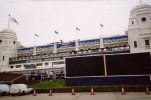
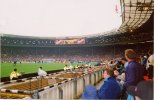
Eight of us went down to Wembley in a limo. Great day out but couldn't do it now. We'd need a comfort stop at every services.

We went down the night before and stayed over.
We got off at the wrong stop and it was hike to the stadium. It was feckin freezing and I seem to remember it hail stoned at one stage on that Yomp to the stadium.
When Horlock scored we all just thought it was a consolation goal, it seemed injury time was done, we had no idea how long was left.
When Dickov's shot hit the back of the net I can't really remember what happen except an outpouring of joy.
I thought we would have won it in extra time and fortunately they were crap at penalties, although all around us were shitting it when a certain Richard Edgehill went up to take his.
What a day, what a comeback and probably saved the club from going out of business.
The train journey back to Manchester seemed to take an absolute age, not helped that there was an alcohol ban and it was feckin heaving with bodies everywhere. CTID
That first point is the part of the narrative that needs to be emphasised. Mark Hodkinson articulated it best in his book "Down Among The Dead Mean" when he said "Magic and Manchester City had parted company many years before". City had become famous for snatching defeat from the jaws of victory for years. If there were cups for cock ups we'd have had a trophy cabinet full. We'd had five months of hope, the first hope the club had had in a long long time, and it was suddently snatched away yet again by Typical City. And you cannot underestimate how desperate we fans were not no cock this up because it contrasted with Man United's best ever season. Losing this would have been unthinkable - for me, maybe even the final straw.Third, and probably the most important factor of all, is the psychological aspect. All of us who were around in the late 1990s know that City somehow seemed cursed - if there was a way to fuck things up, we would. Winning the play-off in the way we did seemed to cast off that feeling at a stroke. I can't prove it, but I'm convinced the way we got up in 1999 created momentum to allow us to be promoted again in 2000. On the other hand, with a loss against Gillingham, even promotion the next season wouldn't have banished the feeling that City would cock things up when it mattered.
So I very much see the Gillingham game as a 'sliding doors' moment: while it's a matter of conjecture, I think the case is quite compelling that, without our comeback that day, the club's current position would probably be very different. On the other hand, to suggest that it stopped MCFC going to the wall is over the top in my opinion.
We had cut our cloth accordingly at the start of the season according to the chairman, and it was not problem if we stayed in Div 2. Highest earner was Pollock on about £3k a week, and oldest player likely to play was Goater at 28. After the game a new story was made up, treating the fans like idiots, but I never met anyone who thought it was true until 5 years later, a southerner after the Spurs 4-3 win.People like the drama of the narrative that we could have gone to the wall. It's even pushed by people who were in and around senior levels of the club at the time. However, in my opinion, there's a large degree of hyperbole
Though the sale of Georgi Kinkladze had significantly alleviated our debt problems in the summer of 1998, we lost GBP 1 million on a turnover of GBP 12 million during the Division Two season. We'd have sold Weaver and/or Wiekens to keep the wolf from the door - probably Gerard, who we could have fetched a couple of million for at the time and replaced with Richard Jobson, who missed all of 1998/9 through injury but who played 40-odd league games the next season in the higher division, ensuring performances wouldn't have suffered unduly.
We'd sold almost 14K season tickets before the play-off final, which was not far off the total for 1998/9, so I'd argue that gates would probably have held up well as long as we had a winning side. And we had a team that, if form from Boxing Day to the end of the season had been averaged over the entire campaign, would have topped 100 points.
Of course, you never know how we'd have fared had we been in the third tier again in 1999/2000. However, I think all logic suggests that we'd have had a great chance of winning automatic promotion in front of gates that stood up well compared with those from the previous campaign. Player sales would have kept us financially solvent, if not in an opulent state, without being unduly detrimental to our ability to compete on the field.
This isn't to deny the vast importance of the result going our way that day. Various circumstances suggest that it's highly unlikely we'd be where we are now had Gillingham closed out a win from their position of 2-0 up as the clock ticked round to 90 minutes.
First, Gary James has stated that we wouldn't have moved to the Commonwealth Games stadium had we stayed down that day. Sport England wouldn't have put in the necessary level of funding for a facility with a tenant in the third tier. That would likely have had implications for takeovers in later years. The new stadium was reportedly a significant factor in the takeovers by both Thaksin and, more importantly, Sheikh Mansour less than a decade later.
Second, we also went into the second tier at a very opportune time in 1999, because the second tier the following season was relatively weak. This allowed us to go straight though. By 2000, teams like Fulham, Bolton and Blackburn (all with major financial backing then) had got their act together and were much improved compared with the previous season when we went up under Royle. I don't think we'd have got promoted ahead of those teams, and with our momentum having slowed, we could easily have become stuck in the second tier for years as happened to teams like Leeds, Forest and Wednesday.
Third, and probably the most important factor of all, is the psychological aspect. All of us who were around in the late 1990s know that City somehow seemed cursed - if there was a way to fuck things up, we would. Winning the play-off in the way we did seemed to cast off that feeling at a stroke. I can't prove it, but I'm convinced the way we got up in 1999 created momentum to allow us to be promoted again in 2000. On the other hand, with a loss against Gillingham, even promotion the next season wouldn't have banished the feeling that City would cock things up when it mattered.
So I very much see the Gillingham game as a 'sliding doors' moment: while it's a matter of conjecture, I think the case is quite compelling that, without our comeback that day, the club's current position would probably be very different. On the other hand, to suggest that it stopped MCFC going to the wall is over the top in my opinion.
That first point is the part of the narrative that needs to be emphasised. Mark Hodkinson articulated it best in his book "Down Among The Dead Mean" when he said "Magic and Manchester City had parted company many years before". City had become famous for snatching defeat from the jaws of victory for years. If there were cups for cock ups we'd have had a trophy cabinet full. We'd had five months of hope, the first hope the club had had in a long long time, and it was suddently snatched away yet again by Typical City. And you cannot underestimate how desperate we fans were not no cock this up because it contrasted with Man United's best ever season. Losing this would have been unthinkable - for me, maybe even the final straw.
In the blink of an eye there was magic in the air again, hope was reborn, we finally turned the corner in the most dramatic way. At the time it (and the Blackburn promotion) were as thrilling as any of our forthcoming trophy wins.
That's a good point.When we started off the next season as though another promotion was a serious possibility, I remember arguing somewhere - maybe in MCIVTA or on the old Blue View - that the feel-good factor created that day was in some part responsible. You can never prove it, but I thought that we wouldn't have done so well the next campaign had we gone up differently in 98/99 (say, overhauled Walsall for second place, as at one point looked possible, or been awarded a penalty for that first-minute shout against Gillingham and gone on to win the game much more comfortably).
Definitely, and the opposite for Liverpool who will start next season psychologically behind us.That's a good point.
Similarly, winning the League the way we did this season, from the jaws of disaster and killing Scouse dreams has made this season, for me, better than if we'd won it the previous week.
People like the drama of the narrative that we could have gone to the wall. It's even pushed by people who were in and around senior levels of the club at the time. However, in my opinion, there's a large degree of hyperbole
Though the sale of Georgi Kinkladze had significantly alleviated our debt problems in the summer of 1998, we lost GBP 1 million on a turnover of GBP 12 million during the Division Two season. We'd have sold Weaver and/or Wiekens to keep the wolf from the door - probably Gerard, who we could have fetched a couple of million for at the time and replaced with Richard Jobson, who missed all of 1998/9 through injury but who played 40-odd league games the next season in the higher division, ensuring performances wouldn't have suffered unduly.
We'd sold almost 14K season tickets before the play-off final, which was not far off the total for 1998/9, so I'd argue that gates would probably have held up well as long as we had a winning side. And we had a team that, if form from Boxing Day to the end of the season had been averaged over the entire campaign, would have topped 100 points.
Of course, you never know how we'd have fared had we been in the third tier again in 1999/2000. However, I think all logic suggests that we'd have had a great chance of winning automatic promotion in front of gates that stood up well compared with those from the previous campaign. Player sales would have kept us financially solvent, if not in an opulent state, without being unduly detrimental to our ability to compete on the field.
This isn't to deny the vast importance of the result going our way that day. Various circumstances suggest that it's highly unlikely we'd be where we are now had Gillingham closed out a win from their position of 2-0 up as the clock ticked round to 90 minutes.
First, Gary James has stated that we wouldn't have moved to the Commonwealth Games stadium had we stayed down that day. Sport England wouldn't have put in the necessary level of funding for a facility with a tenant in the third tier. That would likely have had implications for takeovers in later years. The new stadium was reportedly a significant factor in the takeovers by both Thaksin and, more importantly, Sheikh Mansour less than a decade later.
Second, we also went into the second tier at a very opportune time in 1999, because the second tier the following season was relatively weak. This allowed us to go straight though. By 2000, teams like Fulham, Bolton and Blackburn (all with major financial backing then) had got their act together and were much improved compared with the previous season when we went up under Royle. I don't think we'd have got promoted ahead of those teams, and with our momentum having slowed, we could easily have become stuck in the second tier for years as happened to teams like Leeds, Forest and Wednesday.
Third, and probably the most important factor of all, is the psychological aspect. All of us who were around in the late 1990s know that City somehow seemed cursed - if there was a way to fuck things up, we would. Winning the play-off in the way we did seemed to cast off that feeling at a stroke. I can't prove it, but I'm convinced the way we got up in 1999 created momentum to allow us to be promoted again in 2000. On the other hand, with a loss against Gillingham, even promotion the next season wouldn't have banished the feeling that City would cock things up when it mattered.
So I very much see the Gillingham game as a 'sliding doors' moment: while it's a matter of conjecture, I think the case is quite compelling that, without our comeback that day, the club's current position would probably be very different. On the other hand, to suggest that it stopped MCFC going to the wall is over the top in my opinion.
Don‘t know when it went 2-0 to gillingham my first thought was all those teams chairmen rubbing their hands knowing that City would have their grounds selling out and ( no disrespect to them teams )the cup final type game when we rolled into town,thank fuck for Horlock and Dickov..We would of survived another season in the tier 3 but if we failed again who knows what would of happened.
I have.Felt absolutely exhausted at the end of the game.
Couldnt sleep the night before and the emotion of the day further drained me.
Never been so low and then so high within 5 minutes.
In one of his books, @Gary James suggested that positive "typical City" was the reason behind Agüeroooooooooo. Maybe positive "typical City" was also the reason behind the Gillingham result.People like the drama of the narrative that we could have gone to the wall. It's even pushed by people who were in and around senior levels of the club at the time. However, in my opinion, there's a large degree of hyperbole
Though the sale of Georgi Kinkladze had significantly alleviated our debt problems in the summer of 1998, we lost GBP 1 million on a turnover of GBP 12 million during the Division Two season. We'd have sold Weaver and/or Wiekens to keep the wolf from the door - probably Gerard, who we could have fetched a couple of million for at the time and replaced with Richard Jobson, who missed all of 1998/9 through injury but who played 40-odd league games the next season in the higher division, ensuring performances wouldn't have suffered unduly.
We'd sold almost 14K season tickets before the play-off final, which was not far off the total for 1998/9, so I'd argue that gates would probably have held up well as long as we had a winning side. And we had a team that, if form from Boxing Day to the end of the season had been averaged over the entire campaign, would have topped 100 points.
Of course, you never know how we'd have fared had we been in the third tier again in 1999/2000. However, I think all logic suggests that we'd have had a great chance of winning automatic promotion in front of gates that stood up well compared with those from the previous campaign. Player sales would have kept us financially solvent, if not in an opulent state, without being unduly detrimental to our ability to compete on the field.
This isn't to deny the vast importance of the result going our way that day. Various circumstances suggest that it's highly unlikely we'd be where we are now had Gillingham closed out a win from their position of 2-0 up as the clock ticked round to 90 minutes.
First, Gary James has stated that we wouldn't have moved to the Commonwealth Games stadium had we stayed down that day. Sport England wouldn't have put in the necessary level of funding for a facility with a tenant in the third tier. That would likely have had implications for takeovers in later years. The new stadium was reportedly a significant factor in the takeovers by both Thaksin and, more importantly, Sheikh Mansour less than a decade later.
Second, we also went into the second tier at a very opportune time in 1999, because the second tier the following season was relatively weak. This allowed us to go straight though. By 2000, teams like Fulham, Bolton and Blackburn (all with major financial backing then) had got their act together and were much improved compared with the previous season when we went up under Royle. I don't think we'd have got promoted ahead of those teams, and with our momentum having slowed, we could easily have become stuck in the second tier for years as happened to teams like Leeds, Forest and Wednesday.
Third, and probably the most important factor of all, is the psychological aspect. All of us who were around in the late 1990s know that City somehow seemed cursed - if there was a way to fuck things up, we would. Winning the play-off in the way we did seemed to cast off that feeling at a stroke. I can't prove it, but I'm convinced the way we got up in 1999 created momentum to allow us to be promoted again in 2000. On the other hand, with a loss against Gillingham, even promotion the next season wouldn't have banished the feeling that City would cock things up when it mattered.
So I very much see the Gillingham game as a 'sliding doors' moment: while it's a matter of conjecture, I think the case is quite compelling that, without our comeback that day, the club's current position would probably be very different. On the other hand, to suggest that it stopped MCFC going to the wall is over the top in my opinion.
23 Years Today: Some Journey We’ve Been On Since That Day In 1999.
One of the best posts I've read on BM Petrusha. Brilliant stuff.People like the drama of the narrative that we could have gone to the wall. It's even pushed by people who were in and around senior levels of the club at the time. However, in my opinion, there's a large degree of hyperbole
Though the sale of Georgi Kinkladze had significantly alleviated our debt problems in the summer of 1998, we lost GBP 1 million on a turnover of GBP 12 million during the Division Two season. We'd have sold Weaver and/or Wiekens to keep the wolf from the door - probably Gerard, who we could have fetched a couple of million for at the time and replaced with Richard Jobson, who missed all of 1998/9 through injury but who played 40-odd league games the next season in the higher division, ensuring performances wouldn't have suffered unduly.
We'd sold almost 14K season tickets before the play-off final, which was not far off the total for 1998/9, so I'd argue that gates would probably have held up well as long as we had a winning side. And we had a team that, if form from Boxing Day to the end of the season had been averaged over the entire campaign, would have topped 100 points.
Of course, you never know how we'd have fared had we been in the third tier again in 1999/2000. However, I think all logic suggests that we'd have had a great chance of winning automatic promotion in front of gates that stood up well compared with those from the previous campaign. Player sales would have kept us financially solvent, if not in an opulent state, without being unduly detrimental to our ability to compete on the field.
This isn't to deny the vast importance of the result going our way that day. Various circumstances suggest that it's highly unlikely we'd be where we are now had Gillingham closed out a win from their position of 2-0 up as the clock ticked round to 90 minutes.
First, Gary James has stated that we wouldn't have moved to the Commonwealth Games stadium had we stayed down that day. Sport England wouldn't have put in the necessary level of funding for a facility with a tenant in the third tier. That would likely have had implications for takeovers in later years. The new stadium was reportedly a significant factor in the takeovers by both Thaksin and, more importantly, Sheikh Mansour less than a decade later.
Second, we also went into the second tier at a very opportune time in 1999, because the second tier the following season was relatively weak. This allowed us to go straight though. By 2000, teams like Fulham, Bolton and Blackburn (all with major financial backing then) had got their act together and were much improved compared with the previous season when we went up under Royle. I don't think we'd have got promoted ahead of those teams, and with our momentum having slowed, we could easily have become stuck in the second tier for years as happened to teams like Leeds, Forest and Wednesday.
Third, and probably the most important factor of all, is the psychological aspect. All of us who were around in the late 1990s know that City somehow seemed cursed - if there was a way to fuck things up, we would. Winning the play-off in the way we did seemed to cast off that feeling at a stroke. I can't prove it, but I'm convinced the way we got up in 1999 created momentum to allow us to be promoted again in 2000. On the other hand, with a loss against Gillingham, even promotion the next season wouldn't have banished the feeling that City would cock things up when it mattered.
So I very much see the Gillingham game as a 'sliding doors' moment: while it's a matter of conjecture, I think the case is quite compelling that, without our comeback that day, the club's current position would probably be very different. On the other hand, to suggest that it stopped MCFC going to the wall is over the top in my opinion.