the-ecstacy-of-eight
Well-Known Member
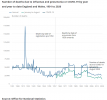
These "cases per 100,000" haven't sat right with me for a while now.How does Lancaster compare to Camden (89/100,000 cases)?
We can all pick out outliers.
Surely all of this data analysis needs to also take into account the actual magnitude of the population (and therefore magnitude of cases) in all of these areas, if one of the most important factors is hospital capacity?
If there are 89/100,000 cases and the population is 250,000 surely that's a worse situation for the hospitals than say 120/100,000 cases when the population is only 50,000. A local(ised) hospital may be able to cope with 60 cases, but could it cope with 222 new cases?
If the population is 5 times bigger then hospital facilities need to be five times bigger and the percentages don't take this into account. Then you look into neighbouring districts/boroughs. Do they also use the same local(ised) hospital resources? Are these nearby populations of a similar size? How big is this local hospital? The numbers soon start piling up and the percentages become almost irrelevant when sat alongside the actual number of people.
It feels very much like data manipulation to me, and from my experience data is generally manipulated in order to serve a hidden purpose.
It's a "shady" oversimplification of the analysis of the data as far as I'm concerned; don't get me wrong, percentages are obviously good for comparison purposes, but is the primary aim of this data to simply compare one place with another in order to create a "league table"? They don't tell the whole story and the actual raw data also has much more significance and relevance in this instance.
Last edited: