
Another new Brexit thread

  • Thread starter Thread starter Ric
  • Start date Start date
Status
Not open for further replies.
Ever closer union was a founding principle. It's what we signed up to in 73. Don't pretend it's a surprise or something new.
Here's the rub. 'Ever closer union' does not appear in the text of the treaty of Rome. It appears in the preamble, which is not part of the treaty. Article 2 cites 'closer relations' between the states. Article 3 sets out the activities of the Common Market. Measures to achieve ever closer union are not mentioned.
At the time of the 1975 referendum, those in favour made a strong pitch that we were signing up to a trade treaty. Ted Heath said that the treaty was not political. Some years later he said "it was always political". The paper that the gov sent to all households identified money, food and jobs as the key issues. On the subject of sovereignty, the paper relied on the need for unanimity in the Council of Ministers to ensure that British laws could not be decided by "faceless bureaucrats in Brussels". QMV has seriously altered that.
Ever closer union was not mentioned, though "bringing the people of Europe together" was.
The case against membership was most eloquently put by Tony Benn in a letter to all his constituents, published in the Spectator.
https://blogs.spectator.co.uk/2016/05/a-lesson-from-the-1975-referendum/
Benn relied on the argument that sovereignty was lost by our membership and that the EC would continuously seek to enlarge its policy footprint.
Those arguments have continued to the present day and have been magnified each time the EU has taken or proposed more powers for itself.
Did Britain actually sign up for ever closer union in 1973? Did the voters in 1975 sign up for ever closer union? Has the continuous talk of ever closer union carried the British people willingly along?
Remainers who argue that leaving will be damaging economically are probably right, but leavers voted emotionally in the belief that ever closer union was not what they wanted and was not what they were promised.
 
Speak for yourself.

Years of thinking you know what the electorate wants and thinks has left you where exactly?

Decimated in Parliament and out of the EU is the answer.

Its all so laughably condescending and wrong.
Sorry - are you saying you think we will be better off financially?
 
Nah, unlike you mate I'm not into jingoistic nonsense.
I'll watch this one out from the sofa and expect us to end up better off ( or at least no worse off) as was promised.

come now len you have said many times farage Johnson and the myriad of leavers are liars and charlatans . Why would you suddenly start to measure success against what those lying bastards told us.

surely a better measure of success for you would be measure the success of brexit against all the expert predictions you and your pals endlessly posted on here.

huge unemployment
Deep recession
Companies leaving the uk
Financial institutions flocking from London
No drugs
Companies Can’t import or export goods into the eu , due to your favourite phrase , non-tariff barriers.

Tell me will brexit be a success for you if all this comes true or if it doesn’t ?

which would you prefer?
 
Here's the rub. 'Ever closer union' does not appear in the text of the treaty of Rome. It appears in the preamble, which is not part of the treaty. Article 2 cites 'closer relations' between the states. Article 3 sets out the activities of the Common Market. Measures to achieve ever closer union are not mentioned.
At the time of the 1975 referendum, those in favour made a strong pitch that we were signing up to a trade treaty. Ted Heath said that the treaty was not political. Some years later he said "it was always political". The paper that the gov sent to all households identified money, food and jobs as the key issues. On the subject of sovereignty, the paper relied on the need for unanimity in the Council of Ministers to ensure that British laws could not be decided by "faceless bureaucrats in Brussels". QMV has seriously altered that.
Ever closer union was not mentioned, though "bringing the people of Europe together" was.
The case against membership was most eloquently put by Tony Benn in a letter to all his constituents, published in the Spectator.
https://blogs.spectator.co.uk/2016/05/a-lesson-from-the-1975-referendum/
Benn relied on the argument that sovereignty was lost by our membership and that the EC would continuously seek to enlarge its policy footprint.
Those arguments have continued to the present day and have been magnified each time the EU has taken or proposed more powers for itself.
Did Britain actually sign up for ever closer union in 1973? Did the voters in 1975 sign up for ever closer union? Has the continuous talk of ever closer union carried the British people willingly along?
Remainers who argue that leaving will be damaging economically are probably right, but leavers voted emotionally in the belief that ever closer union was not what they wanted and was not what they were promised.


The world has changed since 1975 tho........ hasn't it?
 
The world has changed since 1975 tho........ hasn't it?
It certainly has and that made it incumbent on the EU and the UK gov to carry people along continuously to avoid an almighty showdown. This they failed to do; as Mrs Merkel said the 'EU must listen more to the people'.
 
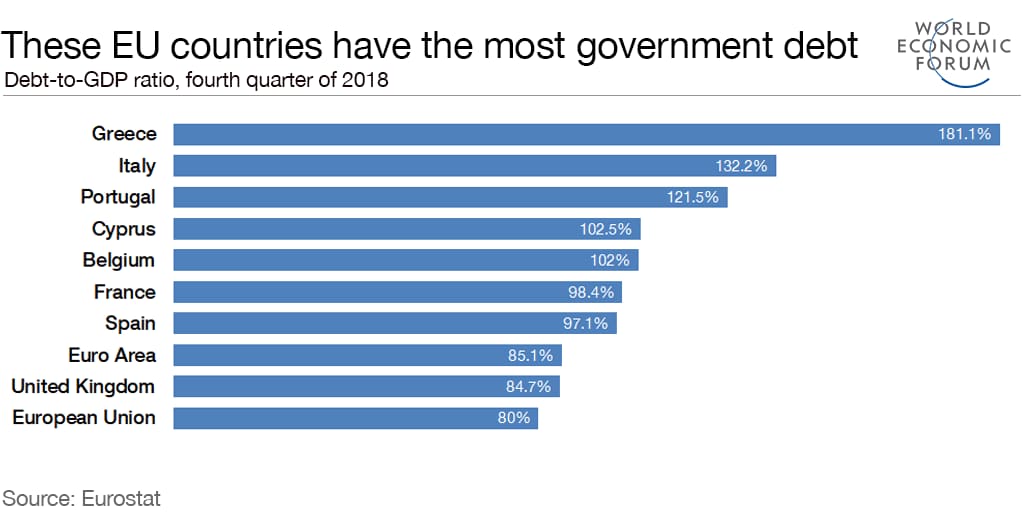
You are aware that since the Conservatives came to power the National Debt has more than doubled (and thats after they stole 7 years of pensions off women to pay it down) sooooo we are a tiny debt ridden country. In fact if personal debt was included we would probably be close to Spain

fIPCMLb4h7wZyap2EXFz6Rlprx-o524VqlLNjqGR_dU.png


It's difficult to play any sort of 'ball' when the other side doesn't want to play because you won't stick to the rules of the game.

Imposed restrictions ? Tell me one thing you can do today that you couldn't last friday.

Your fully independent strong nation is about to shatter and divide itself even more with calls for another independence referendum in Scotland and Sinn Feins call for the reunification of Ireland (calls which will get louder as the people of Northern Ireland realise what a pigs ear the current deal is)

Please elucidate ..... what cards do we have to play in negotiations ? Fish that we don't eat perhaps but that will simply reveal another lie told by Johnson and leave wont it ?
Mate from day one of this debate three and half years ago it was obvious you were and still are in total denial of the referendum result and a quitter to boot. The guff you have posted in that time has been repeatedly proven to be utter nonsense. Sure we have problems as an economy but no where near as many as others in the world including the EU. If you don't like it pop over to the tax haven economy of the ROI, you know the one that we the UK bailed out 10 yrs ago!? or move north of the border to Sturgeons fanciful braveheart land which she convieniently forgets is subsidised by the rest of UK . We are the 5th biggest economy in the world, you would do well to remember that when you post your sniveling crap.
 
and there in a single post is the obstacle to reasoned discussion about anything - the empty and absurd aggression of the lunatic left fighting a monster of their own creation which is, in reality, a just a mirror of themselves.
yep - that post was seriously a great example of how it is actually the Remainers that are the ones that can come across as being a bit thick
 
Maybe no deal - let’s see..
He cant afford no deal with his election promises, so it sounds like he wants a second rate eu deal and hope he can make it up with other deals. Those other deal makers will know we are desperate and will take years. Still at least I m free this morning.
 
Here's the rub. 'Ever closer union' does not appear in the text of the treaty of Rome. It appears in the preamble, which is not part of the treaty. Article 2 cites 'closer relations' between the states. Article 3 sets out the activities of the Common Market. Measures to achieve ever closer union are not mentioned.
At the time of the 1975 referendum, those in favour made a strong pitch that we were signing up to a trade treaty. Ted Heath said that the treaty was not political. Some years later he said "it was always political". The paper that the gov sent to all households identified money, food and jobs as the key issues. On the subject of sovereignty, the paper relied on the need for unanimity in the Council of Ministers to ensure that British laws could not be decided by "faceless bureaucrats in Brussels". QMV has seriously altered that.
Ever closer union was not mentioned, though "bringing the people of Europe together" was.
The case against membership was most eloquently put by Tony Benn in a letter to all his constituents, published in the Spectator.
https://blogs.spectator.co.uk/2016/05/a-lesson-from-the-1975-referendum/
Benn relied on the argument that sovereignty was lost by our membership and that the EC would continuously seek to enlarge its policy footprint.
Those arguments have continued to the present day and have been magnified each time the EU has taken or proposed more powers for itself.
Did Britain actually sign up for ever closer union in 1973? Did the voters in 1975 sign up for ever closer union? Has the continuous talk of ever closer union carried the British people willingly along?
Remainers who argue that leaving will be damaging economically are probably right, but leavers voted emotionally in the belief that ever closer union was not what they wanted and was not what they were promised.
Thats a good post mate.
 
omg, i now see the light. I have been wrong all along.

From the Telegraph. On a par with the Mail. Lets dismiss Trade, Defence, Social aspects and concentrate on Sovereignty. Something that we always had and have demonstrably used over the last three years, lets have some more of that. A great example of the vacuous argument that any clear headed supporter of Brexit would see through in as much time as it takes to say ECJ.
I hope your pain is receding

Think you are right in your first line though;-)
 
Living in a democracy means that you can be lied to. I get it. It doesn't change the hypocrisy.

Absolutely but here you and others claiming that its only us that can ever fall for the lies whilst you see right through it every time.

Politicians lie shocker! No shit Sherlock.

I dont need you to tell me that, I've been around since 71 but here is the thing you simply will not accept, remain lied, constantly, still do, as do the EU....its all part and parcel of the game that is politics.
 
Here's the rub. 'Ever closer union' does not appear in the text of the treaty of Rome. It appears in the preamble, which is not part of the treaty. Article 2 cites 'closer relations' between the states. Article 3 sets out the activities of the Common Market. Measures to achieve ever closer union are not mentioned.
At the time of the 1975 referendum, those in favour made a strong pitch that we were signing up to a trade treaty. Ted Heath said that the treaty was not political. Some years later he said "it was always political". The paper that the gov sent to all households identified money, food and jobs as the key issues. On the subject of sovereignty, the paper relied on the need for unanimity in the Council of Ministers to ensure that British laws could not be decided by "faceless bureaucrats in Brussels". QMV has seriously altered that.
Ever closer union was not mentioned, though "bringing the people of Europe together" was.
The case against membership was most eloquently put by Tony Benn in a letter to all his constituents, published in the Spectator.
https://blogs.spectator.co.uk/2016/05/a-lesson-from-the-1975-referendum/
Benn relied on the argument that sovereignty was lost by our membership and that the EC would continuously seek to enlarge its policy footprint.
Those arguments have continued to the present day and have been magnified each time the EU has taken or proposed more powers for itself.
Did Britain actually sign up for ever closer union in 1973? Did the voters in 1975 sign up for ever closer union? Has the continuous talk of ever closer union carried the British people willingly along?
Remainers who argue that leaving will be damaging economically are probably right, but leavers voted emotionally in the belief that ever closer union was not what they wanted and was not what they were promised.
Obviously the preamble is part of a treaty. To what extent its provisions can be cited as legally enforceable is another matter.

You can cherry pick what was said "at the time" to justify your own view on what people thought they were signing up to. That justifies my repeating that voters were told we would still be in a free trade zone from Iceland to the Russian border.
 
Status
Not open for further replies.

Don't have an account? Register now and see fewer ads!

SIGN UP
Back
Top