The Album Review Club - *** Christmas Break Playlist (next album 7/1/26) ***

Every Picture Tells a Story
Rod Stewart


No Wait! Dont leave because its Rod 'dya think i'm sexy' Stewart! I promise this is worth three listens and is really good.

There is an interesting comparison for me with the last pick, OB1’s Sheer Heart Attack, an album I absolutely loved at the time, performed by a group that I later fell out of love with . My pick is also by an artist I later became to actively dislike (because of his choice of material) and yet I still absolutely love this album and play it regularly more than 50 years after its initial release.
1971 was the year that Rod Stewart became a superstar (the same year that Bowie and Bolan had similar breakthroughs). Having featured in bands with Long John Baldry and Jeff Beck, Stewart made two solo albums ’An old raincoat won’t ever let you down’ and ‘Gasoline Alley’ and fronted all the vocals to the Faces first album ‘First Step’. But it was ‘Every Picture Tells A Story’ that broke him into the stratosphere with the album being voted Rolling Stone album of the year. A rare event where the critical and the commercial conclusions were as one.
Stewart referenced Sam Cooke as a critical influence to his singing style which is to all intents and purposes an extension of his speaking voice. Like Cook he sang above his natural register and had the ability to give authenticity to songs, as if old songs had been ‘found’ rather than recently composed if that makes any sense - Mandolin Wind is a prime example of this skill.

So enough of the context what about the record?

Every Picture Tells a Story is a melange of hard rock, blues and country, it’s an album that takes you to a small smoky venue, it ambles into the room with a cocky grin, half-drunk on its own raw energy, only to leave you exhilarated but also touched and uplifted by the beauty and sadness of a number of songs. There is something on the album for everyone. Country, Folk, Blues and Rock and in 1971, the songs appealed to an audience that wanted music they could relate to and it sold very very well. You could play this album to anyone and they will find something to like (Rob, I think you will like the variety of instruments, violin, mandolin, mouth harp and the fact you can here every instrument clearly). Rod co-wrote three tracks on the album including the stand out ‘Maggie May’ and ‘Mandolin Wind’

Although the album is a Rod Stewart solo effort, the album’s DNA is inseparable from the Faces’ signature blend of rock and roll, blues rock, boogie rock, and folk rock, infused with a loose, energy that set them apart from their contemporaries (maybe other than the Stones where there are obvious connections - Wood was a Rolling Stone personified!) . Their style was defined by a raw, unpolished sound, emphasising feel and spontaneity over technical precision. The Band and a selection of other musicians were integral in shaping the sound and spirit of Every Picture Tells a Story, providing the loose, ragged charm that underpins the album’s enduring appeal.

Ronnie Wood’s guitar work is a standout, alternating between gritty, driving riffs and more subtle passages that perfectly complement Stewart’s voice. His contribution to tracks like the title song and "Maggie May" provided a raw edge. Wood also played bass on a number of tracks as did Pete Sears and Danny Thompson who added double bass to Mandolin Wind. Ian McLagan’s keyboards bring a warm, organic texture, adding depth to the arrangements. Martin Quittenton who was co-composer of Maggie May played acoustic piano. Faces, Ronnie Lane and Kenny Jones played Bass and Drums on ‘I Know, Im Losing You’. Maggie Bell of Stone the Crows fame provided some of memorable backing vocals. The recording of the album featured much impromptu arrangement and improvisation and that is a big part of its enduring charm.

More than just instrumentalists, the Faces embodied a spirit of camaraderie and fun that defines the album. The band’s chemistry gave Stewart the perfect environment to craft an album that feels deeply personal and irresistibly communal. Together, they created a record that defines the very heart and swagger of early '70s rock at its finest.

There is no bad track albeit some lyrics, particularly on the title track, contain outdated stereotypes that jar these days.

‘Every Picture Tells a Story’ Rod and Ronnie recorded the song in a spontaneous session. The structure of the track was barely sketched out beforehand, with much of it coming together in the studio. Wood’s guitar work, which alternates between jagged riffs and bluesy licks, was largely improvised on the spot. Meanwhile, Stewart's vocals were delivered with an off-the-cuff intensity, as though he were recounting the song’s globe-trotting tale to a group of mates over a drink.
The recording process was so casual that Stewart later admitted he wasn’t entirely certain about some of the lyrics, which were cobbled together from ideas he had jotted down and expanded on during the session. The unpolished, almost chaotic energy of this session gave the song its infectious vitality. However, the freeform nature of the recording also contributed to some of its more controversial elements, including lyrics that reflect outdated racial stereotypes—something Stewart later acknowledged as a sign of the times.

‘Seems Like a Long Time,’ reflects Stewart’s interest in incorporating gospel. The track’s lush arrangement, featuring Ian McLagan on piano and the soulful backing vocals of Maggie Bell, giving it a contrast with the more raw feel of much of the album. Stewart's vocal delivery leans into the spiritual undertones of the songs lyrics. The production is a bit more polished than other tracks compared to the album's more organic moments.

The next track is a cover of Arthur Crudup’s blues classic ‘Thats all right’ which serves as a tribute to early rock and roll. (I think it was Elvis’s first single). The recording process for this track was intentionally stripped-down and informal, reflecting the grit of the original. Wood’s electric guitar work dominates the track but I really enjoy Ian McLagan’s piano which adds a boogie-woogie texture that roots the track firmly in its blues heritage.

Rod Stewart’s cover of Bob Dylan’s “Tomorrow Is a Long Time” is one of the album’s most understated tracks. Stewart, a devoted Dylan fan, chose to reinterpret this lesser-known song with a delicate, folk-inspired arrangement. The recording features Martin Quittenton on acoustic guitar, whose intricate work provides the foundation for Stewart’s introspective vocal performance. Danny Thompson, a renowned bassist from the British folk scene, played double bass, adding warmth to the track. The minimalist approach allowed the melancholy of Dylan’s lyrics to shine. The track was crafted with a focus on subtlety and as such it works well in showcasing Stewart’s versatility and demonstrates beautifully his ability to excel with quieter, more introspective material.

‘Maggie May’ is a track that is familiar with everyone. It purports to tell the story of Rod’s deflowering by an older woman and it does so with some charm. I still remember his early performances on TOTP where he and the Faces kicked footballs into the audience. The mandolin solo was famously composed and played by a young Ray Jackson of Lindisfarne who was paid an eye watering £15 (or £12 if you read other articles!) for his efforts. He later claimed a share of the royalties from the song on the basis he was its co-composer, a claim that Stewart described as ‘Ridiculous’.

Mandolin Wind is simply the best thing he has ever done. An interesting fact about the recording is that Rod Stewart himself played the majority of the acoustic guitar parts on the track, a departure from his usual role as lead vocalist. Stewart's guitar work helped shape the pastoral atmosphere of the song, emphasising its intimate and reflective tone. What makes this even more notable is Stewart's self-admitted modesty as a guitarist—he has often said he was never particularly confident in his playing. However, his performance on "Mandolin Wind" demonstrated his ability to convey raw emotion through simplicity. The mandolin part that complements the song’s acoustic texture was performed by Martin Quittenton who’s delicate touch adds a rustic, folk-inspired quality that perfectly underscores the song’s themes of love and resilience

(I Know) I’m Losing You is my favourite track on the album. I'ts a fiery cover of the Temptations classic. The track showcases the Faces in full force, with their raw, unpolished energy taking the song in a completely different direction from the soulful original. The session was a testament to the band’s improvisational prowess. In particular, Kenny Jones thunderous drumming gave the song an edge of primal urgency. I love the way he propels the song forward, increasing the intensity but not a single drum beat out of place or unnecessary. The recording captures the spontaneity of a live performance, which was precisely the band’s intention. Interestingly, the track was recorded in a single take. The Faces’ chemistry was so tight during the session that they captured the gritty, intense atmosphere of the song on their first try. The result is a blistering rock reinterpretation that stands as one of the most powerful moments on the album.

The album closes with “Reason to Believe,” a tender, heartfelt cover of Tim Hardin’s folk classic. The track was recorded with a sparse arrangement a deliberate choice that contrasts with the album’s more boisterous numbers.

Martin Quittenton’s acoustic guitar playing forms the backbone of the track, with its gentle strumming providing a delicate framework for Stewart’s introspective vocals. Pete Sears’ bass work subtly reinforces the melody without overpowering it, and the restrained instrumentation gives the song a timeless quality. Stewart’s performance on “Reason to Believe” is deeply affecting, as he captures the song’s themes of disillusionment and hope with sincerity. It was originally intended as the lead single from the album, but it was quickly overshadowed by the success of “Maggie May,” which became a surprise hit. Despite this, “Reason to Believe” remains a standout, rounding off the album on a poignant note.

Hope those that know the album like it and those that don’t know it enjoy it as if it were 1971!

I agree re Mandolin Wind, a great tune and very evocative of that start of the 70s period.
 
I think Ronnie Wood chipped in too? I'm sure I read somewhere that neither Lane nor Marriott got to see any royalties from Small Faces, by the time Kenney Jones managed to get what they were owed they'd both passed away.:-(

If I'd change anything about this album a bit more Ronnie Lane would be good. Wood is good on the bass but his guitarist instincts means he sometimes overcooks it. Lane started as a guitarist too so had that knack with a melodic line as well but as a 'proper' bassist knew less was sometimes more. Compare Woods bassline on Maggie May with Lane's on the glorious Stay With Me both are a great part of their songs but only one of them has no extraneous notes!
Must be honest I didn’t twig quite how good a bassist Plonk was until I got the Faces BBC box set. There is great work on it by all the musicians.
 
The Doors Live? Was that the one with Celebration of the Lizard on it? Have listened to a few Doors live albums -some are brilliant, one or two not so much.

Three Bowie albums: Hunky Dory, Ziggy Stardust, Aladdin sane - how would you rank them 1,2,3?

For me, HD, Aladdin sane, Ziggy S but then I'm weird. Lady Grinning Soul on Aladdin sane - that Mick Garson piano work...

you should nominate one and write a review.
Hard to choose between AS & RAFOZSASFM. AS was my favourite album by any artist for a time.
 
Must be honest I didn’t twig quite how good a bassist Plonk was until I got the Faces BBC box set. There is great work on it by all the musicians.

Lane could arguably be the most underrated bassist there is. He rarely gets a look in when names are bandied about in lists and stuff. By most accounts he was a lovely but ramshackle bloke who did his own thing usually at significant cost to himself! Maybe he just didn't play the game well enough for the journos to pay attention? Then again Faces are underrated overall imo so maybe it's just a part of that.
 
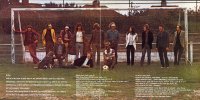
Think it was the faces.What was the album with the band members in a photo under a set of goalposts.
My dad had this album and the reason i got into the Faces or Rod at the time.
 
That’s interesting. I haven’t seen that at all. Perhaps it was a bootleg version of something.
It was Never a Dull Moment inside cover.
Nothing to do with the Faces.
 

Attachments

  • 1000009856.jpg
    1000009856.jpg
    163.1 KB · Views: 6
Have to say it that apart from the Lonesome Jubilee this has to be one of the biggest and best surprises since i joined the forum.
Rock/Blues/Country, whatever genre you wish to attach to it, it is fun and a great listen. Even the Country stuff which usually turns me off is enjoyable. I think perhaps as you don't have that American twang.
Apart from the now outdated references in the opener/title track, its a great start.....and it just keeps going. I don't think there is really a duff track on this...apart from maybe the little bit of Amazing Grace.
 
Every Picture Tells A Story – Rod Stewart

For the second consecutive week, we have a British institution to review.

The title track features a satisfying acoustic opening and the chime of the acoustic in the left ear throughout is a satisfying sound as the song goes full steam ahead, with Rod whooping and hollering his way through what is a great opening to the album.

“Seems Like A Long Time” is quite a comedown. There’s nothing special about the song or performance to my ears, it just sounds like Rod Stewart-by-numbers. Apparently, it seems like a long time (it is if you’re listening to this song) and just to make sure we understand, Rod and his back-up singers keep repeating the mantra.

“That’s All Right” features some nice slide (again in the left ear) and whilst the acoustic blues that starts the “Amazing Grace” is equally good, it can’t save what feels like a bit of a pointless cover.

Thankfully, the album improves immensely after these two mis-steps. There’s a good mixture of acoustic and violin on Bob Dylan’s “Tomorrow Is A Long Time”, the violin providing a lovely refrain.

Martin Quittenton’s short acoustic intro to “Maggie May”, a song he co-wrote with Stewart, is a nice touch and of course the song is superb. I’m listening on my Bose noise-cancelling headphones and the sound of Ian McLagan’s Hammond elevates the track. I can’t say that I’ve ever noticed this when I’ve heard the song in other environments, but maybe I wasn’t listening carefully enough. The mandolin sounds great too. Unsurprisingly, the lovely mandolin is carried into “Mandolin Wind”, which is also excellent.

Great funky guitar to open “(I Know) I’m Losing You” and, like the title track, this is another song with great energy. “(Find A) Reason To Believe” features evocative gospel organ and a strong performance in general, the violin making a welcome return.

The sonic palette is strong on this one – good use of acoustic guitar, slide, mandolin and violin. In an initial listen, I made a note that there was “a little too much plink-plonky piano for me”, but subsequent listens reveals that this is limited to “Seems Like A Long Time”. If only he’d put some accordion on instead, the album would have been even better.

To Rod Stewart’s credit, three of the best songs on the album are those that he wrote or co-wrote. It’s a pity that he didn’t write “Tomorrow Is A Long Time” and “(Find A) Reason To Believe” as well.

It's worth pointing out the power of this thread to get us listening to stuff. I have only ever bought two albums of cover versions, each by two of my favourite artists. One of them features incredible songs and performances across the board, and I’m currently enjoying it again now. So much so that I may consider putting it up for review on here to see what everybody makes of it.

But back to Every Picture Tells a Story. This is an album that is superbly produced and performed with some strong songs (and great stereo separation of the instruments), but it has way too many cover versions and a couple of them aren’t that great. If you are going to do a cover version, make it great and don’t make it feel like you are simply padding out the album. There’s certainly enough here for me to enjoy and all things considered 8/10 feels fair.
 
A good album let down by 3 songs from making it great.
Seems like a long time,That's alright and I'm losing you.
Good start with Every picture tells a story then a couple of fillers before Tomorrow is a long time in which i found out was a Dylan cover the post above.
Without hearing the original Rod does a good job on it.
Then Maggie May a great song despite the amount of times i have heard it.
Mandolin Wind my favourite Rod song of all time.
Then the pointless I'm losing you ending with the great Reason to believe.
Thought about a 7 but going to give it an 8 due to instrument playing especially acoustic guitar and organ.
Got into Rod and the Faces through my dad who was a big fan and had most of his stuff will into the 1980's.
Myself i liked Rod up until A night on the town.Even liked Atlantic crossing despite the awful sailing probably his biggest hit
8/10.
 
Have to say it that apart from the Lonesome Jubilee this has to be one of the biggest and best surprises since i joined the forum.
Rock/Blues/Country, whatever genre you wish to attach to it, it is fun and a great listen. Even the Country stuff which usually turns me off is enjoyable. I think perhaps as you don't have that American twang.
Apart from the now outdated references in the opener/title track, its a great start.....and it just keeps going. I don't think there is really a duff track on this...apart from maybe the little bit of Amazing Grace.
Really pleased you like it mate.
 
Every Picture Tells A Story – Rod Stewart

For the second consecutive week, we have a British institution to review.

The title track features a satisfying acoustic opening and the chime of the acoustic in the left ear throughout is a satisfying sound as the song goes full steam ahead, with Rod whooping and hollering his way through what is a great opening to the album.

“Seems Like A Long Time” is quite a comedown. There’s nothing special about the song or performance to my ears, it just sounds like Rod Stewart-by-numbers. Apparently, it seems like a long time (it is if you’re listening to this song) and just to make sure we understand, Rod and his back-up singers keep repeating the mantra.

“That’s All Right” features some nice slide (again in the left ear) and whilst the acoustic blues that starts the “Amazing Grace” is equally good, it can’t save what feels like a bit of a pointless cover.

Thankfully, the album improves immensely after these two mis-steps. There’s a good mixture of acoustic and violin on Bob Dylan’s “Tomorrow Is A Long Time”, the violin providing a lovely refrain.

Martin Quittenton’s short acoustic intro to “Maggie May”, a song he co-wrote with Stewart, is a nice touch and of course the song is superb. I’m listening on my Bose noise-cancelling headphones and the sound of Ian McLagan’s Hammond elevates the track. I can’t say that I’ve ever noticed this when I’ve heard the song in other environments, but maybe I wasn’t listening carefully enough. The mandolin sounds great too. Unsurprisingly, the lovely mandolin is carried into “Mandolin Wind”, which is also excellent.

Great funky guitar to open “(I Know) I’m Losing You” and, like the title track, this is another song with great energy. “(Find A) Reason To Believe” features evocative gospel organ and a strong performance in general, the violin making a welcome return.

The sonic palette is strong on this one – good use of acoustic guitar, slide, mandolin and violin. In an initial listen, I made a note that there was “a little too much plink-plonky piano for me”, but subsequent listens reveals that this is limited to “Seems Like A Long Time”. If only he’d put some accordion on instead, the album would have been even better.

To Rod Stewart’s credit, three of the best songs on the album are those that he wrote or co-wrote. It’s a pity that he didn’t write “Tomorrow Is A Long Time” and “(Find A) Reason To Believe” as well.

It's worth pointing out the power of this thread to get us listening to stuff. I have only ever bought two albums of cover versions, each by two of my favourite artists. One of them features incredible songs and performances across the board, and I’m currently enjoying it again now. So much so that I may consider putting it up for review on here to see what everybody makes of it.

But back to Every Picture Tells a Story. This is an album that is superbly produced and performed with some strong songs (and great stereo separation of the instruments), but it has way too many cover versions and a couple of them aren’t that great. If you are going to do a cover version, make it great and don’t make it feel like you are simply padding out the album. There’s certainly enough here for me to enjoy and all things considered 8/10 feels fair.
In defence of Stewart. His cover version of (I Know) I'm Losing You was probably the first time most people in the UK had heard it.
As a 14 yr old I was not aware the Temptations released it in 1966. (I was only 8 !) Black music did not get played by the BBC, instead we were forced to accept that Lulu shouting Shout was a British single. When I eventually heard the Isley Brothers doing the original I could not believe the difference. One was a brilliant song the other was a jock woman shouting.
But back on topic, Stewart like many White British artists covered American (black) soul music as there own and nobody knew any different. It is one reason why I have always hated the old farts in suits at the BBC.
 
In defence of Stewart. His cover version of (I Know) I'm Losing You was probably the first time most people in the UK had heard it.
As a 14 yr old I was not aware the Temptations released it in 1966. (I was only 8 !) Black music did not get played by the BBC, instead we were forced to accept that Lulu shouting Shout was a British single. When I eventually heard the Isley Brothers doing the original I could not believe the difference. One was a brilliant song the other was a jock woman shouting.
But back on topic, Stewart like many White British artists covered American (black) soul music as there own and nobody knew any different. It is one reason why I have always hated the old farts in suits at the BBC.
I asked on one of the other threads if Motown was popular in the UK at the same time as the US or if bands like the Beatles popularised it with covers. Do you know?
 
I asked on one of the other threads if Motown was popular in the UK at the same time as the US or if bands like the Beatles popularised it with covers. Do you know?
Sadly Motown and other black music rarely got a look in. There are imo 3 reasons, racism, the class system and trade unions
Until September 1967 Radio 1 did not exist. The ONLY radio station was called The Light Programme. As an example of how you were dictated to, on a Sunday tea time they had the hit parade. It stopped at 6pm for what we used to call War We War We. In other words a church service (the choir sounded like war we war we :-) )
No pop music was then heard until the next day.
Apart from the lucky few who could get the pirate radio station Radio Caroline, starting at 10pm each night, that was it.

Virtually no black music was played on the Light Programme, maybe Nat King Cole and Harry Belafonte.
Very little black music was played on Radio 1. The Supremes being the only ones I can think of.
The Upper Class ran the BBC and decided what you should hear, not what was new or innovative. How the Stones, never mind black artists, ever got airtime still surprises me.
I mentioned racism, perhaps as the UK was predominantly white they, in their tiny little minds, knew we wanted to listen to white music. That is why UK artists covered black songs and we thought they were the original recordings.
I mention Trade Unions. The Musicians Union would not allow any live performances unless the BBC orchestra was used. Can you imagine the Isley Brothers singing Shout backed by the BBC Light Orchestra ?
As a side note the Musicians Union opposed the introduction of commercial television in 1957 and independent local radio in 1973. Up until Radio 1 they also restricted the amount of records that could be played on the Light Programme. To be fair to the BBC, Radio 1 would have been on air earlier than 67 but the M.U. stopped it.
Finally, sorry for going on for so long, because airtime was so restricted for black artists, what became known as Northern Soul came into its own. The Twisted Wheel in Manchester started as a Soul/Blues nightclub (1963?) before becoming niche with Northern Soul.
I'll shut up now.
 
Last edited:

Don't have an account? Register now and see fewer ads!

SIGN UP
Back
Top