Blue Moon Rock Evolution – 1987
Whilst I first got interested in rock and pop at the venerable age of 17 in 1986, it was 1987 where music really exploded for me. We’ve had 1966, 1967, 1971 and arguably 1984 as contenders for the best year in music, but for me, 1987 is a hands-down, once-in-a-lifetime, lightning-in-a-bottle year that had it all. The combination of superstars, up-and-coming artists, rock and pop and all the various splintered genres were thrown into the blender to produce a thrilling melange of sounds. Artists were modifying their sound and scoring amazing successes with music that was both thrilling to listen to and literate at the same time.
In fact, although I do have a soft spot for a few albums from the early to mid-90s, 1987, 1988 and 1989 are really where it’s at – such an incredible amount of music that is important to me was released in this short three-year period.
Now I know how
@Saddleworth2 felt for 1971, or
@OB1 for any given year in the 1970s. Narrowing the year down to ten songs is nigh on impossible, but I know the citizens of this thread will do me proud and pick up the thread where I leave off after my introduction. Still, I’m going to use my thread-runner powers to increase my initial ten to a dozen.
But before the music, the year’s main news
- In January, Terry Waite, the special envoy of the Archbishop of Canterbury in Lebanon, was kidnapped in Beirut. He wasn’t released until November 1991.
- In March, the first Starbucks outside of the US was opened in Vancouver.
- In April, The Simpsons cartoon first appeared as a series of shorts on The Tracey Ullman Show.
- In May, Eighteen-year-old West German pilot Mathias Rust evaded Soviet air defences and landed a private plane on Red Square in Moscow. He was immediately detained and not released until August 1988.
- In June, during a visit to Berlin, U.S. President Ronald Reagan challenged Soviet general secretary Mikhail Gorbachev to tear down the Berlin Wall.
- In August, Michael Ryan carried out the apparently motiveless mass shooting in Hungerford, killing sixteen people.
- In October, on what became known as Black Monday, stock market levels fell sharply on Wall Street and around the world.
Film
Some major films from 1987 included
Lethal Weapon,
Predator, Roxanne and
Fatal Attraction. There were some others I didn’t get to see until 1988 including
The Lost Boys,
Good Morning, Vietnam and
Planes, Trains & Automobiles. I was also still catching up on some fine films from the previous year:
Platoon,
Ferris Bueller’s Day Off and
Stand By Me.
Personal
On a personal front, I completed my first year at Manchester Polytechnic and went into the second year. I was living at home, away from campus life, and although I met up with a few guys for a drink and a game of pool at The Oxford bar on Oxford Road, and we occasionally went to the cinema, this was pretty much the limit of my social life. Friends at home had gone to remote universities and I somehow drifted away from them. I had my music, my course work, and although I had a great family life, I definitely felt that I was missing out on life. I was hoping for some kind of change, but at the time, I couldn’t see where that change would come from. It’s a subject I’ll pick up on soon in the Album Review thread.
Music
The Stereo Sequence
Before getting into my choices for this year, I wanted to mention a radio programme that came along at the right time for me and had a profound effect on the music I listened to both then and in all the years since. In January 1987, legendary DJ Johnnie Walker returned to BBC Radio One to present
The Stereo Sequence.
At the time, Radio One was mainly an AM station, but for five hours on a Saturday afternoon, it was switched over to the FM transmitters, hence the programme name.
The Stereo Sequence featured a combination of live performances, artist interviews, general chat, an American chart section and of course a superb selection of music curated by presenters who were both knowledgeable and passionate about the music they played. This is where a lot of my Americana influences took hold, but artists from the 60s and 70s also got a look-in too, so it was a real broad range of music on the show - far better than the “narrowcasting” usually played on the channel.
Johnnie presented until summer 1988, after which point Roger Scott took over. Whilst I was initially dismayed, I was overjoyed to discover that Roger was every bit as knowledgeable and enthusiastic as Johnnie Walker and the show, renamed
The Saturday Sequence at some point, continued in the same vein. It was a sad day when Roger Scott died in his 40s in 1989 and the show was never the same again.
I heard a few of the selections on this playlist for the first time on
The Stereo Sequence including
Richard Marx’s debut single,
“Don’t Mean Nothing”, which features a searing slide guitar solo from Joe Walsh, as well as two other Eagles on backing vocals (Randy Meisner and Timothy B.Schmit).
The Titans of the 80s
When I look back to the 1980s, there are four huge music stars that were much bigger than everybody else, and all four were active in 1987. Michael Jackson finally got around to following up his smash hit
Thriller album with
Bad. There were plenty of hit singles to show that the wait was worth it for his legions of fans: “Bad”, “The Way You Make Me Feel” and “Smooth Criminal” among them.
Another artist following up the biggest of his career was Bruce Springsteen. Since
Born in the USA, he’d been married, split from his wife and as a result released the low-key
Tunnel of Love, a collection of songs about love gone wrong.
Whilst Madonna was between albums, she did release the timeless “La Isla Bontia” single and embarked on the “Who’s That Girl” world tour.
Unlike the other three superstars, Prince had been going about his career completely unknown to me. This year he released his ninth studio album,
Sign O’ The Times, and I’m selecting
"U Got the Look" to represent these four superstars in 1987.
Featured Albums
1987 was a year with incredible strength-in-depth, and I’ve selected five albums to form the backbone of my review of the year.
The Joshua Tree – U2
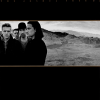
For U2’s fifth album,
The Joshua Tree, the band sought to create a cinematic quality with the recordings, one that would evoke a sense of location, such as the wide-open spaces and big sky country of the US desert, as shown on the album’s stark cover. Listening to the songs on this monster of an album, I’d say they achieved their aim. The album is packed with hit singles, including “With or Without You”, “I Still Haven’t Found What I’m Looking For” and “Where The Streets Have No Name”. The singles are mixed with darker pieces, such as “Bullet The Blue Sky”, inspired by Bono’s trip to war-torn Nicaragua and El Salvador, and the quiet “Running to Stand Still”, with it’s beautiful dobro, describing the life of a heroin-addicted couple living in a flat in Dublin.
Producer Daniel Lanois was on a roll at this time. The year before, he’d produced Peter Gabriel’s
So, and the recording sessions for
The Joshua Tree ran concurrently with his work on Robbie Robertson’s eponymous album, also released in 1987.
The Joshua Tree was primarily recorded in houses, which is a technique that Lanois would return to more than once over the next few years.
“In God’s Country” – U2
Appetite for Destruction - Guns N' Roses
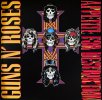
Although the album received little mainstream attention on its initial release, only gaining traction the following year after a tour and the significant airplay received by singles “Welcome to the Jungle” and “Sweet Child O’Mine” (“Paradise City” would follow in January 1989).
Nevertheless, 1987 is when it was released, and the fact that it included the aforementioned “Sweet Child O’Mine” means that I just have to claim it for this greatest of years! The song contains probably the greatest guitar riff of the 80s and one of the most memorable of all time. With Slash’s guitar and Axel Rose’s vocals, Guns N’ Roses brought a harder, grittier, more aggressive edge to rock music in the 80s.
“Sweet Child O’Mine” – Guns N’Roses
Kick – INXS
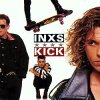
After years of working the Australian pub circuit, through the 1980s, INXS were slowly increasing their reputation as a live act to see. At the same time, they were honing a more polished dance/rock sound that made 1985’s
Listen Like Thieves such a listenable album. But they hit the motherlode with the release of
Kick in 1987. Packed with superb singles such as “Need You Tonight”, “New Sensation”, “Devil Inside” and the majestic string-laden “Never Tear Us Apart”, INXS toured the world, and scored hit singles wherever they went.
“Need You Tonight” – INXS
Diesel and Dust - Midnight Oil
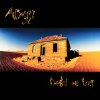
Another band that started off in Australian pubs, Midnight Oil were a different animal to INXS. Led by the 6-and-a-half-foot bald, angry Peter Garrett and fuelled by the twin guitar attack of Jim Moginie and Martin Rotsey, the band played an aggressive mix of hard rock and politics that had gained them a core following in their native country, but they were largely unknown outside of Australia.
In mid-1986, the band spent several months touring the outback alongside indigenous groups, playing to remote Aboriginal communities and seeing firsthand the seriousness of issues in health and living conditions. Whilst some journalists criticised the tour as a one-off event, Midnight Oil were galvanised by the experience and
Diesel and Dust is the result.
I love the lyrical imagery on this album, a lot of which puts you smack in the middle of the raging hot desert.
Four wheels scare the cockatoos
From Kintore, east to Yuendemu
The Western Desert lives and breathes
In forty-five degrees
In addition to the main theme of the album, there is an anti-war song, “Put Down That Weapon”, and the furious “Dreamworld”, which laments the loss of Queensland heritage.
The final track, "Gunbarrel Highway" was not included on the United States version of the album, reportedly, because the line "shit falls like rain on a world that is brown" was deemed too offensive for US audiences.
Best of all is “The Dead Heart”, recorded for the handing back ceremony of Uluru (Ayers Rock) to its traditional Aboriginal owners. Its lyrics tell the story of colonisation from an indigenous point of view, and Midnight Oil requested that all royalties from the song go to indigenous communities. This is an incredibly powerful song, with bright acoustics mixed in with something more primitive and sonorous that might be a digeridoo, and lyrics that include the stark:-
Forty thousand years can make a difference to the state of things
Diesel and Dust was named by
Rolling Stone as the best album of 1988 (the year of its US release) and the 13th greatest record of the 80s. A monumental album.
“The Dead Heart” – Midnight Oil
The Lonesome Jubilee - John Cougar Mellencamp
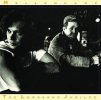
Yes, some of you knew this was coming: my favourite album of all time. I waxed lyrical when selecting this as the first album in our Album Review Club thread, so I’ll keep this relatively brief.
When the tour following his previous album,
Scarecrow, finished, Mellencamp challenged his band to pick up new instruments. He stated that he was sick of guitar solos by this stage and was searching for a new sound for his next album but at that point, didn’t realise exactly what this would be. However, the minute he heard John Cascella [accordion] and Lisa Germano [fiddle] playing together in the rehearsals for “Paper in Fire”, he knew that this was a sound people hadn’t heard before. Germano and Cascella provide the hooks and riffs that would traditionally be played by other instruments, and with their sound complemented by mandolin, banjo, dobro, dulcimer and various other instruments,
The Lonesome Jubilee had its unique flavour.
The sound on the album was a departure from Mellencamp's previous albums. As drummer Kenny Aronoff noted in his book, the band were in the fortunate position of being able to take the time in mastering the new instruments they’d picked up, to practice and experiment in John’s very own Belmont Mall studio without the record label breathing down their necks. The risk of making music counter to the mainstream of rock paid off. The album sold over 3.5 million copies and saw four singles hit the Billboard charts, two of them in the top 10.
There are many albums where musicians play the instruments that you can hear on this album, but to my knowledge none of them play 80s hooks and riffs with them, and there’s a consistency to the sound right through the ten tracks – this is the true greatness and beauty of
The Lonesome Jubilee, and I’ve never heard an album that comes close to this in its production and execution. The production and mix are flawless – there’s lots going on, but you can hear every instrument in its space.
“Paper in Fire” – John Cougar Mellencamp
Best of the Rest
My expanded list of twelve songs leaves me with five more selections.
“Heat of the Night” – Bryan Adams
Whilst just about everything he released since
Into The Fire has seen Bryan Adams slip well down in my list of favourite artists, this year he released a different album to follow up
Reckless; an album that included songs about a man at the crossroads of his life, songs about indigenous North Americans, a soldier fighting in WWI and a rebel returning home after some time away. I saw three of his shows on his tour this year and they were all superb. Both the album and the live show featured some incredible work from Adams’ longtime guitarist, Keith Scott.
It's probably worth mentioning that as part of the set-up to a trilogy of albums I’ll be covering in the Album Club, Bryan Adams’ choice of T’Pau as support artist changed the course of my life.
“Jammin’ Me” - Tom Petty & The Heartbreakers
Fresh off a tour with Bob Dylan, the maestro’s influence showed as Petty and his band released the ramshackle
Let Me Up I’ve Had Enough. The single, “Jammin’ Me”, co-written with Dylan and Heartbreakers guitarist Mike Campbell, it’s one of his best songs.
Satellite – The Hooters
One Way Home is a fabulous 80s rock/folk crossover and The Hooters even managed to reach number 22 on the UK charts with “Satellite”.
Time Stand Still – Rush
I don’t know how the other Rush fans on this thread feel about their
Hold Your Fire album – as the 80s progressed, the band started to incorporate more and more synths into their music and this year’s album was no exception. But “Time Stand Still”, featuring Aimee Mann on vocals, is one of my favourites of theirs.
“Luka” – Suzanne Vega
An upbeat, catchy song with heartbreaking lyrics on a subject rarely visited, at least in the 80s, “Luka” is a brilliantly told tale of child abuse, suffered by Suzanne Vega but taking the name of a kid who used to hang around near where she lived.
And now it’s over to the good citizens of the thread to add to my initial selection. In this year of incredible music, can you find room for Def Leppard, Fleetwood Mac, REM, Lou Gramm, Robbie Nevil, T’Pau, Heart, Cutting Crew, Debbie Gibson, Psuedo Echo, Terence Trent D’Arby, George Harrison, Aerosmith, ABC, Robbie Robertson, George Michael, Wang Chung, Tiffany, Janet Jackson and Gloria Estefan?
If not, I’ll probably stick them all in the coda.