Energy policy and the lies in the media ?

WRicko

Well-Known Member
Joined
2 Jan 2016
Messages
4,471
So given the Iran conflict right now and the impact on oil prices. We are having a lot of phone in shows media discussion etc etc about energy policy, cost of living, energy prices, net zero, green energy etc.

However what’s the truth ?

I keep hearing that green energy is more expensive. Yet isn’t it cheaper ?

I am also hearing people say that we can get more out of the North Sea yet surely that will take ages.

I am also hearing that green energy is subsides but haven’t they fallen as the costs have fallen and we have had austerity. Also doesn’t oil field decommissioning get massive tax deductions.

I don’t think there is a topic that I trust the experts / commentators less. I am fairly sure they all work for oil funded think tanks.

I cannot see what the government had to gain from getting things so wrong according to the opposite side.
 
There are a lot of lies and mistruths around renewable energy, which it is in the best interests of the fossil fuel companies to perpetuate.

The more pressing issue with energy production is the insatiable desire for more power, and an inefficient grid system. Data centres and AI have replaced heavy industry in using shit loads of power for processing and cooling.

Also, if consumers were savvy with their energy use, then we wouldn't have half the issues with energy we currently have. There are so many people where I live light their houses up like Christmas trees, and leave lights burning all night long, and then there's multiple mobile devices, routers, home networks, multiple fridges, innefficient domestic appliances...
 
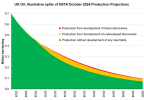
I am also hearing people say that we can get more out of the North Sea yet surely that will take ages.
The North sea has peaked. We can increase what is extracted, but it will be slow, expensive and small in quantity. And it will be sold at international prices anyway.

1773672416328.png

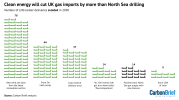
I keep hearing that green energy is more expensive. Yet isn’t it cheaper ?

It depends, but it certainly cuts dependence on unreliable fossil fuels. https://www.carbonbrief.org/analysi...-gas-imports-by-more-than-north-sea-drilling/

1773672271209.png
 
The North sea has peaked. We can increase what is extracted, but it will be slow, expensive and small in quantity. And it will be sold at international prices anyway.

View attachment 186460


It depends, but it certainly cuts dependence on unreliable fossil fuels. https://www.carbonbrief.org/analysi...-gas-imports-by-more-than-north-sea-drilling/

View attachment 186458

Well it doesn't "depend," because solar, wind energy and hydro-electric power are all free at the point of generation, and you can't get cheaper than that. Anything else requires a direct input cost (eg digging up coal or drilling for gas) to generate the power.

What is expensive, of course, is the cost of harnessing green energy and transferring it to the national grid, which is largely the cost of creating the infrastructure - building a windfarm connecting it to the grid and maintaining it afterwards is expensive, especially if the windfarm is 5 miles offshore.

But this is to compare apples and sausages. It's like saying your house costs more to heat than mine, but I'm including in that the cost of building your house in the first place.
 
Well it doesn't "depend," because solar, wind energy and hydro-electric power are all free at the point of generation, and you can't get cheaper than that.
The capital isn't free. So in terms of whether it's lower cost to build more renewables or burn more gas it definitely does depend on the investment capital, interest rate, and cost of the gas amongst other things.

But this is to compare apples and sausages. It's like saying your house costs more to heat than mine, but I'm including in that the cost of building your house in the first place.
Fully agree. There are ways to try and compare better, like levelized cost of energy (LCOE) https://en.wikipedia.org/wiki/Levelized_cost_of_electricity but even then people will argue about dispatchability etc.
 
The capital isn't free. So in terms of whether it's lower cost to build more renewables or burn more gas it definitely does depend on the investment capital, interest rate, and cost of the gas amongst other things.

The very distinction I am drawing is between the capital cost required to harness the energy, including the cost of the capital, and the unit cost once the infrastructure is in place. If you are starting from a zero base, as is often the case with green energy, inevitably the cost is higher. But the longer that infrastructure is in place, the more economic the venture becomes because the Sun shining doesn't cost anything and the wind blowing doesn't cost anything.

Part of the argument seems to me to be that our existing infrastructure is not generating enough power for our needs as it is, so before we even think about shortages of oil or LPG we need to invest in more power-generating infrastructure one way or the other anyway. Comparative capital cost become less significant when you have to spend a certain amount of money either way. It may be that building a new gas fired power station costs less than a new wind farm, but the discrepancy between the two is much less pronounced if you have to build either one or the other, and it is only one of the considerations at work anyway. Others include the impact on the environment, long term economic benefits, the advantages of energy self-sufficiency etc.

There are downsides, too, such as the aesthetic damage caused by renewable energy, as referred to by Mr Trump. Who knew he was such a fan of the view from Blakely Point?
 
The very distinction I am drawing is between the capital cost required to harness the energy, including the cost of the capital, and the unit cost once the infrastructure is in place. If you are starting from a zero base, as is often the case with green energy, inevitably the cost is higher. But the longer that infrastructure is in place, the more economic the venture becomes because the Sun shining doesn't cost anything and the wind blowing doesn't cost anything.

Part of the argument seems to me to be that our existing infrastructure is not generating enough power for our needs as it is, so before we even think about shortages of oil or LPG we need to invest in more power-generating infrastructure one way or the other anyway. Comparative capital cost become less significant when you have to spend a certain amount of money either way. It may be that building a new gas fired power station costs less than a new wind farm, but the discrepancy between the two is much less pronounced if you have to build either one or the other, and it is only one of the considerations at work anyway. Others include the impact on the environment, long term economic benefits, the advantages of energy self-sufficiency etc.

There are downsides, too, such as the aesthetic damage caused by renewable energy, as referred to by Mr Trump. Who knew he was such a fan of the view from Blakely Point?

I think we're largely in agreement (What! It'll never catch on...).

But I would say that to make the best decisions you have to quantify the relative costs; merely stating that sun and wind are free doesn't amount to a business case.

Chez Tuesday we're doing our bit, got solar installed a week ago and already averaging negative electricity bills, even in March.
 
Well it doesn't "depend," because solar, wind energy and hydro-electric power are all free at the point of generation, and you can't get cheaper than that. Anything else requires a direct input cost (eg digging up coal or drilling for gas) to generate the power.

What is expensive, of course, is the cost of harnessing green energy and transferring it to the national grid, which is largely the cost of creating the infrastructure - building a windfarm connecting it to the grid and maintaining it afterwards is expensive, especially if the windfarm is 5 miles offshore.

But this is to compare apples and sausages. It's like saying your house costs more to heat than mine, but I'm including in that the cost of building your house in the first place.
Maybe the fucking king could stop charging rental on his seabed..
 
I've been told on my electricity bills for YEARS now that all my energy come from renewables yet it still goes on increasing and I have no idea why it's linked to the wholesale GAS price???? Add in the 'green' taxes and levies and I just think we're being bled dry for no beneift to 'global warming' at all. We produce bugger all carbon in comparison to the US, India and China and it's just a piss take.
 
Last edited:
I have no idea why it's linked to the wholesale GAS price??

Explainer here.


All power suppliers bid in the market. Cheapest are allocated first, but everybody then gets the price by whatever supplier bid goes over from 99% to 100% of the demand. That supplier is almost always gas.

It's reckoned that while this sounds silly it actually overall reduces the average price by more than any other method of bidding.
 
Last edited:
We produce bugger all carbon in comparison to the US, India and China and it's just a piss take.

Global warming aside, good luck trying to persuade anyone right now we should burn more fossil fuel to reduce bills!

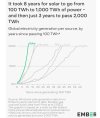
The good news is that the price of renewables generally, and solar in particular have crashed in recent years and even with battery storage are now cheaper than fossil fuels.

Solar worldwide is currently being installed faster than any energy technology in human history as a result.

1000020335.jpg
 
I was particularly disappointed when at his press conference earlier when he was asked a question by the entertainer Christopher Hope from GeeBeeBees he waffled an answer that mentioned oil markets - he should have just told the **** we can't do anything with "our" oil and it will be sold at the going rate on the appropriate markets then told him to sit the fuck down
 
So given the Iran conflict right now and the impact on oil prices. We are having a lot of phone in shows media discussion etc etc about energy policy, cost of living, energy prices, net zero, green energy etc.

However what’s the truth ?

I keep hearing that green energy is more expensive. Yet isn’t it cheaper ?

I am also hearing people say that we can get more out of the North Sea yet surely that will take ages.

I am also hearing that green energy is subsides but haven’t they fallen as the costs have fallen and we have had austerity. Also doesn’t oil field decommissioning get massive tax deductions.

I don’t think there is a topic that I trust the experts / commentators less. I am fairly sure they all work for oil funded think tanks.

I cannot see what the government had to gain from getting things so wrong according to the opposite side.
Good post and good question. One of the enefits of living in a free country is that we can all give our opinion on anything and anyone. The downside is we do not know who to believe.
 
Well it doesn't "depend," because solar, wind energy and hydro-electric power are all free at the point of generation, and you can't get cheaper than that. Anything else requires a direct input cost (eg digging up coal or drilling for gas) to generate the power.

What is expensive, of course, is the cost of harnessing green energy and transferring it to the national grid, which is largely the cost of creating the infrastructure - building a windfarm connecting it to the grid and maintaining it afterwards is expensive, especially if the windfarm is 5 miles offshore.

But this is to compare apples and sausages. It's like saying your house costs more to heat than mine, but I'm including in that the cost of building your house in the first place.

The biggest cost, at least environmentally, is batteries to store the generation. It takes about a year to be environmentally neutral per kWh of battery storage compared to gas generation. If we consider we need 60GW of storage (consumption of 350,000GW per year and approximately 60days of uninterrupted sunshine per year so 350k/60 is ~60GW) and our current gas powered stations contribute approximately 25% so it will take approximately 4-5 years to pay back the upfront environmental costs and cost around £20bn to build.

Certainly not a terrible pay back.

We know what the problem is but what I would like to see more of though is evidence to prove this is actually going to make a material difference - when the world was largely in lockdown during Covid it made little to no difference, possibly too short a period or perhaps we increased our energy consumption during that time but let’s just make sure we are doing the right thing here compared to things like carbon capture and fuel conversion - it maybe we need to do both but I don’t want us to get 10 years down the road with all our eggs in one basket.
 
I was particularly disappointed when at his press conference earlier when he was asked a question by the entertainer Christopher Hope from GeeBeeBees he waffled an answer that mentioned oil markets - he should have just told the **** we can't do anything with "our" oil and it will be sold at the going rate on the appropriate markets then told him to sit the fuck down

If there is more supply the price goes down in a normally functioning market. It’s unlikely the UK would materially impact the price but he’d look a right tit if he said that and told him to sit the fuck down.
 
Good post and good question. One of the enefits of living in a free country is that we can all give our opinion on anything and anyone. The downside is we do not know who to believe.
I think it’s worse than that tho we used to live in a country in which everyone could give an opinion tho a lot of people only stuck to stuff they knew a bit about. Then we moved to a society in which everyone had an opinion on everything but you could ignore them and now we have phone in shows etc in which everyone is an expert and even the experts don’t agree someone is lying
 
The biggest cost, at least environmentally, is batteries to store the generation. It takes about a year to be environmentally neutral per kWh of battery storage compared to gas generation. If we consider we need 60GW of storage (consumption of 350,000GW per year and approximately 60days of uninterrupted sunshine per year so 350k/60 is ~60GW) and our current gas powered stations contribute approximately 25% so it will take approximately 4-5 years to pay back the upfront environmental costs and cost around £20bn to build.

Certainly not a terrible pay back.

We know what the problem is but what I would like to see more of though is evidence to prove this is actually going to make a material difference - when the world was largely in lockdown during Covid it made little to no difference, possibly too short a period or perhaps we increased our energy consumption during that time but let’s just make sure we are doing the right thing here compared to things like carbon capture and fuel conversion - it maybe we need to do both but I don’t want us to get 10 years down the road with all our eggs in one basket.
I think you’re getting your units mixed up. You’ve quoted units of power not energy. I presume you mean GWh when you say GW?
 
On how to avoid gas setting the price of leccy... ...build more renewables.

Spain is there already.


Don't have an account? Register now and see fewer ads!

SIGN UP
Back
Top