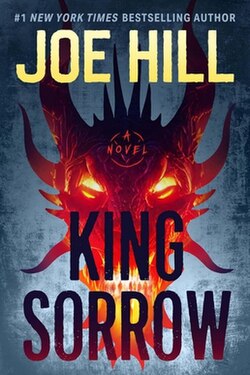
- A Lesson in Violence – Jordan Harper - 7/10
- The Silverblood Promise – James Logan 9/10
- Exiles – Jane Harper 9/10
- Palace of Shadows – Ray Celestine 6/10
- The Wager – David Grann 8/10
- Grimdark Magazine Issue #40 – 6/10
- Grimdark Magazine Issue #41 – 6/10
- The Trials of Empire – Richard Swan – 7/10
- George Harrison - Philip Norman – 8/10
- Go to War: Football on the Brink in the 80s – Jon Spurling – 8/10
- Chasing the Light - Oliver Stone – 8/10
- The Narrows – Ronald Malfi – 7/10
- The Siege – BenMacintyre – 9/10
- The Devils – Joe Abercrombie – 9/10
- The Goldfinch – Donna Tartt – 8/10

This 800+ page whopper is the reason that my last review was nearly seven weeks ago.
I came to it via one of my regular Googles: “Books similar to
The Shadow of the Wind”.
In my opinion, it is not a patch on that classic, but to be fair, the comparison in not unwarranted: both books feature a young protagonist with an obsession over a work of art.
The Goldfinch won the Pulitzer Prize for fiction in 2014, and whilst I do have a lot of issues with it, it certainly made for an interesting read.
Theo Decker and his mum are visiting a New York museum when they are caught up in a terrorist attack. His mother had just shown Theo her favourite painting,
The Goldfinch, when a bomb went off, killing her and plenty of others but leaving Theo unscathed. Theo comforts a dying man who encourages him to take the painting out of the building. This sets in motion a chain of events that will dramatically alter the course of Theo’s life.
You may be surprised by my high score, given the issues that I’m about to list, but read on to see why I think this book is so fascinating.
After a superb start, the book settles down to build its characters, but just when things are getting interesting, Theo moves to Las Vegas where he meets Boris. Boris is such an annoying character, speaking all his dialogue in an Alexander the Meerkat voice. As if that wasn’t bad enough, he goes on for pages and pages, often derailing the plot. Completing this mis-step is the fact that Theo and Boris spend 200 pages or so in Las Vegas as drug-addled teenagers. However, I will admit that this chapter sets up a couple of things further down the line.
Another thing that bugged me was that Donna Tartt seemed to spend large portions of the book ignoring the old “Show, don’t tell” maxim. For example, Theo gets involved in an art scam that might have made compelling reading, but instead of showing the reader as it happened, she just tells it after the fact! Given the length of the book, I think she could have used those pages more wisely. Finally, the book could have used a much better editor: amongst all the gold, there’s some right old rubbish in the dialogue, descriptions and seemingly never-ending chapters.
And yet, for all its faults, this book certainly has something. It makes you think, it makes you feel. I think the idea and the feelings that it evokes are brilliant, it’s just the bloated delivery that gets in the way of this being a classic.
The idea that Theo is constantly looking over his shoulder, worrying whether he’ll be caught for stealing the painting works well. Even better is his obsession with the painting and how his mother was showing it to him when the bomb went off,
The Goldfinch therefore becoming the talismanic and iconic object at the centre of his life, and when its relevance to the old man he met in the museum at the start of the book is finally revealed, this just adds another layer. The idea of chance meetings or even being in the wrong/right place at the wrong/right time, and as a result, having your fate bound to that of others is a subject that fascinates me. So, despite all its flaws, and the humongous page count,
The Goldfinch really worked for me.
If you are intrigued, and have about 30 hours to kill, this may be the book for you.