My daughter teaches at an LA school in Brum where all the pupils come from immigrant stock. She is impressed by their commitment.Fully aware that this will fall on deaf ears on here but have a look at the stats...
Manchester - no longer majority white British, with a drop of over 10% in the ten years between 2011-2021. Expected to fall significantly further by the time of the next census in 2031.
Leicester - 60% belong to ethnic minorities.
London - in 1991, the population of London was 80% white British in 2021 it was 36%. It is expected by 2031, that will have dropped significantly more.
Birmingham - dropped by 10% in 10 years. A minority white city.
English schools - White British children in English schools are dropping at a rate of 2% every 2 years, in less than 10 years it is predicted that it will drop below 50% of all students in England. There are state funded schools in England where there are NO White British children. There are nearly 500 schools where White British children make up less than 2% and 1 in 4 of ALL schools they are the minority.

You are using an out of date browser. It may not display this or other websites correctly.
You should upgrade or use an alternative browser.
You should upgrade or use an alternative browser.
Jim Ratcliffe - claims the UK is being “colonised”
- Thread starter BlueBas
- Start date
I'm With Stupid
Well-Known Member
- Joined
- 6 May 2013
- Messages
- 23,915
Also it's worth mentioning that if mixed-race people with a white parent don't count as white in the statistics, then almost by definition you're going to see more and more ethnic minority kids over time as people integrate and marry outside their racial group.
It's funny, because one of the key criticisms of ethnic minorities is that they "don't integrate" and yet the kids of those who clearly have integrated are still counted as immigrant stock when one of their parents is white British and the other is brown or black British (or an actual immigrant).
That’s a bit Savage.He's talking shit.
Colin isn't a popular name anymore
I’d never thought of that even though I have an Anglo-Indian grandson. If you really are going to classify people by ethic origin, which is a strange thing to be doing, British people should have a category called something like ‘joint’ since so many of us will be in that category eventually. Personally, I don’t see any real reason or benefit in classifying people by ethnic origin. Ethnically, I am a celt, not an Anglo Saxon, though I’m sure there is probably a mix somewhere in my forebears. Who cares?Also it's worth mentioning that if mixed-race people with a white parent don't count as white in the statistics, then almost by definition you're going to see more and more ethnic minority kids over time as people integrate and marry outside their racial group.
It's funny, because one of the key criticisms of ethnic minorities is that they "don't integrate" and yet the kids of those who clearly have integrated are still counted as immigrant stock when one of their parents is white British and the other is brown or black British (or an actual immigrant).
My grandson’s dad is of Indian origin; he was born and raised here. Thus he is a citizen, which is the only classification that counts. Actually he is a British Subject like the rest of us, not a citizen. About time we changed that too.
Last edited:
It's all frightfully dull watching the billionaires whip their peasants in to a frenzy. They'll be telling you that immigration is why public services don't work next, while they pay no UK tax and move their manufacture to the EU, extolling Brexit's countless benefits. Hopefully, the majority can see through charlatans like this.
As for stats about white-British...yawn.
Others have said it perfectly - do we have an option to choose non-white British? Divisions by ethnicity is so last century.
As for stats about white-British...yawn.
Others have said it perfectly - do we have an option to choose non-white British? Divisions by ethnicity is so last century.
Last edited:
I'm With Stupid
Well-Known Member
- Joined
- 6 May 2013
- Messages
- 23,915
It's literally the 'one-drop' rule from slavery era America. But we can't call it out as racist, of course.I’d never thought of that even though I have an Anglo-Indian grandson. If you really are going to classify people by ethic origin, which is a strange thing to be doing, British people should have a category called something like ‘joint’ since so many of us will be in that category eventually. Personally, I don’t see any real reason or benefit in classifying people by ethnic origin. Ethnically, I am a celt, not an Anglo Saxon, though I’m sure there is probably a mix somewhere in my forebears. Who cares?
My grandson’s dad is of Indian origin; he was born and raised here. Thus he is a citizen, which is the only classification that counts. Actually he is a British Subject like the rest of us, not a citizen. About time we changed that too.
Bigg Bigg Blue
Well-Known Member
I'm confused, why is everyone saying that Muslim's are great for the country yet as soon as we ( City ) are taken over by a Muslim they and their money are bad ?
Anyone explain this to me please.
This is not a dig at anyone on here but the gutter press we have in this country.
Anyone explain this to me please.
This is not a dig at anyone on here but the gutter press we have in this country.
Our press feed the racism on behalf of their paymasters.I'm confused, why is everyone saying that Muslim's are great for the country yet as soon as we ( City ) are taken over by a Muslim they and their money are bad ?
Anyone explain this to me please.
This is not a dig at anyone on here but the gutter press we have in this country.
Gulf-based owners are bad, while US hedge funds are...well, not really discussed too much.
As for the first point, immigration is utterly essential: our birthrate is now 1.4 as a nation.
There seem to be a whole host of statisticians debating population by ethnicity, yet I have no idea why skin colour would be a factor in making a 'judgement'. Across the globe, most ethnicities will become more and more mixed and our census data will need to adapt
lefty goldblatt
Well-Known Member
- Joined
- 1 Jul 2012
- Messages
- 7,281

We've got Guardiola
Well-Known Member
- Joined
- 26 Aug 2025
- Messages
- 387
- Team supported
- Manchester City
I wouldn't trust ChatGPT on this. It says we had high fertility rates and yes we did but birth rates have collapsed and they have continued to collapse over the centuries. Of course death rates fell too but that gets into age demographics and not children. People living into their 70s or beyond does not equate to adding to the population, it merely sustains it.So I was intrigued and asked AI if you were correct. Seems not:
Short answer: no, that claim is largely false and mixes a few facts with big misunderstandings.
Let’s break it down carefully.
1. UK population growth: the numbers
So the headline growth (roughly 4× over the 19th century) is broadly correct.
- c.1800: ~10–11 million
- c.1900: ~38–41 million
2. Did this happen despite falling birth rates?
No. This is the biggest error in the claim.
What actually happened:
- Birth rates were high throughout most of the 19th century
- Fertility only started to decline meaningfully after ~1870
- The early and mid-1800s had very large families (often 5–7 children)
What changed early on was death rates, not birth rates.
Why population exploded:
- Dramatic falls in infant and child mortality
- Better nutrition (agricultural revolution)
- Clean water and sanitation (later 1800s)
- Vaccination and basic public health
When births stay high and deaths fall, population surges.
This is a textbook example of the demographic transition model.
3. Was immigration the main driver of growth?
No. Not even close.
- Net immigration to the UK in the 19th century was small
- In fact, the UK experienced net emigration:
- Millions left for the US, Canada, Australia, New Zealand
- Even including Irish migration, natural increase dwarfed migration
4. “Virtually nobody’s ancestors lived here 200 years ago”
This is flatly wrong.
Yes, Britain has always had some migration (Romans, Anglo-Saxons, Normans, etc.), but:
- Parish records, censuses, and genealogical data show deep continuity
- The vast majority of people in Britain in 1900:
- Were descended from people living in Britain in 1700, 1600, and earlier
- Large-scale population replacement did not occur
View attachment 183516
- Those events were many centuries earlier
- By 1800, the population was overwhelmingly stable and locally rooted
If we had no immigration driver behind population change at all then how has the percentage of foreign born people increased by 500% over 200 years? I suppose this didn't change too much until the mid 1900's but it has since accelerated rapidly in tandem with a historic low birth rate so at somepoint it became the absolute prime driver.
There is a very strong argument that had we not taken this and future immigration then otherwise the population would be facing total collapse today. And businesses can't get the people that they need now, what would it be like in a Reform zero migration strategy? An economic apocalypse is the answer because you cannot do anything without young people.
So again, forgive me if I'm not bothered about seeing ethnic minority groups filling our schools, it's because those groups are the ones having children. If we are bothered about demographics then we should vote in parties who want to help young couples and help families and Reform/Tories do not fit into this bracket. We also need a cultural shift in whether people decide to have families because I'm 37 and I know many people my age just aren't bothering.
How can a Reform voter moan about school demographics and then vote in a party that will destroy the family economy when it's already in tatters? They've already said that they'll reinstate the two child benefit cap and use that money to give back 5p savings on a pint. It's ridiculous.


Last edited:
I think it’s is the old British Empire view that all Arabs were out to cheat you and their word could not be trusted.I'm confused, why is everyone saying that Muslim's are great for the country yet as soon as we ( City ) are taken over by a Muslim they and their money are bad ?
Anyone explain this to me please.
This is not a dig at anyone on here but the gutter press we have in this country.
bluethrunthru
Well-Known Member
Zahawi - the only multi-millionaire who seemingly doesn't own a mirror

 www.lbc.co.uk
Man Utd boss Sir Jim Ratcliffe is right on immigration and UK is being 'colonised,' claims Reform UK’s Nadhim Zahawi | LBC
Sir Jim Ratcliffe said the country has been "colonised" by immigrants.
www.lbc.co.uk
meltonblue
Well-Known Member
- Joined
- 14 May 2013
- Messages
- 8,956
I'm confused, why is everyone saying that Muslim's are great for the country yet as soon as we ( City ) are taken over by a Muslim they and their money are bad ?
Anyone explain this to me please.
This is not a dig at anyone on here but the gutter press we have in this country.
I have never seen anyone in the press criticise our owners purely for being Muslim to be fair.
Was going to post the 1 drop rule but you beat meIt's literally the 'one-drop' rule from slavery era America. But we can't call it out as racist, of course.
stonerblue
Well-Known Member
Caveman.Fully aware that this will fall on deaf ears on here but have a look at the stats...
Manchester - no longer majority white British, with a drop of over 10% in the ten years between 2011-2021. Expected to fall significantly further by the time of the next census in 2031.
Leicester - 60% belong to ethnic minorities.
London - in 1991, the population of London was 80% white British in 2021 it was 36%. It is expected by 2031, that will have dropped significantly more.
Birmingham - dropped by 10% in 10 years. A minority white city.
English schools - White British children in English schools are dropping at a rate of 2% every 2 years, in less than 10 years it is predicted that it will drop below 50% of all students in England. There are state funded schools in England where there are NO White British children. There are nearly 500 schools where White British children make up less than 2% and 1 in 4 of ALL schools they are the minority.
Why does the colour of someone's skin bother you so much?
The Light Was Yellow Sir
Well-Known Member
I do enjoy the 'we should look after our own' and 'we should be helping veterans, the deserving poor and the homeless' soundbites, as if Nigels first priority upon throwing everyone out will be looking after the hoi polloi...Ratcliffe wants you to vote Reform, as he will get his backhander via lobbying. Not daft these rich people, trying to get the masses on board.
Will be interesting to see how his comments work out, and if those masses are willing to throw away their freedoms in search of their utopia.
SWP's back
Well-Known Member
- Joined
- 29 Jun 2009
- Messages
- 91,426
Birth rates a total fucking misnomer when infant mortality rates also dropped. I presume by your posts you’re more than intelligent enough to be well aware of this so must question why you continue to labour an absolutely bollocks post.I wouldn't trust ChatGPT on this. It says we had high fertility rates and yes we did but birth rates have collapsed and they have continued to collapse over the centuries. Of course death rates fell too but that gets into age demographics and not children. People living into their 70s or beyond does not equate to adding to the population, it merely sustains it.
If we had no immigration driver behind population change at all then how has the percentage of foreign born people increased by 500% over 200 years? I suppose this didn't change too much until the mid 1900's but it has since accelerated rapidly in tandem with a historic low birth rate so at somepoint it became the absolute prime driver.
There is a very strong argument that had we not taken this and future immigration then otherwise the population would be facing total collapse today. And businesses can't get the people that they need now, what would it be like in a Reform zero migration strategy? An economic apocalypse is the answer because you cannot do anything without young people.
So again, forgive me if I'm not bothered about seeing ethnic minority groups filling our schools, it's because those groups are the ones having children. If we are bothered about demographics then we should vote in parties who want to help young couples and help families and Reform/Tories do not fit into this bracket. We also need a cultural shift in whether people decide to have families because I'm 37 and I know many people my age just aren't bothering.
How can a Reform voter moan about school demographics and then vote in a party that will destroy the family economy when it's already in tatters? They've already said that they'll reinstate the two child benefit cap and use that money to give back 5p savings on a pint. It's ridiculous.
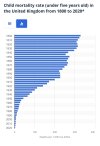
Graphs below.
stonerblue
Well-Known Member
I checked by looking out of the window.
SWP's back
Well-Known Member
- Joined
- 29 Jun 2009
- Messages
- 91,426

And a lot of the CofE schools have large numbers of children of other faiths. 50 years ago the CofE school in Spitalfields (Brick Lane) was 100% Muslim pupils. And a lot of churches are viable only because of Christian immigrants.There have been jewish schools in England since 1657. There has always been catholic schools, CofE schools,