He is on the flight logs but not to Epstein's island. Allegedly only between Palm Beach and an airport in New Jersey. Doesn't seem there is a smoking gun in the flight logs.He's on the flight logs.

You are using an out of date browser. It may not display this or other websites correctly.
You should upgrade or use an alternative browser.
You should upgrade or use an alternative browser.
President Trump
- Thread starter Brightwell’s left peg
- Start date
Hardly. If these Christian Nationalists in the US claim to be "evangelical" then discovering the will of God (number 10) should depend on the word of God (1 to 9).All those seem perfectly reasonable, until you get to number 10, which is the ultimate “get out of jail free” card, which allows you to make up your own, personally convenient, interpretation on what gods will is and renders ever single “teaching” irrelevant. All religions have it and it allows you blithly ignore, or put down to “faith” anything you can’t, or don’t want to, understand, or accept.
BobKowalski
Well-Known Member
- Joined
- 17 May 2007
- Messages
- 21,511
Good for Obama then, no? :) its his underlings who lied under oath who might get some serious time.
Nah, because if the GOP go down that route, then they will be next when the boot is on the other foot. The trick to persecuting your political opponents is making sure the other side never get the chance to fuck you back, and if the Conservative right manage to ensure they rule forever then your country is dead.
But, hey, if you want to torch everything to the ground to protect a sexual predator then knock yourselves out. It’s your funeral.
And no doubt Farage welcomes Trump's saying "Nigel is a friend of mine" (but not enough to get invited to the inauguration).Khan will be delighted he said it tbh.
D
D
Deleted member 89841
Guest
There I go again refusing to fall-down and worship the Orange Calf by remembering Trump's complaints this week that Gaza's starving people are ungrateful for not promising to suck his fucking micro-dick as thanks for a handful of dry rice. Trump even complained that their failure to say thanks made him feel bad. No parody. Literally true.
MAGA: "That's our guy!"
Trump Bible, Gospel of Luke, 12:20-9.
"Jesus sat down and began to speak, saying, Amen Amen I say to you, if you feed the starving just enough to keep them dying slowly, you do My Will and the Will of Him who sent me, and if a starving man does not thank you, attack them and their children and their swaddling infants and sucking babes as ungrateful wretches that have hurt your feelings and made you feel bad about yourself. Verily I say unto you, the poor are poor because God has refused to bless them and He has refused to bless them because they are poor."
The translation of the Trump Bible (pub. Shanghai Port, China 2024) from the original languages is thanks to a generous and America First Christian donation from the Foundation For a Better Prosperity Gospel.
MAGA: "That's our guy!"
Trump Bible, Gospel of Luke, 12:20-9.
"Jesus sat down and began to speak, saying, Amen Amen I say to you, if you feed the starving just enough to keep them dying slowly, you do My Will and the Will of Him who sent me, and if a starving man does not thank you, attack them and their children and their swaddling infants and sucking babes as ungrateful wretches that have hurt your feelings and made you feel bad about yourself. Verily I say unto you, the poor are poor because God has refused to bless them and He has refused to bless them because they are poor."
The translation of the Trump Bible (pub. Shanghai Port, China 2024) from the original languages is thanks to a generous and America First Christian donation from the Foundation For a Better Prosperity Gospel.
BobKowalski
Well-Known Member
- Joined
- 17 May 2007
- Messages
- 21,511
He is on the flight logs but not to Epstein's island. Allegedly only between Palm Beach and an airport in New Jersey. Doesn't seem there is a smoking gun in the flight logs.
You need to brush up on your conspiracy skills. Absence of information is confirmation that it happened. That’s how a conspiracy thrives.
BobKowalski
Well-Known Member
- Joined
- 17 May 2007
- Messages
- 21,511
There I go again refusing to fall-down and worship the Orange Calf by remembering Trump's complaints this week that Gaza's starving people are ungrateful for not promising to suck his fucking micro-dick as thanks for a handful of dry rice. Trump even complained that their failure to say thanks made him feel bad. No parody. Literally true.
MAGA: "That's our guy!"
Trump Bible, Gospel of Luke, 12:20-9.
"Jesus sat down and began to speak, saying, Amen Amen I say to you, if you feed the starving just enough to keep them dying slowly, you do My Will and the Will of Him who sent me, and if a starving man does not thank you, attack them and their children and their swaddling infants and sucking babes as ungrateful wretches that have hurt your feelings and made you feel bad about yourself. Verily I say unto you, the poor are poor because God has refused to bless them and He has refused to bless them because they are poor."
The translation of the Trump Bible (pub. Shanghai Port, China 2024) from the original languages is thanks to a generous and America First Christian donation from the Foundation For a Better Prosperity Gospel.
Very good. Captures the essence of the man perfectly.
BobKowalski
Well-Known Member
- Joined
- 17 May 2007
- Messages
- 21,511
And no doubt Farage welcomes Trump's saying "Nigel is a friend of mine" (but not enough to get invited to the inauguration).
This is why @Hertzblue is riding to Trump’s rescue. Our foreign overlords must be protected :)
roman totale
Well-Known Member
That’s entirely my point - they reverse-engineer everything. They decide what “will” is acceptable to them, then look up the (often minor, obscure and taken out of context) bits in the scripture to support that and ignore everything else. If there was no directive to have “faith” in the will of an unknowable being, this wouldn’t be open to them.Hardly. If these Christian Nationalists in the US claim to be "evangelical" then discovering the will of God (number 10) should depend on the word of God (1 to 9).
D
D
Deleted member 89841
Guest
Perhaps MAGA could explain 2016 Trump's remark "It's time for our country to move on to bigger and better things."
Is there something here unworthy of Trump's - or the countries - attention? Why in 2016 does Trump want the country to move on from information the Russians were actually operating to the Democrats disadvantage?
Trump wants to move on to "bigger and better things", is information that Russia is engaging in nefarious activities not big enough, not really a big deal?
Why would Donald Trump want to "move on"?
Why would Donald Trump want the whole country to "move on" BEFORE he has been "updated on the facts of this situation"?
Move on...before the facts are in. Weird eh?
It's almost as weird as Trump declaring American Citizens guilty, demanding jail, without any trial, or even indictments, or any sort of due process whatsoever. Not quite as weird as the genius Donald Trump being 100% fooled by his long time friend Jeff. Poor Trump. He had no idea. It was just a dispute over employees that caused the rift. That explains why Trump just wanted everyone to move on from the Epstein issue. As he himself said, "it's boring." He's just thinking about us folks, he doesn't want to waste our time.
Were Obama's actions against Russia in 2016 merely a smokescreen to hide his own wicked deeds directed at Trump whose only crime is loving America too much?
The Obama administration hit back against Russia today. It says Russia hacked into politically sensitive networks to help Donald Trump in the 2016 presidential election. For that, the U.S. is imposing new sanctions, expelling 35 Russians and closing two Russian compounds in the U.S. President Obama says all Americans should be alarmed by Russia's actions.
President-elect Donald Trump responded. He said this. It's time for our country to move on to bigger and better things. Nevertheless, in the interest of our country and its great people, I will meet with leaders of the intelligence community next week in order to be updated on the facts of this situation.
SHAPIRO: Give us more details about the Obama administration's actions today.
NORTHAM: Well, you know, it's a sweeping response. Not only is the U.S. targeting true Russian intelligence services and several of its operatives, it's also going after companies that provide material support for those services. These measures are for alleged Russian interference in the presidential election - you know, hacking the Democratic National Committee emails, among others, and that.
But beyond that, the administration says it's punishing Russia for stepping up harassment of U.S. diplomats in Russia. And that includes being physically assaulted and having diplomats' personal details divulged on Russian TV - that type of thing. And so the U.S. is also expelling three dozen Russias - Russians that it says are actually intelligence officials operating here in the U.S.
SHAPIRO: Now, President Obama has said for some time that the U.S. will retaliate in some way against Russia. And he's said that some of that retaliation may be Republicans, some may not. Is there any evidence that the U.S. may plan to stage cyberattacks against Russia in response to the hacks?
NORTHAM: Well, President Obama said in a statement that today's actions are not the sum total of the administration's response to Russia's actions and that the U.S. will continue to take a variety of measures at a time and place of its choosing. But Obama said some of that will not be publicized. So you run the risk of a tit for tat between the two nations. I just want to say, though, that U.S. officials said today that Russia has been engaged in a decades-long campaign of cyber-hacking and that there's no reason to believe it's going to change its ways. And, in fact, the Kremlin has already said that there would be appropriate retaliation for the sanctions.
SHAPIRO: Of course, President Obama is on his way out. President-elect Trump - on his way in, who's been much friendlier-sounding to Russia. Could he reverse these measures?
NORTHAM: These measures are part of an executive order by President Obama and can certainly be undone by when President-elect Trump takes office. But U.S. officials said that would present a direct threat to U.S. national security.
SHAPIRO: NPR's Jackie Northam, thank you.
NORTHAM: Thank you so much.
Is there something here unworthy of Trump's - or the countries - attention? Why in 2016 does Trump want the country to move on from information the Russians were actually operating to the Democrats disadvantage?
Trump wants to move on to "bigger and better things", is information that Russia is engaging in nefarious activities not big enough, not really a big deal?
Why would Donald Trump want to "move on"?
Why would Donald Trump want the whole country to "move on" BEFORE he has been "updated on the facts of this situation"?
Move on...before the facts are in. Weird eh?
It's almost as weird as Trump declaring American Citizens guilty, demanding jail, without any trial, or even indictments, or any sort of due process whatsoever. Not quite as weird as the genius Donald Trump being 100% fooled by his long time friend Jeff. Poor Trump. He had no idea. It was just a dispute over employees that caused the rift. That explains why Trump just wanted everyone to move on from the Epstein issue. As he himself said, "it's boring." He's just thinking about us folks, he doesn't want to waste our time.
Were Obama's actions against Russia in 2016 merely a smokescreen to hide his own wicked deeds directed at Trump whose only crime is loving America too much?
The Obama administration hit back against Russia today. It says Russia hacked into politically sensitive networks to help Donald Trump in the 2016 presidential election. For that, the U.S. is imposing new sanctions, expelling 35 Russians and closing two Russian compounds in the U.S. President Obama says all Americans should be alarmed by Russia's actions.
President-elect Donald Trump responded. He said this. It's time for our country to move on to bigger and better things. Nevertheless, in the interest of our country and its great people, I will meet with leaders of the intelligence community next week in order to be updated on the facts of this situation.
SHAPIRO: Give us more details about the Obama administration's actions today.
NORTHAM: Well, you know, it's a sweeping response. Not only is the U.S. targeting true Russian intelligence services and several of its operatives, it's also going after companies that provide material support for those services. These measures are for alleged Russian interference in the presidential election - you know, hacking the Democratic National Committee emails, among others, and that.
But beyond that, the administration says it's punishing Russia for stepping up harassment of U.S. diplomats in Russia. And that includes being physically assaulted and having diplomats' personal details divulged on Russian TV - that type of thing. And so the U.S. is also expelling three dozen Russias - Russians that it says are actually intelligence officials operating here in the U.S.
SHAPIRO: Now, President Obama has said for some time that the U.S. will retaliate in some way against Russia. And he's said that some of that retaliation may be Republicans, some may not. Is there any evidence that the U.S. may plan to stage cyberattacks against Russia in response to the hacks?
NORTHAM: Well, President Obama said in a statement that today's actions are not the sum total of the administration's response to Russia's actions and that the U.S. will continue to take a variety of measures at a time and place of its choosing. But Obama said some of that will not be publicized. So you run the risk of a tit for tat between the two nations. I just want to say, though, that U.S. officials said today that Russia has been engaged in a decades-long campaign of cyber-hacking and that there's no reason to believe it's going to change its ways. And, in fact, the Kremlin has already said that there would be appropriate retaliation for the sanctions.
SHAPIRO: Of course, President Obama is on his way out. President-elect Trump - on his way in, who's been much friendlier-sounding to Russia. Could he reverse these measures?
NORTHAM: These measures are part of an executive order by President Obama and can certainly be undone by when President-elect Trump takes office. But U.S. officials said that would present a direct threat to U.S. national security.
SHAPIRO: NPR's Jackie Northam, thank you.
NORTHAM: Thank you so much.
Riding to his rescue , fuck off Bob.This is why @Hertzblue is riding to Trump’s rescue. Our foreign overlords must be protected :)
For what it's worth my opinion is that he will have a whole wardrobe full of skeletons from his long time association with Epstein, why wouldn't he have ? when has Trump ever demonstrated any probity ?
That said, the only flight logs that mention Trump are between Palm Beach and New Jersey , no Island . Sorry that dent fit with your narrative.
bluethrunthru
Well-Known Member
Absolutely, and Trump nailed it with what he said about Khan
So thats the Khan the 3 times Elected Mayor of London - a city that in a Time Out international survey has been voted Best City in the World for 10 years running ? That kind of nailed it? Give your head a wobble and stop watching GB News - don't know you but I bet you don't live in London
Trevor Morley's Tache
Well-Known Member
You need to brush up on your conspiracy skills. Absence of information is confirmation that it happened. That’s how a conspiracy thrives.
Whether Trump ever went to the peado's island, the publicly available flight logs still show that Trump had a closer relationship with Epstein despite what Trump wants us to believe.
Witness testimony from an Epstein victim puts Trump in Epstein’s New York townhouse in 1995, and that Trump believed the girl in question was 16 years old. She claims Epstein said to Trump that '"this girl isn't for you". She said she felt very uncomfortable in his presence and it ultimately led her to go to the New York City police department in 1996.
Trump is (or was) 100% in the Epstein files, and whatever it is isn't good.
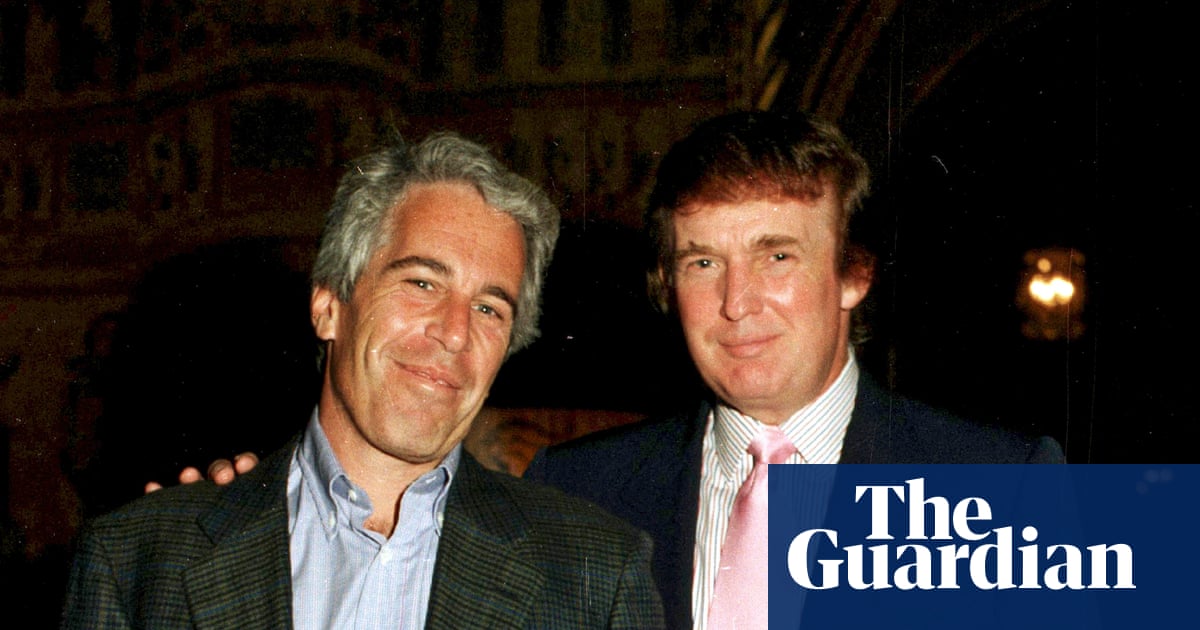
Jeffrey Epstein accuser urged FBI to investigate Trump decades ago – report
Maria Farmer accused Epstein and Maxwell of sexual crimes in 1996, and identified Trump as worthy of attention
 www.theguardian.com
Trevor Morley's Tache
Well-Known Member
The GOP have a history with peadophiles.Nah, because if the GOP go down that route, then they will be next when the boot is on the other foot. The trick to persecuting your political opponents is making sure the other side never get the chance to fuck you back, and if the Conservative right manage to ensure they rule forever then your country is dead.
But, hey, if you want to torch everything to the ground to protect a sexual predator then knock yourselves out. It’s your funeral.
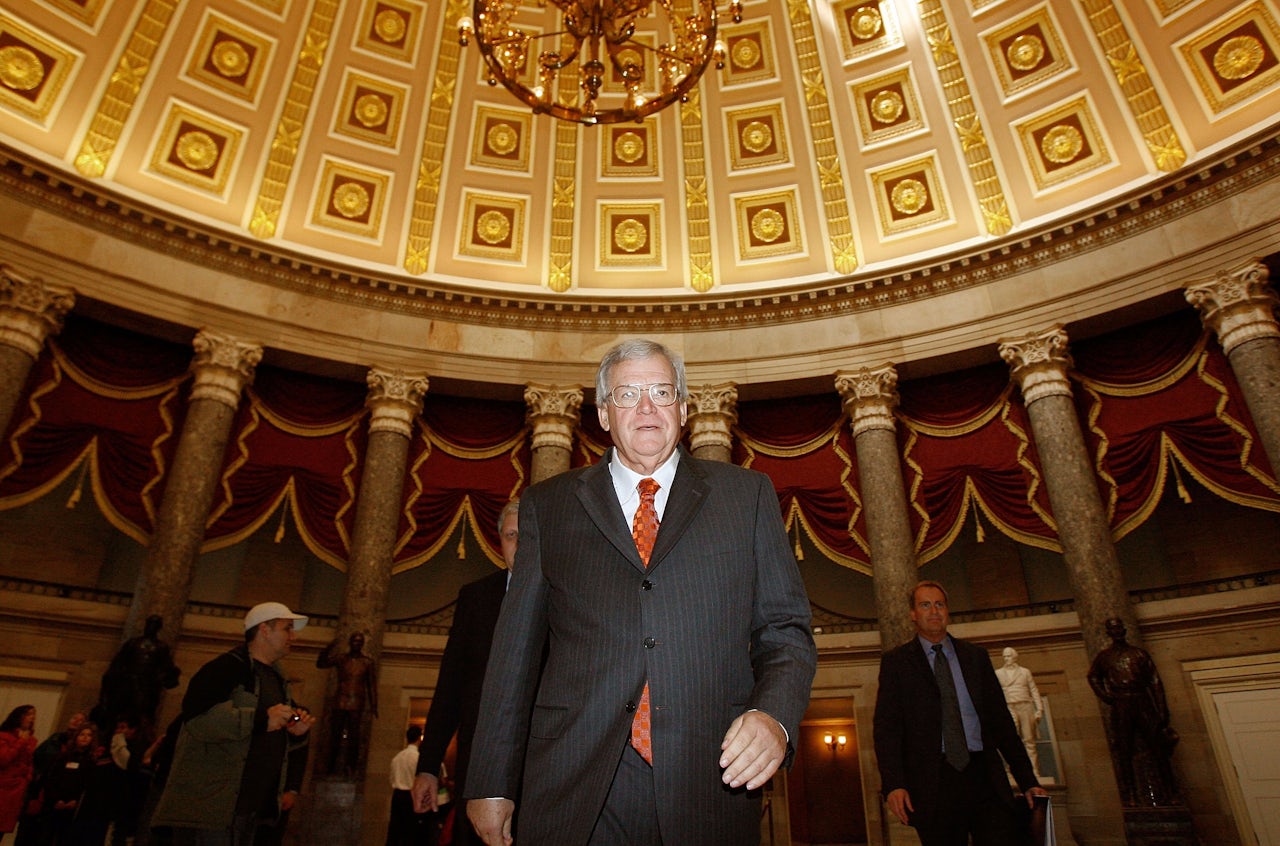
Congress’s forgotten pedophile
Former Speaker of the House Dennis Hastert was a celebrated politician — and a serial child molester.
 theoutline.com
D
D
Deleted member 89841
Guest
Sorry about the length.
Take Home:
Trump's U.S. attorney for the Central District of California filed felony cases against at least 38 people for alleged misconduct in June over ICE / Border Patrol protests, the grand jury flat rejected 31 of them. Apparently, this is not the first time. There's only one reason this is happening, the grand juries, drawn from the same Federal jurisdiction where the alleged offenses took place, know lying shite when they see it. It's that bad. The standard for a grand jury is only "probable cause". This failure rate is unprecedented.
MAGA: "UNPRECEDENTED! Trump wins again! He can't stop winning. He really is the best."
The rest of the story...
On May 26th 2021 CNN’s senior legal analyst and former federal prosecutor Elie Honig mentioned the following in a background piece outlining the basics of a US [Federal] Grand Jury:
It is a one-sided presentation; it’s only the prosecutor, the grand jurors, and a court reporter. There’s no judge, there’s no defense lawyer. So it is extremely one-sided; you hear this expression ‘the grand jury would indict a ham sandwich’ there’s some truth to that; it’s not an adversarial process like you’d have at trial.
and the origin of the 'ham sandwich' reference is mentioned in Wikipedia's Grand Juries in the United States; Rubber Stamp for the Prosecution:
Worth repeating:
"...a former federal district judge in Chicago, noted: "[T]oday, the grand jury is the total captive of the prosecutor who, if he is candid, will concede that he can indict anybody, at any time, for almost anything, before any grand jury."
Grand juries don't operate on a preponderance of the evidence standard, and certainly not beyond a reasonable. The sole evidentiary standard in a grand jury proceeding is the lower "probable cause" standard. Likewise, lots of evidence which would not be admissible in a criminal trial is admissible in a grand jury proceeding. The main kind of evidence not admissible in a grand jury proceeding is evidence which is "privileged" against court disclosure.
Pepperidge Farm remembers MAGA complaining bitterly that the January 6th tourists could not get a fair shake in D.C. (Article III of the Constitution requires defendants to be tried in the venue they committed their crimes] because D.C. is 95% Democrat-voting, thus the jury pool is, for that reason, "tainted."
MAGA has yet to realize, that Trump's / Ratcliffe's / Gabbard's accusations require Obama et al to be tried in Washington. We aren't even going to get to the bit were Obama's lawyers depose Marco Rubio, Richard Burr, Lindsay Graham, John Ratcliffe, Tulsi Gabbard. Trump may or may not be immune for this of that whatever the point is that if Trump is immune, he cannot plead the 5th. Oh well.
This smells like rebellion in the face of Trumpian lies and attacks on substantive and procedural due process. Can't have that spreading.

 www.commondreams.org
The Los Angeles Times reports that Bill Essayli, who was appointed by U.S. Attorney General Pam Bondi earlier this year to serve as the U.S. attorney for the Central District of California, recently became "irate" and could be heard "screaming" at prosecutors in the federal courthouse in downtown Los Angeles when a grand jury declined to indict an anti-ICE protester who had been targeted for potential felony charges.
And according to the LA Times' reporting, this failure to secure an indictment against demonstrators was far from a one-off.
"Although his office filed felony cases against at least 38 people for alleged misconduct that either took place during last month's protests or near the sites of immigration raids, many have been dismissed or reduced to misdemeanor charges," the paper writes. "In total, he has secured only seven indictments, which usually need to be obtained no later than 21 days after the filing of a criminal complaint. Three other cases have been resolved via plea deal."
It is incredibly rare for prosecutors to fail to secure indictments from grand juries, which only require a determination that there is "probable cause" to believe a suspect committed a crime and which do not hear arguments from opposing counsels during proceedings.
Meghan Blanco, a former federal prosecutor and current defense attorney representing one of the anti-ICE protesters currently facing charges, told the LA Times that there's a simple reason that grand juries aren't pulling the trigger on indictments: Namely, prosecutors' cases are full of holes.
In one case, Blanco said she obtained video evidence that directly contradicted a sworn statement from a Border Patrol officer who alleged that her client had obstructed efforts to chase down a suspect who assaulted him. When she presented this video at her client's first court hearing, charges against him were promptly dropped.
"The agent lied and said he was in hot pursuit of a person who punched him," Blanco explained. "The entirety of the affidavit is false."
One anonymous prosecutor who spoke with the LA Times similarly said that ICE agents have been losing credibility when their actions and statements are put under a legal microscope.
"There are a lot of hotheaded [Customs and Border Protection] officers who are kind of arresting first and asking questions later," they said. "We're finding there's not probable cause to support it."
Aaron Reichlin-Melnick, senior fellow at the American Immigration Council, was floored by the failures to secure indictments against the anti-ICE demonstrators.
"Incredible," he wrote on social media website X. "Federal prosecutors are seeing many cases of people accused of assaulting Border Patrol agents being turned down by grand juries! Los Angeles federal prosecutors are privately saying it's because CBP agents are just 'arresting first and asking questions later.'"
Rep. Ted Lieu (D-Calif.) similarly bashed prosecutors for using easily discredited statements from ICE officers to secure indictments.
"I'm a former prosecutor and can confirm that any prosecutor can get a grand jury to indict a ham sandwich," he wrote. "Except the top prosecutor in L.A. Why? Because this article points out ICE AGENTS ARE MAKING SHIT UP. You want your agents respected? Tell them to stop lying."
In other news, yesterday, Mike Gordon, who prosecuted dozens of peaceful Trump tourists who just got lost on Jan 6th, says he was fired from his position without warning or cause – despite receiving the highest possible performance reviews from the DOJ just two days before his termination. Gordon is now suing the Trump administration, noting in his lawsuit that he “was fired on the same day as two other Assistant U.S. attorneys who had previously worked on the prosecution of January 6th defendants, indicating that Mr. Gordon’s termination was retaliation for prosecutions that were perceived as politically-affiliated.”
Take Home:
Trump's U.S. attorney for the Central District of California filed felony cases against at least 38 people for alleged misconduct in June over ICE / Border Patrol protests, the grand jury flat rejected 31 of them. Apparently, this is not the first time. There's only one reason this is happening, the grand juries, drawn from the same Federal jurisdiction where the alleged offenses took place, know lying shite when they see it. It's that bad. The standard for a grand jury is only "probable cause". This failure rate is unprecedented.
MAGA: "UNPRECEDENTED! Trump wins again! He can't stop winning. He really is the best."
The rest of the story...
On May 26th 2021 CNN’s senior legal analyst and former federal prosecutor Elie Honig mentioned the following in a background piece outlining the basics of a US [Federal] Grand Jury:
It is a one-sided presentation; it’s only the prosecutor, the grand jurors, and a court reporter. There’s no judge, there’s no defense lawyer. So it is extremely one-sided; you hear this expression ‘the grand jury would indict a ham sandwich’ there’s some truth to that; it’s not an adversarial process like you’d have at trial.
and the origin of the 'ham sandwich' reference is mentioned in Wikipedia's Grand Juries in the United States; Rubber Stamp for the Prosecution:
[...]Grand jurors also often lack the ability and knowledge to judge sophisticated cases and complicated federal laws. This puts them at the mercy of very well trained and experienced federal prosecutors. Grand jurors often hear only the prosecutor's side of the case and are usually persuaded by them. Grand juries almost always indict people on the prosecutor's recommendation. An unnamed Rochester defense lawyer was quoted in a 1979 newspaper article claiming that a prosecutor could get a grand jury to "indict a ham sandwich", a saying subsequently repeated by the chief judge of New York State's highest court, Sol Wachtler. And William J. Campbell, a former federal district judge in Chicago, noted: "[T]oday, the grand jury is the total captive of the prosecutor who, if he is candid, will concede that he can indict anybody, at any time, for almost anything, before any grand jury."
Worth repeating:
"...a former federal district judge in Chicago, noted: "[T]oday, the grand jury is the total captive of the prosecutor who, if he is candid, will concede that he can indict anybody, at any time, for almost anything, before any grand jury."
Grand juries don't operate on a preponderance of the evidence standard, and certainly not beyond a reasonable. The sole evidentiary standard in a grand jury proceeding is the lower "probable cause" standard. Likewise, lots of evidence which would not be admissible in a criminal trial is admissible in a grand jury proceeding. The main kind of evidence not admissible in a grand jury proceeding is evidence which is "privileged" against court disclosure.
Pepperidge Farm remembers MAGA complaining bitterly that the January 6th tourists could not get a fair shake in D.C. (Article III of the Constitution requires defendants to be tried in the venue they committed their crimes] because D.C. is 95% Democrat-voting, thus the jury pool is, for that reason, "tainted."
MAGA has yet to realize, that Trump's / Ratcliffe's / Gabbard's accusations require Obama et al to be tried in Washington. We aren't even going to get to the bit were Obama's lawyers depose Marco Rubio, Richard Burr, Lindsay Graham, John Ratcliffe, Tulsi Gabbard. Trump may or may not be immune for this of that whatever the point is that if Trump is immune, he cannot plead the 5th. Oh well.
This smells like rebellion in the face of Trumpian lies and attacks on substantive and procedural due process. Can't have that spreading.
Trump Official 'Irate' After Grand Juries Refuse to Indict LA Anti-ICE Protesters: Report | Common Dreams
Trump appointee struggles to indict LA protesters. Anti-ICE demonstrators evade felony charges in ongoing legal battles.
www.commondreams.org
The Los Angeles Times reports that Bill Essayli, who was appointed by U.S. Attorney General Pam Bondi earlier this year to serve as the U.S. attorney for the Central District of California, recently became "irate" and could be heard "screaming" at prosecutors in the federal courthouse in downtown Los Angeles when a grand jury declined to indict an anti-ICE protester who had been targeted for potential felony charges.
And according to the LA Times' reporting, this failure to secure an indictment against demonstrators was far from a one-off.
"Although his office filed felony cases against at least 38 people for alleged misconduct that either took place during last month's protests or near the sites of immigration raids, many have been dismissed or reduced to misdemeanor charges," the paper writes. "In total, he has secured only seven indictments, which usually need to be obtained no later than 21 days after the filing of a criminal complaint. Three other cases have been resolved via plea deal."
It is incredibly rare for prosecutors to fail to secure indictments from grand juries, which only require a determination that there is "probable cause" to believe a suspect committed a crime and which do not hear arguments from opposing counsels during proceedings.
Meghan Blanco, a former federal prosecutor and current defense attorney representing one of the anti-ICE protesters currently facing charges, told the LA Times that there's a simple reason that grand juries aren't pulling the trigger on indictments: Namely, prosecutors' cases are full of holes.
In one case, Blanco said she obtained video evidence that directly contradicted a sworn statement from a Border Patrol officer who alleged that her client had obstructed efforts to chase down a suspect who assaulted him. When she presented this video at her client's first court hearing, charges against him were promptly dropped.
"The agent lied and said he was in hot pursuit of a person who punched him," Blanco explained. "The entirety of the affidavit is false."
One anonymous prosecutor who spoke with the LA Times similarly said that ICE agents have been losing credibility when their actions and statements are put under a legal microscope.
"There are a lot of hotheaded [Customs and Border Protection] officers who are kind of arresting first and asking questions later," they said. "We're finding there's not probable cause to support it."
Aaron Reichlin-Melnick, senior fellow at the American Immigration Council, was floored by the failures to secure indictments against the anti-ICE demonstrators.
"Incredible," he wrote on social media website X. "Federal prosecutors are seeing many cases of people accused of assaulting Border Patrol agents being turned down by grand juries! Los Angeles federal prosecutors are privately saying it's because CBP agents are just 'arresting first and asking questions later.'"
Rep. Ted Lieu (D-Calif.) similarly bashed prosecutors for using easily discredited statements from ICE officers to secure indictments.
"I'm a former prosecutor and can confirm that any prosecutor can get a grand jury to indict a ham sandwich," he wrote. "Except the top prosecutor in L.A. Why? Because this article points out ICE AGENTS ARE MAKING SHIT UP. You want your agents respected? Tell them to stop lying."
In other news, yesterday, Mike Gordon, who prosecuted dozens of peaceful Trump tourists who just got lost on Jan 6th, says he was fired from his position without warning or cause – despite receiving the highest possible performance reviews from the DOJ just two days before his termination. Gordon is now suing the Trump administration, noting in his lawsuit that he “was fired on the same day as two other Assistant U.S. attorneys who had previously worked on the prosecution of January 6th defendants, indicating that Mr. Gordon’s termination was retaliation for prosecutions that were perceived as politically-affiliated.”
D
D
Deleted member 89841
Guest
Here's some more on the breakdown of indictments, these were the serious ones: "out of nine 'assault' and 'impeding' felony cases the Justice Department filed immediately after the start of the protests and promoted by the attorney general, Pam Bondi, prosecutors dismissed seven.
Right, this is actually serious. We have 9 felony assault cases. Assault on Ice and Border Patrol agents.
Ha ha ha not only are grand jurors saying fuck off after presentation of indictments (31 out of 38), Trump's professional MAGA prosecutors are voluntarily dismissing their own cases based on a lack of probable cause ha ha ha the cops are making evidence up and lying on affadavits so Trump's DOJ are dismissing cases. PEAK MAGA!
I can't wait for Trump to blame this on Obama, or tell everyone it's not interesting, move on.
Right, this is actually serious. We have 9 felony assault cases. Assault on Ice and Border Patrol agents.
Ha ha ha not only are grand jurors saying fuck off after presentation of indictments (31 out of 38), Trump's professional MAGA prosecutors are voluntarily dismissing their own cases based on a lack of probable cause ha ha ha the cops are making evidence up and lying on affadavits so Trump's DOJ are dismissing cases. PEAK MAGA!
I can't wait for Trump to blame this on Obama, or tell everyone it's not interesting, move on.
D
D
Deleted member 89841
Guest
I asked my MAGA 8 Ball when Trump the savvy genius NY business man was going to sue Elon over his Epstein comment.
It accused me of being un-American.
I'm pleased Trump has finally cleared up the fog around why he split with his great friend and neighbor Jeff. For the longest time MAGA claimed it was because Epstein did something "creepy". Just last week the White House said exactly that. They did so love the vagueness of that one. Got a lot of mileage. Just a suggestion of something "off" without laying Trump open to questions of his actual knowledge of his great friends sex trafficking ring.
Now we find the public break-up was just a couple of billionaire ego-maniacs who like being around teenage girls disagreeing about what is "appropriate" and "inappropriate" in hiring and retaining quality employees. Ho hum. That's that. Trump was right, it is boring. Nothing to see.
We can't even see Trump's deep shame at being taken for a ride, taken for a total and utter fucking moron clueless deaf blind irrational monkey-brained low-IQ mark Trump got 100% conned and played by Epstein & Maxwell poor Donnie Two Dolls how embarrassing lol.
Yeah, i'm not buying it either.
MAGA: "It's my patriotic and Christian duty to stop asking questions about America's greatest ever public liar and his actual knowledge of Epstein and Maxwell's activities. For the greater good, Hail Trump!"
It accused me of being un-American.
I'm pleased Trump has finally cleared up the fog around why he split with his great friend and neighbor Jeff. For the longest time MAGA claimed it was because Epstein did something "creepy". Just last week the White House said exactly that. They did so love the vagueness of that one. Got a lot of mileage. Just a suggestion of something "off" without laying Trump open to questions of his actual knowledge of his great friends sex trafficking ring.
Now we find the public break-up was just a couple of billionaire ego-maniacs who like being around teenage girls disagreeing about what is "appropriate" and "inappropriate" in hiring and retaining quality employees. Ho hum. That's that. Trump was right, it is boring. Nothing to see.
We can't even see Trump's deep shame at being taken for a ride, taken for a total and utter fucking moron clueless deaf blind irrational monkey-brained low-IQ mark Trump got 100% conned and played by Epstein & Maxwell poor Donnie Two Dolls how embarrassing lol.
Yeah, i'm not buying it either.
MAGA: "It's my patriotic and Christian duty to stop asking questions about America's greatest ever public liar and his actual knowledge of Epstein and Maxwell's activities. For the greater good, Hail Trump!"
Last edited by a moderator:
maxwellblue
Well-Known Member
No it didn't. All my post said was that Tru,mp's observations of Khan were spot on. Nothing more.No but your post inferred it which is why I framed my response as a question not a statement. The fact you’re not denying it speaks volumes.
maxwellblue
Well-Known Member
Yeah, he's done wonders for the place. Knife crime through the roof, 2 out of every 5 mobile phone thefts across Europe are in London. Ridiculous clean air zone.So thats the Khan the 3 times Elected Mayor of London - a city that in a Time Out international survey has been voted Best City in the World for 10 years running ? That kind of nailed it? Give your head a wobble and stop watching GB News - don't know you but I bet you don't live in London
I don't live in Beruit either but I know I wouldn't want to live there.