Millwallawayveteran1988
Well-Known Member
- Joined
- 23 Sep 2010
- Messages
- 42,355
Seems to be ramping up a notch this now. Attacking a Nuclear Plant is just incredibly irresponsible. Who knows what could be next.

I see we have some people who are willing to resist Putin to their last Ukrainian.
I've served my time, and if I was younger and abled bodied, I would take up your offer.There you go mate. £8 return to Poland then you and cross into Ukraine. Happy to give you a lift to the airport!

Cheap Flights to Poland from £13 in 2026 | Skyscanner
Find cheap flights to Poland from £13. Compare every airline, find the best time to fly, and the best route, all with no added fees.www.skyscanner.net
Maybe not. Plenty football clubs and mansions though
So do the Ukrainian’s their choice I’d have thought ?I see we have some people who are willing to resist Putin to their last Ukrainian.
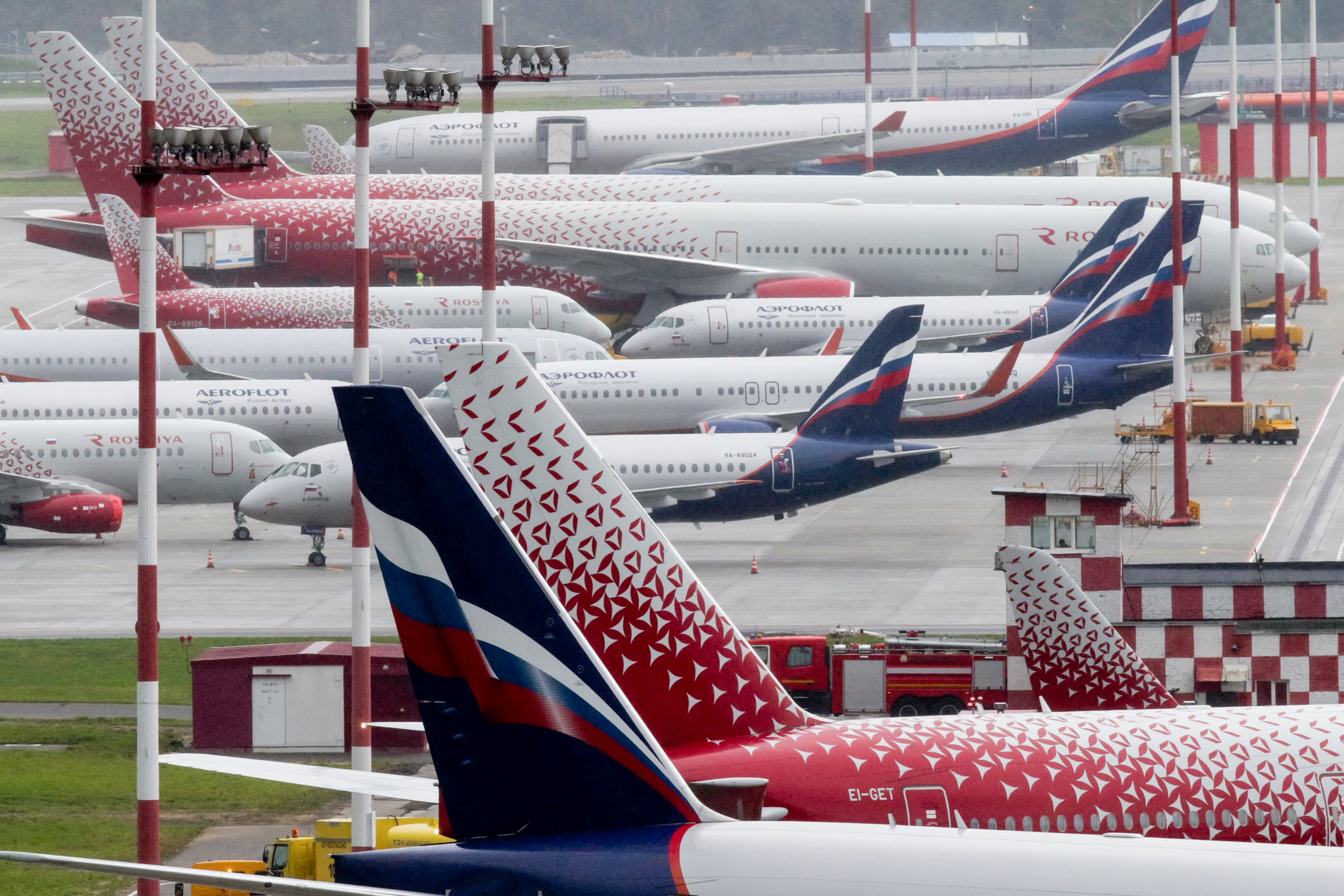
 www.cnbc.com
RECENT developments in Ukraine have shocked and devastated people across the globe and posed a significant obstacle to all those around the world who fight for peace.
Anti-war activists and people’s movements have, for the past few months, attempted to expose how the United States and Nato have contributed to increasing tensions in Russia and Ukraine.
Many mainstream analyses of the situation today seek to undercut the historic role of Nato and the US and shift the blame solely to Russia.
Long-time anti-war activist Brian Becker of the ANSWER Coalition (Act Now to Stop War and End Racism) joined film-maker and anti-imperialist Abby Martin of The Empire Files in a thorough discussion on the context and historical background of Nato and the crisis in Ukraine.
Martin and Becker, peace activists who organise in the “belly of the beast,” the United States, aimed to help provide the anti-war movement with the necessary information to win over the global working class towards the side of peace.
Martin oriented the discussion with the key questions of: “How did we get here? Where do we go from here? And what do we need to know as people in this movement who oppose war and want to call for peace?”
What led to this conflict?
Becker, who has been an activist against war since the US war against Vietnam, began the discussion by providing important historical context.
When the Soviet Union existed, the power of the coalition of socialist countries was able to counterbalance the power of the imperialist camp, led by the United States.
This equilibrium hinged on a key piece: the nuclear armament of both the Soviet Union and the US.
Neither world power could win a war against the other, as each possessed catastrophically destructive weapons.
As Becker said, “That doesn’t mean that there weren’t wars … There was the Vietnam war, the Korean war. You could go on and on, but there wasn’t sort of a repeat of World War I or II, where in the case of World War II, 100 million human beings were killed in a matter of five or six years, and the whole existing world order was basically shattered and left in ruins by 1945.”
However, after the Soviet Union dissolved in 1991, the United States’ foreign policy dramatically shifted.
“The United States policymakers, starting in 1991, established what eventually became the neocon[servative] consensus position that the United States would be able to exercise unipolar authority over the rest of the world,” Becker stated.
The North Atlantic Treaty Organisation (Nato), formed by imperialist powers after WWII to stop the spread of world socialism, did not disband after the fall of the socialist camp.
Instead, Nato expanded into former Soviet republics in eastern Europe, which presented acute security concerns to the newly capitalist Russian Federation.
This expansion came despite the assurances by the US to the USSR that “not an inch of Nato’s present military jurisdiction will spread in an eastern direction.”
Nato did not stop at expanding eastward. Without the counterbalance of the Soviet Union, the US and Nato decided to “destroy all of the governments whose origin was rooted in the anti-colonial projects of the post-WWII era, the countries that had looked at the socialist camp even if they weren’t part of it, they looked to it for military, economic and diplomatic support,” as Becker described.
These countries included Iraq, Libya, and Syria, all of which the US and Nato attacked.
Although Russia did not intervene during the pillaging and destruction of Iraq and Libya, finally the Federation did step in when the United States was determined to overthrow the Assad government in Syria.
As Becker describes it, the Russian forces, Syrian Arab Army and Hezbollah were able to “turn the tide” against the US offensive.
In this context, the one red line that the Russian Federation has consistently held is that Ukraine must not join Nato. As Becker put it, Russia is firm in its conviction that “the Black Sea naval base that Russia has in Crimea, which is their biggest base, is not going to be a Nato base with nuclear weapons against Russia.”
However, the US government, which as Becker described, is “addicted to war,” has seemed determined to cross this line in the sand.
The United States supported the 2014 coup against Ukrainian president Viktor Yanukovych, in which openly identified fascists seized power in Ukraine after months of protest.
These fascists in Ukraine wanted the country to join Nato, because they knew that the United States would support them if they did.
As Becker pointed out, “The United States government policy isn’t historically an anti-fascist policy when it comes to foreign policy.
“I mean, the US will work with any force, including the most right-wing fascist forces … So the fascists know the US is willing to play ball with fascism as long as they do America’s bidding.”
Since the 2014 coup, the political power of the fascists in Ukraine has waned. However, the United States and Nato have since then consistently imported weapons into Ukraine, including to the Ukrainian forces fighting the Russian-backed separatists in Donetsk and Lugansk.
Abby Martin described: “The toppling of the government didn’t mark the end of the violence … for people who are living in these disputed regions, which was Donetsk and Lugansk that Donbass is central to, that fighting never stopped.”
According to Becker, weapons sales from the US and Nato to Ukraine make Ukraine a de facto member of Nato, “from the point of view of the Russian government,” violating Russia’s stated concern and “red line” that Ukraine should not join the alliance.
Why did Russia decide to invade Ukraine?
“The Putin government in Russia has decided that the era of appeasement with the West has ended, and they’re going to use military force to recreate a buffer zone for what they think is necessary for Russian security,” Becker delineated as the reason behind Putin’s invasion.
Martin corroborated: “It’s about Russia stepping in and saying, we’re not going to f*cking take this any more.”
Russian President Vladmir Putin, in an address on February 21, gave several justifications for the invasion of Ukraine.
One key reason was the “denazification” of Ukraine, in which, in 2014, fascists seized power.
However, as Martin warns, “I think it’s important to not reflexively take the PR of a huge capitalist country.”
The influence of the fascist elements in the Ukrainian state has waned considerably. Becker states: “Ukraine in the main is not Nazi … in the 2019 parliamentary elections, the political forces who formed a united right bloc, which are the fascist forces, they got about 2.1 per cent of the vote.”
As Becker explained, the true purpose of the Russian invasion is for Russia to signal to the US and Nato that “the appeasement has ended” in terms of allowing Nato influence to inch closer and closer to Russian territory.
However, while these are valid security concerns, both Martin and Becker agree that the invasion should be condemned.
The invasion is a disaster to both the Ukrainian and Russian population, who under the Soviet Union, were “one people … working together against fascism.”
Why is the US fuelling conflict in Ukraine?
At the root of the current conflict in Ukraine is the escalation in tensions on the part of the US and Nato.
Nato has consistently chosen to escalate and attempt to move closer to Russian territory, despite not allowing Russia to join Nato itself.
As Becker described, “if [the Russian Federation] had been admitted into the imperialist club, they would have been glad to join at a certain point.”
Martin added that Russia “would have [joined Nato] if they were invited.” If this is the case, why did the United States not allow Russia, a powerful capitalist country, to peacefully join Nato? Why choose confrontation instead?
Becker argued that “if the United States treats Russia as an equal because it’s now a capitalist-led country, then Germany and other countries in Europe will gravitate in the direction of Russia.
“They are the natural trading partners and political partners, especially Germany.”
The central reason to the US taking an antagonistic, rather than co-operative, approach to capitalist Russia is that “the US fears the loss of its hegemony” in Europe.
The United States has consistently chosen the escalation of conflict, choices which have led to the devastating invasion of Ukraine.
What is the solution?
A central demand of the US anti-war movement has been to “disband Nato.” “[Nato] is not an anti-fascist alliance, it’s an anti-communist, anti-socialist, anti-worker alliance,” Becker states, articulating, “Nato is foundationally an offensive military alliance.
“It was designed to stop the spread of socialism. It was designed to make western Europe basically under the complete subjugation of American imperialism.”
As an offensive alliance, Nato does not stop conflict, only fuels it, as can be seen in places like Libya, Iraq and Syria.
If any country does not play by the US and Nato’s rules, “the Americans view that as an existential threat because it’s like the mafia. They say: ‘Well, if this country can show that it’s neutral, that it’s independent, that it’s not following the empire, that might suggest to others that they too could be independent.’”
However, even if Nato is disbanded and US hegemony ends, a multipolar world is not necessarily the solution.
Becker explained: “We had a multipolar world all the way up until WWII. What did it bring us? The multipolar world brought us WWI, the multipolar world brought us WWII.”
“The only solution is not multipolarity. The only solution is socialism … it’s a system that doesn’t require war because it’s not based on competition. It’s based on human co-operation between people at home and people all over the world.”
How do we prepare for what’s next?
As an anti-war activist, Becker offers advice for the peace movement. Becker is the director of the ANSWER Coalition, which was founded three days after the September 11 attacks in order to oppose the US drive for war.
Initially, people in the US responded with disdain. According to him, “at first people spat upon us. I mean, we were really isolated.”
But, he added: “Over time, that dissipates … Over time, people will see that what we’re saying is actually true, even though at the moment it’s going to be very, very hard. So we have to stick to our principles. We have to look for opportunities to do public education against war and militarism.”
Becker articulated that it is important for the anti-war left to “win the battle of ideas” against media and government propaganda that is advocating for war.
“The war danger, which emanates from here in the United States, is premised on the justification and rationale provided to the American people by the Establishment and echoed by the media.”
According to Becker, if anti-war activists dedicate themselves to winning over the US working class, the likelihood of an even more devastating confrontation will decrease.
He added: “By winning working class and poor people over to our side, by carrying out that kind of political education, we build a mighty force that can actually make change.”
Taken from the Morning Star.
RECENT developments in Ukraine have shocked and devastated people across the globe and posed a significant obstacle to all those around the world who fight for peace.
Anti-war activists and people’s movements have, for the past few months, attempted to expose how the United States and Nato have contributed to increasing tensions in Russia and Ukraine.
Many mainstream analyses of the situation today seek to undercut the historic role of Nato and the US and shift the blame solely to Russia.
Long-time anti-war activist Brian Becker of the ANSWER Coalition (Act Now to Stop War and End Racism) joined film-maker and anti-imperialist Abby Martin of The Empire Files in a thorough discussion on the context and historical background of Nato and the crisis in Ukraine.
Martin and Becker, peace activists who organise in the “belly of the beast,” the United States, aimed to help provide the anti-war movement with the necessary information to win over the global working class towards the side of peace.
Martin oriented the discussion with the key questions of: “How did we get here? Where do we go from here? And what do we need to know as people in this movement who oppose war and want to call for peace?”
What led to this conflict?
Becker, who has been an activist against war since the US war against Vietnam, began the discussion by providing important historical context.
When the Soviet Union existed, the power of the coalition of socialist countries was able to counterbalance the power of the imperialist camp, led by the United States.
This equilibrium hinged on a key piece: the nuclear armament of both the Soviet Union and the US.
Neither world power could win a war against the other, as each possessed catastrophically destructive weapons.
As Becker said, “That doesn’t mean that there weren’t wars … There was the Vietnam war, the Korean war. You could go on and on, but there wasn’t sort of a repeat of World War I or II, where in the case of World War II, 100 million human beings were killed in a matter of five or six years, and the whole existing world order was basically shattered and left in ruins by 1945.”
However, after the Soviet Union dissolved in 1991, the United States’ foreign policy dramatically shifted.
“The United States policymakers, starting in 1991, established what eventually became the neocon[servative] consensus position that the United States would be able to exercise unipolar authority over the rest of the world,” Becker stated.
The North Atlantic Treaty Organisation (Nato), formed by imperialist powers after WWII to stop the spread of world socialism, did not disband after the fall of the socialist camp.
Instead, Nato expanded into former Soviet republics in eastern Europe, which presented acute security concerns to the newly capitalist Russian Federation.
This expansion came despite the assurances by the US to the USSR that “not an inch of Nato’s present military jurisdiction will spread in an eastern direction.”
Nato did not stop at expanding eastward. Without the counterbalance of the Soviet Union, the US and Nato decided to “destroy all of the governments whose origin was rooted in the anti-colonial projects of the post-WWII era, the countries that had looked at the socialist camp even if they weren’t part of it, they looked to it for military, economic and diplomatic support,” as Becker described.
These countries included Iraq, Libya, and Syria, all of which the US and Nato attacked.
Although Russia did not intervene during the pillaging and destruction of Iraq and Libya, finally the Federation did step in when the United States was determined to overthrow the Assad government in Syria.
As Becker describes it, the Russian forces, Syrian Arab Army and Hezbollah were able to “turn the tide” against the US offensive.
In this context, the one red line that the Russian Federation has consistently held is that Ukraine must not join Nato. As Becker put it, Russia is firm in its conviction that “the Black Sea naval base that Russia has in Crimea, which is their biggest base, is not going to be a Nato base with nuclear weapons against Russia.”
However, the US government, which as Becker described, is “addicted to war,” has seemed determined to cross this line in the sand.
The United States supported the 2014 coup against Ukrainian president Viktor Yanukovych, in which openly identified fascists seized power in Ukraine after months of protest.
These fascists in Ukraine wanted the country to join Nato, because they knew that the United States would support them if they did.
As Becker pointed out, “The United States government policy isn’t historically an anti-fascist policy when it comes to foreign policy.
“I mean, the US will work with any force, including the most right-wing fascist forces … So the fascists know the US is willing to play ball with fascism as long as they do America’s bidding.”
Since the 2014 coup, the political power of the fascists in Ukraine has waned. However, the United States and Nato have since then consistently imported weapons into Ukraine, including to the Ukrainian forces fighting the Russian-backed separatists in Donetsk and Lugansk.
Abby Martin described: “The toppling of the government didn’t mark the end of the violence … for people who are living in these disputed regions, which was Donetsk and Lugansk that Donbass is central to, that fighting never stopped.”
According to Becker, weapons sales from the US and Nato to Ukraine make Ukraine a de facto member of Nato, “from the point of view of the Russian government,” violating Russia’s stated concern and “red line” that Ukraine should not join the alliance.
Why did Russia decide to invade Ukraine?
“The Putin government in Russia has decided that the era of appeasement with the West has ended, and they’re going to use military force to recreate a buffer zone for what they think is necessary for Russian security,” Becker delineated as the reason behind Putin’s invasion.
Martin corroborated: “It’s about Russia stepping in and saying, we’re not going to f*cking take this any more.”
Russian President Vladmir Putin, in an address on February 21, gave several justifications for the invasion of Ukraine.
One key reason was the “denazification” of Ukraine, in which, in 2014, fascists seized power.
However, as Martin warns, “I think it’s important to not reflexively take the PR of a huge capitalist country.”
The influence of the fascist elements in the Ukrainian state has waned considerably. Becker states: “Ukraine in the main is not Nazi … in the 2019 parliamentary elections, the political forces who formed a united right bloc, which are the fascist forces, they got about 2.1 per cent of the vote.”
As Becker explained, the true purpose of the Russian invasion is for Russia to signal to the US and Nato that “the appeasement has ended” in terms of allowing Nato influence to inch closer and closer to Russian territory.
However, while these are valid security concerns, both Martin and Becker agree that the invasion should be condemned.
The invasion is a disaster to both the Ukrainian and Russian population, who under the Soviet Union, were “one people … working together against fascism.”
Why is the US fuelling conflict in Ukraine?
At the root of the current conflict in Ukraine is the escalation in tensions on the part of the US and Nato.
Nato has consistently chosen to escalate and attempt to move closer to Russian territory, despite not allowing Russia to join Nato itself.
As Becker described, “if [the Russian Federation] had been admitted into the imperialist club, they would have been glad to join at a certain point.”
Martin added that Russia “would have [joined Nato] if they were invited.” If this is the case, why did the United States not allow Russia, a powerful capitalist country, to peacefully join Nato? Why choose confrontation instead?
Becker argued that “if the United States treats Russia as an equal because it’s now a capitalist-led country, then Germany and other countries in Europe will gravitate in the direction of Russia.
“They are the natural trading partners and political partners, especially Germany.”
The central reason to the US taking an antagonistic, rather than co-operative, approach to capitalist Russia is that “the US fears the loss of its hegemony” in Europe.
The United States has consistently chosen the escalation of conflict, choices which have led to the devastating invasion of Ukraine.
What is the solution?
A central demand of the US anti-war movement has been to “disband Nato.” “[Nato] is not an anti-fascist alliance, it’s an anti-communist, anti-socialist, anti-worker alliance,” Becker states, articulating, “Nato is foundationally an offensive military alliance.
“It was designed to stop the spread of socialism. It was designed to make western Europe basically under the complete subjugation of American imperialism.”
As an offensive alliance, Nato does not stop conflict, only fuels it, as can be seen in places like Libya, Iraq and Syria.
If any country does not play by the US and Nato’s rules, “the Americans view that as an existential threat because it’s like the mafia. They say: ‘Well, if this country can show that it’s neutral, that it’s independent, that it’s not following the empire, that might suggest to others that they too could be independent.’”
However, even if Nato is disbanded and US hegemony ends, a multipolar world is not necessarily the solution.
Becker explained: “We had a multipolar world all the way up until WWII. What did it bring us? The multipolar world brought us WWI, the multipolar world brought us WWII.”
“The only solution is not multipolarity. The only solution is socialism … it’s a system that doesn’t require war because it’s not based on competition. It’s based on human co-operation between people at home and people all over the world.”
How do we prepare for what’s next?
As an anti-war activist, Becker offers advice for the peace movement. Becker is the director of the ANSWER Coalition, which was founded three days after the September 11 attacks in order to oppose the US drive for war.
Initially, people in the US responded with disdain. According to him, “at first people spat upon us. I mean, we were really isolated.”
But, he added: “Over time, that dissipates … Over time, people will see that what we’re saying is actually true, even though at the moment it’s going to be very, very hard. So we have to stick to our principles. We have to look for opportunities to do public education against war and militarism.”
Becker articulated that it is important for the anti-war left to “win the battle of ideas” against media and government propaganda that is advocating for war.
“The war danger, which emanates from here in the United States, is premised on the justification and rationale provided to the American people by the Establishment and echoed by the media.”
According to Becker, if anti-war activists dedicate themselves to winning over the US working class, the likelihood of an even more devastating confrontation will decrease.
He added: “By winning working class and poor people over to our side, by carrying out that kind of political education, we build a mighty force that can actually make change.”
Taken from the Morning Star.
Oh Rasc :(RECENT developments in Ukraine have shocked and devastated people across the globe and posed a significant obstacle to all those around the world who fight for peace.
Anti-war activists and people’s movements have, for the past few months, attempted to expose how the United States and Nato have contributed to increasing tensions in Russia and Ukraine.
Many mainstream analyses of the situation today seek to undercut the historic role of Nato and the US and shift the blame solely to Russia.
Long-time anti-war activist Brian Becker of the ANSWER Coalition (Act Now to Stop War and End Racism) joined film-maker and anti-imperialist Abby Martin of The Empire Files in a thorough discussion on the context and historical background of Nato and the crisis in Ukraine.
Martin and Becker, peace activists who organise in the “belly of the beast,” the United States, aimed to help provide the anti-war movement with the necessary information to win over the global working class towards the side of peace.
Martin oriented the discussion with the key questions of: “How did we get here? Where do we go from here? And what do we need to know as people in this movement who oppose war and want to call for peace?”
What led to this conflict?
Becker, who has been an activist against war since the US war against Vietnam, began the discussion by providing important historical context.
When the Soviet Union existed, the power of the coalition of socialist countries was able to counterbalance the power of the imperialist camp, led by the United States.
This equilibrium hinged on a key piece: the nuclear armament of both the Soviet Union and the US.
Neither world power could win a war against the other, as each possessed catastrophically destructive weapons.
As Becker said, “That doesn’t mean that there weren’t wars … There was the Vietnam war, the Korean war. You could go on and on, but there wasn’t sort of a repeat of World War I or II, where in the case of World War II, 100 million human beings were killed in a matter of five or six years, and the whole existing world order was basically shattered and left in ruins by 1945.”
However, after the Soviet Union dissolved in 1991, the United States’ foreign policy dramatically shifted.
“The United States policymakers, starting in 1991, established what eventually became the neocon[servative] consensus position that the United States would be able to exercise unipolar authority over the rest of the world,” Becker stated.
The North Atlantic Treaty Organisation (Nato), formed by imperialist powers after WWII to stop the spread of world socialism, did not disband after the fall of the socialist camp.
Instead, Nato expanded into former Soviet republics in eastern Europe, which presented acute security concerns to the newly capitalist Russian Federation.
This expansion came despite the assurances by the US to the USSR that “not an inch of Nato’s present military jurisdiction will spread in an eastern direction.”
Nato did not stop at expanding eastward. Without the counterbalance of the Soviet Union, the US and Nato decided to “destroy all of the governments whose origin was rooted in the anti-colonial projects of the post-WWII era, the countries that had looked at the socialist camp even if they weren’t part of it, they looked to it for military, economic and diplomatic support,” as Becker described.
These countries included Iraq, Libya, and Syria, all of which the US and Nato attacked.
Although Russia did not intervene during the pillaging and destruction of Iraq and Libya, finally the Federation did step in when the United States was determined to overthrow the Assad government in Syria.
As Becker describes it, the Russian forces, Syrian Arab Army and Hezbollah were able to “turn the tide” against the US offensive.
In this context, the one red line that the Russian Federation has consistently held is that Ukraine must not join Nato. As Becker put it, Russia is firm in its conviction that “the Black Sea naval base that Russia has in Crimea, which is their biggest base, is not going to be a Nato base with nuclear weapons against Russia.”
However, the US government, which as Becker described, is “addicted to war,” has seemed determined to cross this line in the sand.
The United States supported the 2014 coup against Ukrainian president Viktor Yanukovych, in which openly identified fascists seized power in Ukraine after months of protest.
These fascists in Ukraine wanted the country to join Nato, because they knew that the United States would support them if they did.
As Becker pointed out, “The United States government policy isn’t historically an anti-fascist policy when it comes to foreign policy.
“I mean, the US will work with any force, including the most right-wing fascist forces … So the fascists know the US is willing to play ball with fascism as long as they do America’s bidding.”
Since the 2014 coup, the political power of the fascists in Ukraine has waned. However, the United States and Nato have since then consistently imported weapons into Ukraine, including to the Ukrainian forces fighting the Russian-backed separatists in Donetsk and Lugansk.
Abby Martin described: “The toppling of the government didn’t mark the end of the violence … for people who are living in these disputed regions, which was Donetsk and Lugansk that Donbass is central to, that fighting never stopped.”
According to Becker, weapons sales from the US and Nato to Ukraine make Ukraine a de facto member of Nato, “from the point of view of the Russian government,” violating Russia’s stated concern and “red line” that Ukraine should not join the alliance.
Why did Russia decide to invade Ukraine?
“The Putin government in Russia has decided that the era of appeasement with the West has ended, and they’re going to use military force to recreate a buffer zone for what they think is necessary for Russian security,” Becker delineated as the reason behind Putin’s invasion.
Martin corroborated: “It’s about Russia stepping in and saying, we’re not going to f*cking take this any more.”
Russian President Vladmir Putin, in an address on February 21, gave several justifications for the invasion of Ukraine.
One key reason was the “denazification” of Ukraine, in which, in 2014, fascists seized power.
However, as Martin warns, “I think it’s important to not reflexively take the PR of a huge capitalist country.”
The influence of the fascist elements in the Ukrainian state has waned considerably. Becker states: “Ukraine in the main is not Nazi … in the 2019 parliamentary elections, the political forces who formed a united right bloc, which are the fascist forces, they got about 2.1 per cent of the vote.”
As Becker explained, the true purpose of the Russian invasion is for Russia to signal to the US and Nato that “the appeasement has ended” in terms of allowing Nato influence to inch closer and closer to Russian territory.
However, while these are valid security concerns, both Martin and Becker agree that the invasion should be condemned.
The invasion is a disaster to both the Ukrainian and Russian population, who under the Soviet Union, were “one people … working together against fascism.”
Why is the US fuelling conflict in Ukraine?
At the root of the current conflict in Ukraine is the escalation in tensions on the part of the US and Nato.
Nato has consistently chosen to escalate and attempt to move closer to Russian territory, despite not allowing Russia to join Nato itself.
As Becker described, “if [the Russian Federation] had been admitted into the imperialist club, they would have been glad to join at a certain point.”
Martin added that Russia “would have [joined Nato] if they were invited.” If this is the case, why did the United States not allow Russia, a powerful capitalist country, to peacefully join Nato? Why choose confrontation instead?
Becker argued that “if the United States treats Russia as an equal because it’s now a capitalist-led country, then Germany and other countries in Europe will gravitate in the direction of Russia.
“They are the natural trading partners and political partners, especially Germany.”
The central reason to the US taking an antagonistic, rather than co-operative, approach to capitalist Russia is that “the US fears the loss of its hegemony” in Europe.
The United States has consistently chosen the escalation of conflict, choices which have led to the devastating invasion of Ukraine.
What is the solution?
A central demand of the US anti-war movement has been to “disband Nato.” “[Nato] is not an anti-fascist alliance, it’s an anti-communist, anti-socialist, anti-worker alliance,” Becker states, articulating, “Nato is foundationally an offensive military alliance.
“It was designed to stop the spread of socialism. It was designed to make western Europe basically under the complete subjugation of American imperialism.”
As an offensive alliance, Nato does not stop conflict, only fuels it, as can be seen in places like Libya, Iraq and Syria.
If any country does not play by the US and Nato’s rules, “the Americans view that as an existential threat because it’s like the mafia. They say: ‘Well, if this country can show that it’s neutral, that it’s independent, that it’s not following the empire, that might suggest to others that they too could be independent.’”
However, even if Nato is disbanded and US hegemony ends, a multipolar world is not necessarily the solution.
Becker explained: “We had a multipolar world all the way up until WWII. What did it bring us? The multipolar world brought us WWI, the multipolar world brought us WWII.”
“The only solution is not multipolarity. The only solution is socialism … it’s a system that doesn’t require war because it’s not based on competition. It’s based on human co-operation between people at home and people all over the world.”
How do we prepare for what’s next?
As an anti-war activist, Becker offers advice for the peace movement. Becker is the director of the ANSWER Coalition, which was founded three days after the September 11 attacks in order to oppose the US drive for war.
Initially, people in the US responded with disdain. According to him, “at first people spat upon us. I mean, we were really isolated.”
But, he added: “Over time, that dissipates … Over time, people will see that what we’re saying is actually true, even though at the moment it’s going to be very, very hard. So we have to stick to our principles. We have to look for opportunities to do public education against war and militarism.”
Becker articulated that it is important for the anti-war left to “win the battle of ideas” against media and government propaganda that is advocating for war.
“The war danger, which emanates from here in the United States, is premised on the justification and rationale provided to the American people by the Establishment and echoed by the media.”
According to Becker, if anti-war activists dedicate themselves to winning over the US working class, the likelihood of an even more devastating confrontation will decrease.
He added: “By winning working class and poor people over to our side, by carrying out that kind of political education, we build a mighty force that can actually make change.”
Taken from the Morning Star.
I'm well aware of that Octavian. I was obviously speaking in general terms.It won’t be Biden or Putin.
It will be some sort of high ranking military commanders I imagine.
They’ll be able to instantly calm down the other side if something is spotted out of the ordinary.
You’ve totally lost the plot posting that nonsense.RECENT developments in Ukraine have shocked and devastated people across the globe and posed a significant obstacle to all those around the world who fight for peace.
Anti-war activists and people’s movements have, for the past few months, attempted to expose how the United States and Nato have contributed to increasing tensions in Russia and Ukraine.
Many mainstream analyses of the situation today seek to undercut the historic role of Nato and the US and shift the blame solely to Russia.
Long-time anti-war activist Brian Becker of the ANSWER Coalition (Act Now to Stop War and End Racism) joined film-maker and anti-imperialist Abby Martin of The Empire Files in a thorough discussion on the context and historical background of Nato and the crisis in Ukraine.
Martin and Becker, peace activists who organise in the “belly of the beast,” the United States, aimed to help provide the anti-war movement with the necessary information to win over the global working class towards the side of peace.
Martin oriented the discussion with the key questions of: “How did we get here? Where do we go from here? And what do we need to know as people in this movement who oppose war and want to call for peace?”
What led to this conflict?
Becker, who has been an activist against war since the US war against Vietnam, began the discussion by providing important historical context.
When the Soviet Union existed, the power of the coalition of socialist countries was able to counterbalance the power of the imperialist camp, led by the United States.
This equilibrium hinged on a key piece: the nuclear armament of both the Soviet Union and the US.
Neither world power could win a war against the other, as each possessed catastrophically destructive weapons.
As Becker said, “That doesn’t mean that there weren’t wars … There was the Vietnam war, the Korean war. You could go on and on, but there wasn’t sort of a repeat of World War I or II, where in the case of World War II, 100 million human beings were killed in a matter of five or six years, and the whole existing world order was basically shattered and left in ruins by 1945.”
However, after the Soviet Union dissolved in 1991, the United States’ foreign policy dramatically shifted.
“The United States policymakers, starting in 1991, established what eventually became the neocon[servative] consensus position that the United States would be able to exercise unipolar authority over the rest of the world,” Becker stated.
The North Atlantic Treaty Organisation (Nato), formed by imperialist powers after WWII to stop the spread of world socialism, did not disband after the fall of the socialist camp.
Instead, Nato expanded into former Soviet republics in eastern Europe, which presented acute security concerns to the newly capitalist Russian Federation.
This expansion came despite the assurances by the US to the USSR that “not an inch of Nato’s present military jurisdiction will spread in an eastern direction.”
Nato did not stop at expanding eastward. Without the counterbalance of the Soviet Union, the US and Nato decided to “destroy all of the governments whose origin was rooted in the anti-colonial projects of the post-WWII era, the countries that had looked at the socialist camp even if they weren’t part of it, they looked to it for military, economic and diplomatic support,” as Becker described.
These countries included Iraq, Libya, and Syria, all of which the US and Nato attacked.
Although Russia did not intervene during the pillaging and destruction of Iraq and Libya, finally the Federation did step in when the United States was determined to overthrow the Assad government in Syria.
As Becker describes it, the Russian forces, Syrian Arab Army and Hezbollah were able to “turn the tide” against the US offensive.
In this context, the one red line that the Russian Federation has consistently held is that Ukraine must not join Nato. As Becker put it, Russia is firm in its conviction that “the Black Sea naval base that Russia has in Crimea, which is their biggest base, is not going to be a Nato base with nuclear weapons against Russia.”
However, the US government, which as Becker described, is “addicted to war,” has seemed determined to cross this line in the sand.
The United States supported the 2014 coup against Ukrainian president Viktor Yanukovych, in which openly identified fascists seized power in Ukraine after months of protest.
These fascists in Ukraine wanted the country to join Nato, because they knew that the United States would support them if they did.
As Becker pointed out, “The United States government policy isn’t historically an anti-fascist policy when it comes to foreign policy.
“I mean, the US will work with any force, including the most right-wing fascist forces … So the fascists know the US is willing to play ball with fascism as long as they do America’s bidding.”
Since the 2014 coup, the political power of the fascists in Ukraine has waned. However, the United States and Nato have since then consistently imported weapons into Ukraine, including to the Ukrainian forces fighting the Russian-backed separatists in Donetsk and Lugansk.
Abby Martin described: “The toppling of the government didn’t mark the end of the violence … for people who are living in these disputed regions, which was Donetsk and Lugansk that Donbass is central to, that fighting never stopped.”
According to Becker, weapons sales from the US and Nato to Ukraine make Ukraine a de facto member of Nato, “from the point of view of the Russian government,” violating Russia’s stated concern and “red line” that Ukraine should not join the alliance.
Why did Russia decide to invade Ukraine?
“The Putin government in Russia has decided that the era of appeasement with the West has ended, and they’re going to use military force to recreate a buffer zone for what they think is necessary for Russian security,” Becker delineated as the reason behind Putin’s invasion.
Martin corroborated: “It’s about Russia stepping in and saying, we’re not going to f*cking take this any more.”
Russian President Vladmir Putin, in an address on February 21, gave several justifications for the invasion of Ukraine.
One key reason was the “denazification” of Ukraine, in which, in 2014, fascists seized power.
However, as Martin warns, “I think it’s important to not reflexively take the PR of a huge capitalist country.”
The influence of the fascist elements in the Ukrainian state has waned considerably. Becker states: “Ukraine in the main is not Nazi … in the 2019 parliamentary elections, the political forces who formed a united right bloc, which are the fascist forces, they got about 2.1 per cent of the vote.”
As Becker explained, the true purpose of the Russian invasion is for Russia to signal to the US and Nato that “the appeasement has ended” in terms of allowing Nato influence to inch closer and closer to Russian territory.
However, while these are valid security concerns, both Martin and Becker agree that the invasion should be condemned.
The invasion is a disaster to both the Ukrainian and Russian population, who under the Soviet Union, were “one people … working together against fascism.”
Why is the US fuelling conflict in Ukraine?
At the root of the current conflict in Ukraine is the escalation in tensions on the part of the US and Nato.
Nato has consistently chosen to escalate and attempt to move closer to Russian territory, despite not allowing Russia to join Nato itself.
As Becker described, “if [the Russian Federation] had been admitted into the imperialist club, they would have been glad to join at a certain point.”
Martin added that Russia “would have [joined Nato] if they were invited.” If this is the case, why did the United States not allow Russia, a powerful capitalist country, to peacefully join Nato? Why choose confrontation instead?
Becker argued that “if the United States treats Russia as an equal because it’s now a capitalist-led country, then Germany and other countries in Europe will gravitate in the direction of Russia.
“They are the natural trading partners and political partners, especially Germany.”
The central reason to the US taking an antagonistic, rather than co-operative, approach to capitalist Russia is that “the US fears the loss of its hegemony” in Europe.
The United States has consistently chosen the escalation of conflict, choices which have led to the devastating invasion of Ukraine.
What is the solution?
A central demand of the US anti-war movement has been to “disband Nato.” “[Nato] is not an anti-fascist alliance, it’s an anti-communist, anti-socialist, anti-worker alliance,” Becker states, articulating, “Nato is foundationally an offensive military alliance.
“It was designed to stop the spread of socialism. It was designed to make western Europe basically under the complete subjugation of American imperialism.”
As an offensive alliance, Nato does not stop conflict, only fuels it, as can be seen in places like Libya, Iraq and Syria.
If any country does not play by the US and Nato’s rules, “the Americans view that as an existential threat because it’s like the mafia. They say: ‘Well, if this country can show that it’s neutral, that it’s independent, that it’s not following the empire, that might suggest to others that they too could be independent.’”
However, even if Nato is disbanded and US hegemony ends, a multipolar world is not necessarily the solution.
Becker explained: “We had a multipolar world all the way up until WWII. What did it bring us? The multipolar world brought us WWI, the multipolar world brought us WWII.”
“The only solution is not multipolarity. The only solution is socialism … it’s a system that doesn’t require war because it’s not based on competition. It’s based on human co-operation between people at home and people all over the world.”
How do we prepare for what’s next?
As an anti-war activist, Becker offers advice for the peace movement. Becker is the director of the ANSWER Coalition, which was founded three days after the September 11 attacks in order to oppose the US drive for war.
Initially, people in the US responded with disdain. According to him, “at first people spat upon us. I mean, we were really isolated.”
But, he added: “Over time, that dissipates … Over time, people will see that what we’re saying is actually true, even though at the moment it’s going to be very, very hard. So we have to stick to our principles. We have to look for opportunities to do public education against war and militarism.”
Becker articulated that it is important for the anti-war left to “win the battle of ideas” against media and government propaganda that is advocating for war.
“The war danger, which emanates from here in the United States, is premised on the justification and rationale provided to the American people by the Establishment and echoed by the media.”
According to Becker, if anti-war activists dedicate themselves to winning over the US working class, the likelihood of an even more devastating confrontation will decrease.
He added: “By winning working class and poor people over to our side, by carrying out that kind of political education, we build a mighty force that can actually make change.”
Taken from the Morning Star.
This is an insane decision. Trading short term (ie 3 weeks) of pretending things are OK for permanent exclusion from the international aviation business.
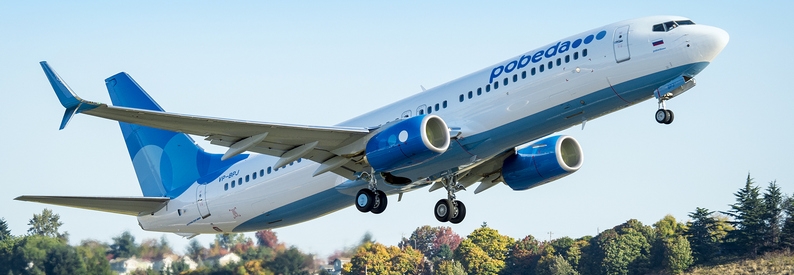
 www.ch-aviation.com
RECENT developments in Ukraine have shocked and devastated people across the globe and posed a significant obstacle to all those around the world who fight for peace.
Anti-war activists and people’s movements have, for the past few months, attempted to expose how the United States and Nato have contributed to increasing tensions in Russia and Ukraine.
Many mainstream analyses of the situation today seek to undercut the historic role of Nato and the US and shift the blame solely to Russia.
Long-time anti-war activist Brian Becker of the ANSWER Coalition (Act Now to Stop War and End Racism) joined film-maker and anti-imperialist Abby Martin of The Empire Files in a thorough discussion on the context and historical background of Nato and the crisis in Ukraine.
Martin and Becker, peace activists who organise in the “belly of the beast,” the United States, aimed to help provide the anti-war movement with the necessary information to win over the global working class towards the side of peace.
Martin oriented the discussion with the key questions of: “How did we get here? Where do we go from here? And what do we need to know as people in this movement who oppose war and want to call for peace?”
What led to this conflict?
Becker, who has been an activist against war since the US war against Vietnam, began the discussion by providing important historical context.
When the Soviet Union existed, the power of the coalition of socialist countries was able to counterbalance the power of the imperialist camp, led by the United States.
This equilibrium hinged on a key piece: the nuclear armament of both the Soviet Union and the US.
Neither world power could win a war against the other, as each possessed catastrophically destructive weapons.
As Becker said, “That doesn’t mean that there weren’t wars … There was the Vietnam war, the Korean war. You could go on and on, but there wasn’t sort of a repeat of World War I or II, where in the case of World War II, 100 million human beings were killed in a matter of five or six years, and the whole existing world order was basically shattered and left in ruins by 1945.”
However, after the Soviet Union dissolved in 1991, the United States’ foreign policy dramatically shifted.
“The United States policymakers, starting in 1991, established what eventually became the neocon[servative] consensus position that the United States would be able to exercise unipolar authority over the rest of the world,” Becker stated.
The North Atlantic Treaty Organisation (Nato), formed by imperialist powers after WWII to stop the spread of world socialism, did not disband after the fall of the socialist camp.
Instead, Nato expanded into former Soviet republics in eastern Europe, which presented acute security concerns to the newly capitalist Russian Federation.
This expansion came despite the assurances by the US to the USSR that “not an inch of Nato’s present military jurisdiction will spread in an eastern direction.”
Nato did not stop at expanding eastward. Without the counterbalance of the Soviet Union, the US and Nato decided to “destroy all of the governments whose origin was rooted in the anti-colonial projects of the post-WWII era, the countries that had looked at the socialist camp even if they weren’t part of it, they looked to it for military, economic and diplomatic support,” as Becker described.
These countries included Iraq, Libya, and Syria, all of which the US and Nato attacked.
Although Russia did not intervene during the pillaging and destruction of Iraq and Libya, finally the Federation did step in when the United States was determined to overthrow the Assad government in Syria.
As Becker describes it, the Russian forces, Syrian Arab Army and Hezbollah were able to “turn the tide” against the US offensive.
In this context, the one red line that the Russian Federation has consistently held is that Ukraine must not join Nato. As Becker put it, Russia is firm in its conviction that “the Black Sea naval base that Russia has in Crimea, which is their biggest base, is not going to be a Nato base with nuclear weapons against Russia.”
However, the US government, which as Becker described, is “addicted to war,” has seemed determined to cross this line in the sand.
The United States supported the 2014 coup against Ukrainian president Viktor Yanukovych, in which openly identified fascists seized power in Ukraine after months of protest.
These fascists in Ukraine wanted the country to join Nato, because they knew that the United States would support them if they did.
As Becker pointed out, “The United States government policy isn’t historically an anti-fascist policy when it comes to foreign policy.
“I mean, the US will work with any force, including the most right-wing fascist forces … So the fascists know the US is willing to play ball with fascism as long as they do America’s bidding.”
Since the 2014 coup, the political power of the fascists in Ukraine has waned. However, the United States and Nato have since then consistently imported weapons into Ukraine, including to the Ukrainian forces fighting the Russian-backed separatists in Donetsk and Lugansk.
Abby Martin described: “The toppling of the government didn’t mark the end of the violence … for people who are living in these disputed regions, which was Donetsk and Lugansk that Donbass is central to, that fighting never stopped.”
According to Becker, weapons sales from the US and Nato to Ukraine make Ukraine a de facto member of Nato, “from the point of view of the Russian government,” violating Russia’s stated concern and “red line” that Ukraine should not join the alliance.
Why did Russia decide to invade Ukraine?
“The Putin government in Russia has decided that the era of appeasement with the West has ended, and they’re going to use military force to recreate a buffer zone for what they think is necessary for Russian security,” Becker delineated as the reason behind Putin’s invasion.
Martin corroborated: “It’s about Russia stepping in and saying, we’re not going to f*cking take this any more.”
Russian President Vladmir Putin, in an address on February 21, gave several justifications for the invasion of Ukraine.
One key reason was the “denazification” of Ukraine, in which, in 2014, fascists seized power.
However, as Martin warns, “I think it’s important to not reflexively take the PR of a huge capitalist country.”
The influence of the fascist elements in the Ukrainian state has waned considerably. Becker states: “Ukraine in the main is not Nazi … in the 2019 parliamentary elections, the political forces who formed a united right bloc, which are the fascist forces, they got about 2.1 per cent of the vote.”
As Becker explained, the true purpose of the Russian invasion is for Russia to signal to the US and Nato that “the appeasement has ended” in terms of allowing Nato influence to inch closer and closer to Russian territory.
However, while these are valid security concerns, both Martin and Becker agree that the invasion should be condemned.
The invasion is a disaster to both the Ukrainian and Russian population, who under the Soviet Union, were “one people … working together against fascism.”
Why is the US fuelling conflict in Ukraine?
At the root of the current conflict in Ukraine is the escalation in tensions on the part of the US and Nato.
Nato has consistently chosen to escalate and attempt to move closer to Russian territory, despite not allowing Russia to join Nato itself.
As Becker described, “if [the Russian Federation] had been admitted into the imperialist club, they would have been glad to join at a certain point.”
Martin added that Russia “would have [joined Nato] if they were invited.” If this is the case, why did the United States not allow Russia, a powerful capitalist country, to peacefully join Nato? Why choose confrontation instead?
Becker argued that “if the United States treats Russia as an equal because it’s now a capitalist-led country, then Germany and other countries in Europe will gravitate in the direction of Russia.
“They are the natural trading partners and political partners, especially Germany.”
The central reason to the US taking an antagonistic, rather than co-operative, approach to capitalist Russia is that “the US fears the loss of its hegemony” in Europe.
The United States has consistently chosen the escalation of conflict, choices which have led to the devastating invasion of Ukraine.
What is the solution?
A central demand of the US anti-war movement has been to “disband Nato.” “[Nato] is not an anti-fascist alliance, it’s an anti-communist, anti-socialist, anti-worker alliance,” Becker states, articulating, “Nato is foundationally an offensive military alliance.
“It was designed to stop the spread of socialism. It was designed to make western Europe basically under the complete subjugation of American imperialism.”
As an offensive alliance, Nato does not stop conflict, only fuels it, as can be seen in places like Libya, Iraq and Syria.
If any country does not play by the US and Nato’s rules, “the Americans view that as an existential threat because it’s like the mafia. They say: ‘Well, if this country can show that it’s neutral, that it’s independent, that it’s not following the empire, that might suggest to others that they too could be independent.’”
However, even if Nato is disbanded and US hegemony ends, a multipolar world is not necessarily the solution.
Becker explained: “We had a multipolar world all the way up until WWII. What did it bring us? The multipolar world brought us WWI, the multipolar world brought us WWII.”
“The only solution is not multipolarity. The only solution is socialism … it’s a system that doesn’t require war because it’s not based on competition. It’s based on human co-operation between people at home and people all over the world.”
How do we prepare for what’s next?
As an anti-war activist, Becker offers advice for the peace movement. Becker is the director of the ANSWER Coalition, which was founded three days after the September 11 attacks in order to oppose the US drive for war.
Initially, people in the US responded with disdain. According to him, “at first people spat upon us. I mean, we were really isolated.”
But, he added: “Over time, that dissipates … Over time, people will see that what we’re saying is actually true, even though at the moment it’s going to be very, very hard. So we have to stick to our principles. We have to look for opportunities to do public education against war and militarism.”
Becker articulated that it is important for the anti-war left to “win the battle of ideas” against media and government propaganda that is advocating for war.
“The war danger, which emanates from here in the United States, is premised on the justification and rationale provided to the American people by the Establishment and echoed by the media.”
According to Becker, if anti-war activists dedicate themselves to winning over the US working class, the likelihood of an even more devastating confrontation will decrease.
He added: “By winning working class and poor people over to our side, by carrying out that kind of political education, we build a mighty force that can actually make change.”
Taken from the Morning Star.

 www.theguardian.com
It has however been comprehensively disproven as a theory and only exists as a Kremlin propaganda line to justify the war, so while you're certainly allowed to say it, you might get judged.
Reasons it's bullshit.
1) Ukraine was no closer to joining NATO now than it was 10 years ago, in fact NATO rules actually meant Ukraine couldn't join since 2014 due to the ongoing conflict in Donbass, so Russia did not think it was going to join.
2) Russia has infact had NATO garrisons on its border since 1949, so what Brand describes as "antagonistic" is actually just how things have been for 75 years.
3)In 1975 Soviet leader Leonard Brezhnev willingly signed on to the Helsinki Accords, which stipulated every country is free to choose it's own alliances. So the USSR/Russia explicitly endorses every countries right to join NATO if they want and has done for 50 years.
4)The fable of "not 1 inch east". This quote by the US Secretary of State was made during negotiations about Germany. They were trying to come to an agreement about how to reunify Germany and Russia wanted assurances that the massive NATO forces still garrisoned in West Germany weren't going to rush to the new Eastern Border with Poland.
However this was not actually possible because NATO wouldn't have been able to defend Germany under Article 5 of NATO, so it was resolved and made no appearance in the 2-plus-4 agreement that the USSR agreed to.
5) Russia has the biggest nuclear arsenal in the world. That makes them absolutely invulnerable to attack, because (as they so often threaten) it risks nuclear apocalypse. No NATO troops on the border changes that.
NATO has an open-door policy to joining and a country only has to approach NATO to open negotiations.
The 2004 and 2010 (in fact, all!) Ukraine elections were fraught with election fraud with meddling from Russia.
After the 2010 elections, pro-Russian president Yanukovych, threw all opposition leaders in gaol.
In 2013 Ukraine was set to join the EU with an overwhelming majority in favour of this across the country. Russia again meddled and Yanukovych refused to sign the papers and Ukraine didn’t join.
Ukraine was invaded in 2014 - to be fair in Crimea it was mostly welcomed, but in Donbas it wasn’t despite there being a large pro-Russian and Russian ethnic population.
Yanukovych put 46% of the Ukraine budget towards the large pro-Russian and Russian ethnic Donbas region when it only has 11% of the Ukraine population.
In 2014 Russia were kicked out of the G8 for numerous reasons including being untrustworthy, unfriendly if not dangerous, and basically dickheads.
Russia does not recognise Ukraine’s sovereignty.
Russia thinks Ukraine is a region of Russia.
Putin is big on making Russian Orthodox Christianity as part of every day Russian life - in Ukraine they have a different denomination of Orthodoxy that Putin does not recognise and wants to get rid of it.
Ukraine approached NATO about joining as they were sick of Russia and fearful of their next moves.
Also, importantly…
This is why Ukraine matters.
It is the second largest country by area in Europe by area and has a population
of over 40 million - more than Poland.
Minerals:
Ukraine ranks:
1st in Europe in proven recoverable reserves of uranium ores;
2nd place in Europe and 10th place in the world in terms of titanium ore reserves;
2nd place in the world in terms of explored reserves of manganese ores (2.3 billion tons, or 12% of the world's reserves);
2nd largest iron ore reserves in the world (30 billion tons);
2nd place in Europe in terms of mercury ore reserves;
3rd place in Europe (13th place in the world) in shale gas reserves (22 trillion cubic meters)
4th in the world by the total value of natural resources;
7th place in the world in coal reserves (33.9 billion tons)
Ukraine is an important agricultural country:
1st in Europe in terms of arable land area;
3rd place in the world by the area of black soil (25% of world's volume);
1st place in the world in exports of sunflower and sunflower oil;
2nd place in the world in barley production and 4th place in barley exports;
3rd largest producer and 4th largest exporter of corn in the world;
4th largest producer of potatoes in the world;
5th largest rye producer in the world;
5th place in the world in bee production (75,000 tons);
8th place in the world in wheat exports;
9th place in the world in the production of chicken eggs;
16th place in the world in cheese exports.
Ukraine can meet the food needs of 600 million people.
Ukraine is an important industrialised country:
1st in Europe in ammonia production;
Europe's 2nd’s and the world’s 4th largest natural gas pipeline system;
3rd largest in Europe and 8th largest in the world in terms of installed capacity of nuclear power plants;
3rd place in Europe and 11th in the world in terms of rail network length (21,700 km);
3rd place in the world (after the U.S. and France) in production of locators and locating equipment;
3rd largest iron exporter in the world
4th largest exporter of turbines for nuclear power plants in the world;
4th world's largest manufacturer of rocket launchers;
4th place in the world in clay exports
4th place in the world in titanium exports
8th place in the world in exports of ores and concentrates;
9th place in the world in exports of defence industry products;
10th largest steel producer in the world (32.4 million tons).
Ukraine matters
Russia has a small, unvaried and struggling economy… look at that list and think why Russia might want to invade Ukraine.
Also Russian is the world’s biggest spreader of misinformation. Don’t fall for it!
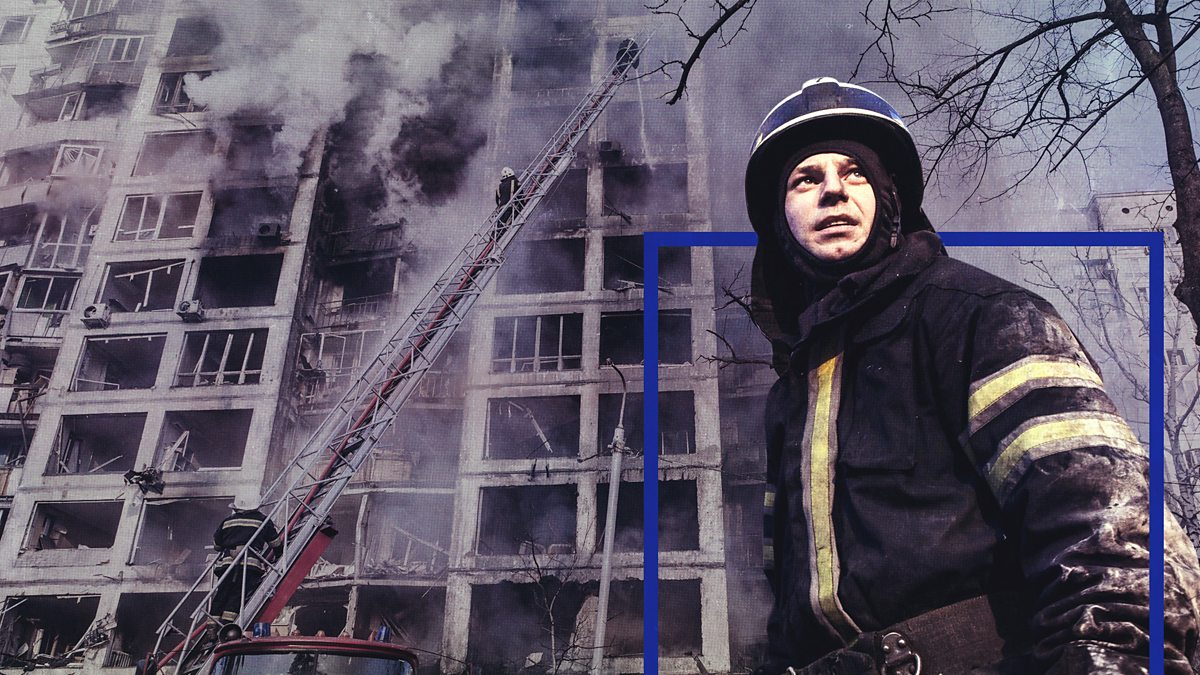
The far left (and far right) in the West are played like a fiddle by Russia.
Have you ever heard of Olginos? Also known as “Russian Troll Factories”? They are misinformation organisations that spread pro-Russia/anti-West shite across Russia and into the West. They also start conspiracy theories or spread misinformation around emotive topics, or stoke fires around incidents and create furores that antagonise groups of people into getting wound-up and even into taking action.
This was one of the very first things Putin started doing when he took power in 2000. He took over Russian state TV and made it a pro-Putin/anti-West propaganda station. Then he spread it into different countries. It’s why we should never have allowed RT to broadcast in this country.
Then with the rise of the internet and social media, these Olginos or Troll Factories were created and would flood Russian social media platforms with this same pro-Putin/anti-West rhetoric all over comments sections and chat rooms. They then employed English speaking employees who spread the same shite across our online platforms in the West: YouTube, Facebook, Twitter, forums (just like ours!) would have these Russian bots posting their pro-Putin/anti-West bollocks day-after-day, hour-after-hour.
The far left in the West hate Western society and our governments (Christ, they even hate the slightly less left wing left wing!). These bots have spread misinformation about NATO-expansionism, NATO-imperialism, NATO’s threat to Russia, NATO antagonising Russia… the far left here fucking love that shit, and it just becomes part of the topics of every day conversations online.
Look at Jeremy Corbyn and his merry band with their protest against NATO countries sending weapons to Ukraine and the West’s antagonising of Russia. On their website, there are 7 words to start a paragraph off about condemning Russia’s invasion and the rest of the paragraph is moaning about the West/NATO!
People on the extremes of politics and social issues are easily exposed to and often trapped in algorithms and online echo chambers. Even those who get a broader scope often just ignore what they don’t like and won’t take it on board. These people are easily swayed and manipulated with continual exposure and repeated tropes.
These Troll Factories spread across every political and social issue you could possibly imagine. They’re open 24 hours a day, 7 days a week hammering us with fake news, and influential and manipulative language.
It’ll be the same with the founders and most extreme supporters of things like Black Lives Matter. While the well-meaning supporters who follow them because they simply think that black lives matter; the core of that movement describe themselves as Marxist and anti-capitalist and there’s a lot of anti-West and anti-white sentiment in their extreme end too. Their online algorithms will be feeding them all kinds of bollocks in their online echo chambers with misinformation sloshing around spread by the Troll Factories.
It’s the same over on the far right n’all. They love a conspiracy theory and the Troll Factories start, spread, and spam them all over social media.
QAnon, white genocide, Covid conspiracies, anti-vaccers, global warming hoax, chemtrails, Holocaust denial etc. will all be Troll Factory rooted. Those paranoid far right nutters hate “MSM” and access their news from all sorts of utterly crazy places. Where they are trapped in their end of algorithms and echo chambers is frightening!
There’s obviously a lot of racism over on the far right as well. Trump/MAGA, and Brexit/immigration topics will have been rife for Troll Factory involvement.
The Leave campaign was full of this misinformation spread by Russia. As was a hell of a lot of the going on in the MAGA and Trump years, with interference in the election drives of Clinton and Biden.
There are negativity spammers from the Factories as well, spreading doom+gloom and forever repeating how shit things are around different topics.
There’s so much anti-West and conspiracy shit talked about by the extreme ends that these topics, and what were once extreme minorities, are forever nudging ever closer into normal ways of thinking and moderate politics with a worryingly ever growing support.
The FBI put undercover employees in the Troll Factories last decade, and there have also been ex-employees who’ve come forward to the West to admit what went on there. For example, here in these articles:

The Russian troll factory at the heart of the meddling allegations
Former workers tell how hundreds of bloggers are paid to flood forums and social networks at home and abroad with anti-western and pro-Kremlin comments
Latest breaking news and videos of European and World | Eupoliticalreport
Find all national and international information about Europe and Worlds. News about economy, politics, diplomacy and others. Stay with us.www.eupoliticalreport.eu
They’re really good reads!
I’ve been banging on about this sort of thing for years. I feel like people don’t really take much notice of me and dismiss what I say on it, but maybe now they will start to take it on board a bit more with what’s currently unfolding.
I’ve spoken before in this thread about Putin’s aims. And they are two-fold:
1. Disrupt, create divisions, and weaken in the West
2. Expand Russia
He’s been doing #1 for over two decades, and doing it very well! He’s been doing #2 in Georgia since 2008 and Ukraine since 2014. But he’s really ramped up #2 these past few weeks. Although, it’s not going anywhere near as well as he did with #1, and this might be the very thing that smashes his gains made with #1 as it unites the West where it has been continually divided for too long!
The Morning Star you say...RECENT developments in Ukraine have shocked and devastated people across the globe and posed a significant obstacle to all those around the world who fight for peace.
Anti-war activists and people’s movements have, for the past few months, attempted to expose how the United States and Nato have contributed to increasing tensions in Russia and Ukraine.
Many mainstream analyses of the situation today seek to undercut the historic role of Nato and the US and shift the blame solely to Russia.
Long-time anti-war activist Brian Becker of the ANSWER Coalition (Act Now to Stop War and End Racism) joined film-maker and anti-imperialist Abby Martin of The Empire Files in a thorough discussion on the context and historical background of Nato and the crisis in Ukraine.
Martin and Becker, peace activists who organise in the “belly of the beast,” the United States, aimed to help provide the anti-war movement with the necessary information to win over the global working class towards the side of peace.
Martin oriented the discussion with the key questions of: “How did we get here? Where do we go from here? And what do we need to know as people in this movement who oppose war and want to call for peace?”
What led to this conflict?
Becker, who has been an activist against war since the US war against Vietnam, began the discussion by providing important historical context.
When the Soviet Union existed, the power of the coalition of socialist countries was able to counterbalance the power of the imperialist camp, led by the United States.
This equilibrium hinged on a key piece: the nuclear armament of both the Soviet Union and the US.
Neither world power could win a war against the other, as each possessed catastrophically destructive weapons.
As Becker said, “That doesn’t mean that there weren’t wars … There was the Vietnam war, the Korean war. You could go on and on, but there wasn’t sort of a repeat of World War I or II, where in the case of World War II, 100 million human beings were killed in a matter of five or six years, and the whole existing world order was basically shattered and left in ruins by 1945.”
However, after the Soviet Union dissolved in 1991, the United States’ foreign policy dramatically shifted.
“The United States policymakers, starting in 1991, established what eventually became the neocon[servative] consensus position that the United States would be able to exercise unipolar authority over the rest of the world,” Becker stated.
The North Atlantic Treaty Organisation (Nato), formed by imperialist powers after WWII to stop the spread of world socialism, did not disband after the fall of the socialist camp.
Instead, Nato expanded into former Soviet republics in eastern Europe, which presented acute security concerns to the newly capitalist Russian Federation.
This expansion came despite the assurances by the US to the USSR that “not an inch of Nato’s present military jurisdiction will spread in an eastern direction.”
Nato did not stop at expanding eastward. Without the counterbalance of the Soviet Union, the US and Nato decided to “destroy all of the governments whose origin was rooted in the anti-colonial projects of the post-WWII era, the countries that had looked at the socialist camp even if they weren’t part of it, they looked to it for military, economic and diplomatic support,” as Becker described.
These countries included Iraq, Libya, and Syria, all of which the US and Nato attacked.
Although Russia did not intervene during the pillaging and destruction of Iraq and Libya, finally the Federation did step in when the United States was determined to overthrow the Assad government in Syria.
As Becker describes it, the Russian forces, Syrian Arab Army and Hezbollah were able to “turn the tide” against the US offensive.
In this context, the one red line that the Russian Federation has consistently held is that Ukraine must not join Nato. As Becker put it, Russia is firm in its conviction that “the Black Sea naval base that Russia has in Crimea, which is their biggest base, is not going to be a Nato base with nuclear weapons against Russia.”
However, the US government, which as Becker described, is “addicted to war,” has seemed determined to cross this line in the sand.
The United States supported the 2014 coup against Ukrainian president Viktor Yanukovych, in which openly identified fascists seized power in Ukraine after months of protest.
These fascists in Ukraine wanted the country to join Nato, because they knew that the United States would support them if they did.
As Becker pointed out, “The United States government policy isn’t historically an anti-fascist policy when it comes to foreign policy.
“I mean, the US will work with any force, including the most right-wing fascist forces … So the fascists know the US is willing to play ball with fascism as long as they do America’s bidding.”
Since the 2014 coup, the political power of the fascists in Ukraine has waned. However, the United States and Nato have since then consistently imported weapons into Ukraine, including to the Ukrainian forces fighting the Russian-backed separatists in Donetsk and Lugansk.
Abby Martin described: “The toppling of the government didn’t mark the end of the violence … for people who are living in these disputed regions, which was Donetsk and Lugansk that Donbass is central to, that fighting never stopped.”
According to Becker, weapons sales from the US and Nato to Ukraine make Ukraine a de facto member of Nato, “from the point of view of the Russian government,” violating Russia’s stated concern and “red line” that Ukraine should not join the alliance.
Why did Russia decide to invade Ukraine?
“The Putin government in Russia has decided that the era of appeasement with the West has ended, and they’re going to use military force to recreate a buffer zone for what they think is necessary for Russian security,” Becker delineated as the reason behind Putin’s invasion.
Martin corroborated: “It’s about Russia stepping in and saying, we’re not going to f*cking take this any more.”
Russian President Vladmir Putin, in an address on February 21, gave several justifications for the invasion of Ukraine.
One key reason was the “denazification” of Ukraine, in which, in 2014, fascists seized power.
However, as Martin warns, “I think it’s important to not reflexively take the PR of a huge capitalist country.”
The influence of the fascist elements in the Ukrainian state has waned considerably. Becker states: “Ukraine in the main is not Nazi … in the 2019 parliamentary elections, the political forces who formed a united right bloc, which are the fascist forces, they got about 2.1 per cent of the vote.”
As Becker explained, the true purpose of the Russian invasion is for Russia to signal to the US and Nato that “the appeasement has ended” in terms of allowing Nato influence to inch closer and closer to Russian territory.
However, while these are valid security concerns, both Martin and Becker agree that the invasion should be condemned.
The invasion is a disaster to both the Ukrainian and Russian population, who under the Soviet Union, were “one people … working together against fascism.”
Why is the US fuelling conflict in Ukraine?
At the root of the current conflict in Ukraine is the escalation in tensions on the part of the US and Nato.
Nato has consistently chosen to escalate and attempt to move closer to Russian territory, despite not allowing Russia to join Nato itself.
As Becker described, “if [the Russian Federation] had been admitted into the imperialist club, they would have been glad to join at a certain point.”
Martin added that Russia “would have [joined Nato] if they were invited.” If this is the case, why did the United States not allow Russia, a powerful capitalist country, to peacefully join Nato? Why choose confrontation instead?
Becker argued that “if the United States treats Russia as an equal because it’s now a capitalist-led country, then Germany and other countries in Europe will gravitate in the direction of Russia.
“They are the natural trading partners and political partners, especially Germany.”
The central reason to the US taking an antagonistic, rather than co-operative, approach to capitalist Russia is that “the US fears the loss of its hegemony” in Europe.
The United States has consistently chosen the escalation of conflict, choices which have led to the devastating invasion of Ukraine.
What is the solution?
A central demand of the US anti-war movement has been to “disband Nato.” “[Nato] is not an anti-fascist alliance, it’s an anti-communist, anti-socialist, anti-worker alliance,” Becker states, articulating, “Nato is foundationally an offensive military alliance.
“It was designed to stop the spread of socialism. It was designed to make western Europe basically under the complete subjugation of American imperialism.”
As an offensive alliance, Nato does not stop conflict, only fuels it, as can be seen in places like Libya, Iraq and Syria.
If any country does not play by the US and Nato’s rules, “the Americans view that as an existential threat because it’s like the mafia. They say: ‘Well, if this country can show that it’s neutral, that it’s independent, that it’s not following the empire, that might suggest to others that they too could be independent.’”
However, even if Nato is disbanded and US hegemony ends, a multipolar world is not necessarily the solution.
Becker explained: “We had a multipolar world all the way up until WWII. What did it bring us? The multipolar world brought us WWI, the multipolar world brought us WWII.”
“The only solution is not multipolarity. The only solution is socialism … it’s a system that doesn’t require war because it’s not based on competition. It’s based on human co-operation between people at home and people all over the world.”
How do we prepare for what’s next?
As an anti-war activist, Becker offers advice for the peace movement. Becker is the director of the ANSWER Coalition, which was founded three days after the September 11 attacks in order to oppose the US drive for war.
Initially, people in the US responded with disdain. According to him, “at first people spat upon us. I mean, we were really isolated.”
But, he added: “Over time, that dissipates … Over time, people will see that what we’re saying is actually true, even though at the moment it’s going to be very, very hard. So we have to stick to our principles. We have to look for opportunities to do public education against war and militarism.”
Becker articulated that it is important for the anti-war left to “win the battle of ideas” against media and government propaganda that is advocating for war.
“The war danger, which emanates from here in the United States, is premised on the justification and rationale provided to the American people by the Establishment and echoed by the media.”
According to Becker, if anti-war activists dedicate themselves to winning over the US working class, the likelihood of an even more devastating confrontation will decrease.
He added: “By winning working class and poor people over to our side, by carrying out that kind of political education, we build a mighty force that can actually make change.”
Taken from the Morning Star.
I know mate. The "man who is never wrong" has decided whilst Ukrainians are dying for their country, the hill he wants to die on is trying to ram his opinion down everyone's throat that this has nothing to do with NATO. And seeking to pick only comments which support that "view", whilst ignoring the rest.That is exactly what I should do, read twitter to get educated.
I do not know why I haven't thought of that before, it obviously works for you.
He's gone full Tontoski.The Morning Star you say...
Alaska/Russia , Norway/ Russia both in the frozen wastelands. were the only borders where the founding members of NATO/Russia interjected. Alaska is separated from Russia by the Bering sea, Norway land border with Russia is tiny.NATO has bordered Russia/USSR since its inception.
I cannot believe people are still seriously repeating this nonsense Kremlin line that having NATO on Russia's doorstep is untenable or risky for Russia, it's been going on for 73 years.
Russia's 6,000 nuclear warheads and M.A.D protects them, that has always been the case.
What? No-one ever surrenders?I expect better than that from you Vic.
Alaska/Russia , Norway/ Russia both in the frozen wastelands. were the only borders where the founding members of NATO/Russia interjected. Alaska is separated from Russia by the Bering sea, Norway land border with Russia is tiny.
Using Russia and USSR is disengenous, the USSR no longer exists, the Warsaw Pact has gone. The Warsaw Pact bordered NATO of course, but since its disintegration many Warsaw Pact countries are now NATO countries.
Putin may be an Imperialist who wants to restore the former influence of Russia over its former satellite states, but it has shown no sign at all of the expansionism of NATO.
Lenin referred to Imperialism as the highest stage of Capitalism and NATO is being used to promote Capitalism and as we have seen in this thread demonise the left. It is eradication of left wing thinking on a mass scale.
Putin though is not a left wing leader, he is an authoritarian Nationalist and I have said before he is dangerous and should be stopped. However NATO is not the cuddly benign organisation its made out to be. This is not as black and white as its being made out. The propaganda is not one sided. FFS, we had Nadine Dorries praising the BBC yesterday and she wanted to defund it last week.
Maybe as @swpsback says i should educate myself on twitter