As bad an argument as the spelling.Palestine didn't exit itself till 1917. A creation of the British Empire resembling the similar Roman Province and the Kingdom of Jordan - One of the British Empires allies in WW1.
The Ottoman Empire spit things very differently and there were multiple ethnic groupings.
View attachment 145321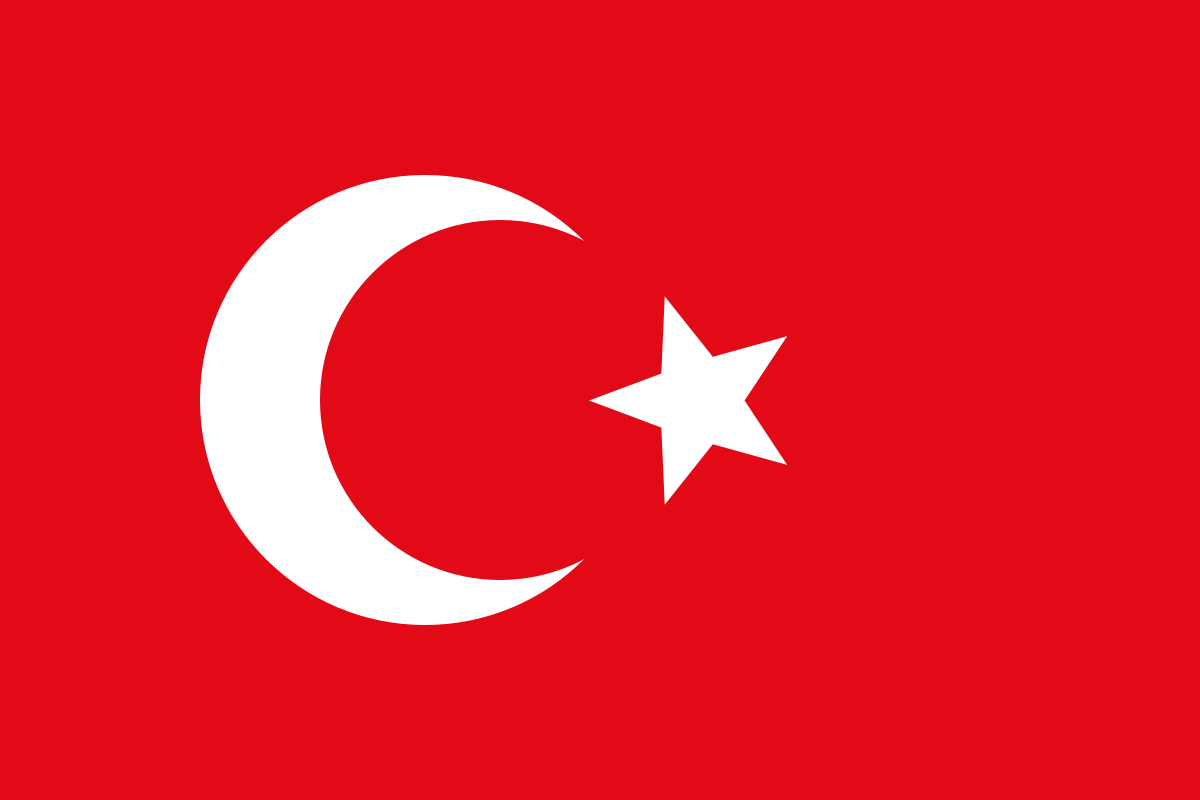
Ottoman Syria - Wikipedia
en.m.wikipedia.org

You are using an out of date browser. It may not display this or other websites correctly.
You should upgrade or use an alternative browser.
You should upgrade or use an alternative browser.
Middle East Conflict
- Thread starter The blue phantom
- Start date
BlueAnorak
Well-Known Member
- Joined
- 31 Oct 2010
- Messages
- 30,097
Hilarious Deflection Tactics.
The blue phantom
Well-Known Member
- Joined
- 26 Aug 2015
- Messages
- 9,595
Anorak is the gift that keeps.on giving.
BlueAnorak
Well-Known Member
- Joined
- 31 Oct 2010
- Messages
- 30,097
And by the same argument the Turks can claim it and then the Ayyubid dynasty and then Crusaders and then Egypt and then Saudi Arabia and then the Greeks and then the Italians and then the Jews and then the Greeks again and then the Jews and then the Phisitines and Cannaites and then the Jews again.So by the Same logic Russia can take back Ukraine because it's only been a sovereign country 34 years?
You chose to start in 1917.
Mr Kobayashi
Well-Known Member
- Joined
- 1 Oct 2020
- Messages
- 17,873
And by the same argument the Turks can claim it and then the Ayyubid dynasty and then Crusaders and then Egypt and then Saudi Arabia and then the Greeks and then the Italians and then the Jews and then the Greeks again and then the Jews and then the Phisitines and Cannaites and then the Jews again.
You chose to start in 1917.
This is the imperialist mindset. When Austria Hungary collapsed, the Slavs got their own countries. Same for Turkey. Those olive skinned people of the desert weren't civilised enough said Churchill among others.
Palestinians are more of a nation than the interlopers occupying their land.
cucumberman
Well-Known Member
- Joined
- 4 Jul 2009
- Messages
- 5,230
Palestine didn't exit itself till 1917. A creation of the British Empire resembling the similar Roman Province and the Kingdom of Jordan - One of the British Empires allies in WW1.
The Ottoman Empire spit things very differently and there were multiple ethnic groupings.
View attachment 145321Ottoman Syria - Wikipedia
Historical evidence:
The Greek Herodotus recorded of Palaistin in 5BC both from his first-hand accounts and in his reference to Egyptians and ancient Egypt scripts of the Peleset in 1120BC and then after Palashtu in 800BC. At the same time, Herodotus records did not mention once of Israel.
If those archived records are not sufficient, and you refer all the way back to the Egyptian stele, which is the earliest evidence, read below:
Ancient jew artifacts didn’t go as ancient as ancient Egyptian hieroglyphs.
Hence why Israeli historians refer to the Merneptah Stele, as the only ancient Egypt historical reference to counter the hieroglyphs of Peleset and dated 1209BC.
The issue with referring to the Merneptah Stele however is contradictory by 3 main readings of the Stele.
1. Line 26-27 of the Merneptah Stele is of “iisii-r-iar”. Thus pro-Israel historians conclude as representing ‘Israel’. However, translating the term “iisii-r-iar” define the ancient Egyptian phrase “those exiled because of their sin”. Simply, before the pronunciation of Israel means Isreal, in ancient Egypt isi-r-iar means those exiled because of their sin.
2. That same line, the hieroglyph of ‘aa’ is rather blurry (because of natural erosion) and the vulture (hence aa for iar) is very similar to the owl (hence r for r-em). “those exiled because of their sin”, when transliterated as r-em instead or r-iar, is of people and crying because r-em in ancient Egypt means ‘tears’. Simply the hieroglyph either states as ‘those exiled because of their sins’ or ‘tears’.
3. Referring to the same line also refers to the two people sat on 3 grains. Transliteration is that iisii-r-ar OR r-em refers to people, not land, because in ancient Egypt the reference of people above grains are of nomadic tribes, not a civilization.
The Merneptah stele is the only stele that mentions iisii-r-iar (or iisii-r-em). In contrast, the ancient Egyptians mentioned Peleset in 4 different steles. All 4 steles have far better preserved than the Merneptah. The ancient Egyptians referred to the Peleset as the invading sea people who conquered and civilized the Eastern coast.
If playing by the book of who owns that territory, it’s the ancient Egyptians. If debating on who is the rightful owner, the ancient Egyptians. Not the Palestine Peleset (who invaded Egyptian coast).
He chose to start with a 1917 document that referred to Palestine. Balfour referred to Palestine because it already was Palestine not because his letter somehow created it.And by the same argument the Turks can claim it and then the Ayyubid dynasty and then Crusaders and then Egypt and then Saudi Arabia and then the Greeks and then the Italians and then the Jews and then the Greeks again and then the Jews and then the Phisitines and Cannaites and then the Jews again.
You chose to start in 1917.
People post stuff like "Palestine was never an independent state" only to diminish the rights of the existing inhabitants in 1917 - which is exactly what Balfour made a condition of the offer of a Jewish homeland. Those rights have not been respected.
It's actually quite sad that you can come on the thread with this nonsense despite all the posts explaining this over the last year or so.
Gobshiight
Well-Known Member
- Joined
- 4 Mar 2013
- Messages
- 1,959
It's pointless arguing about who was there centuries and millennia ago. There's a population of millions being displaced from a land they've lived in for generations, and the violence is being driven by our allies' governments and our own
Everything else is just detracts from the actual problem and leads nowhere (not that arguing on a football forum would ever solve anything)
Everything else is just detracts from the actual problem and leads nowhere (not that arguing on a football forum would ever solve anything)
Mr Kobayashi
Well-Known Member
- Joined
- 1 Oct 2020
- Messages
- 17,873
It's pointless arguing about who was there centuries and millennia ago. There's a population of millions being displaced from a land they've lived in for generations, and the violence is being driven by our allies' governments and our own
Everything else is just detracts from the actual problem and leads nowhere (not that arguing on a football forum would ever solve anything)
All Good points.
Something worth highlighting. If the Palestinians weren't there, the Israelis would just pick a new enemy and try to take their territory.
We already have real life examples.
See the recent invasion into Sovereign Syrian territory beyond the Golan Heights.
See their treatment of the Bedouin people in the West Bank.
If Palestinians live overseas there is always likely to be a spiritual successor to the PLO who would fight for their lost homeland.
If Zionism could be abandoned, then both people could live in peace. That's the ideal.
If zionists can't live in peace, and afford Palestinians equal rights then they should go live elsewhere.
cucumberman
Well-Known Member
- Joined
- 4 Jul 2009
- Messages
- 5,230
It's pointless arguing about who was there centuries and millennia ago. There's a population of millions being displaced from a land they've lived in for generations, and the violence is being driven by our allies' governments and our own
Everything else is just detracts from the actual problem and leads nowhere (not that arguing on a football forum would ever solve anything)
You are right.
Revisionist Zionists are increasingly arrogant that there is no such thing as Palestine, and Israel has been for centuries.
75+ years ago, the first generation Israelis at least acknowledged what is Palestine. Indoctrination has made the other generations believing otherwise (like the rags)
Even Golda Meir, the grandmother of Israel, at least remembered what Palestine is. The younger generations today, Anorak included, is indoctrinated. The belief has turned upside down.
cucumberman
Well-Known Member
- Joined
- 4 Jul 2009
- Messages
- 5,230
And here’s one example of how the younger Israeli generations
Calling Norman Finkelstein a holocaust denier, antisemite. Thats the indoctrinated zionists.
Norman is a Jew, an intellectual Jew, his parents victim of the holocaust.
Ilan Pappe, Albert Einstein, Arendt, Avi Shlaim, Gillian Slovo, Irene Bruegel, Zionists hate them.
Calling Norman Finkelstein a holocaust denier, antisemite. Thats the indoctrinated zionists.
Norman is a Jew, an intellectual Jew, his parents victim of the holocaust.
Ilan Pappe, Albert Einstein, Arendt, Avi Shlaim, Gillian Slovo, Irene Bruegel, Zionists hate them.
TinFoilHat
Well-Known Member
- Joined
- 26 Jan 2023
- Messages
- 38,851
- Team supported
- Manchester City
Bibi and Trump exchanging ideas tomorrow on holding onto power and best ways to murder people you don't like whilst rebranding Genocide.
Should be interesting day. Part of me thinks Trump will press the button and nuke Palestine.
Should be interesting day. Part of me thinks Trump will press the button and nuke Palestine.
bluethrunthru
Well-Known Member
when Netanyahu agrees a ceasefire
cucumberman
Well-Known Member
- Joined
- 4 Jul 2009
- Messages
- 5,230
when Netanyahu agrees a ceasefire
Not just Lebanon.
West Bank as well. A 2-year old girl was literally shot (snipered) in the head, the pregnant mother wounded.
cucumberman
Well-Known Member
- Joined
- 4 Jul 2009
- Messages
- 5,230
Not a first. IDf has previous in shooting toddlers in the heads and chests
For Palestinian footballers, they shot on the legs instead.
For Palestinian footballers, they shot on the legs instead.
The Fat el Hombre
Well-Known Member
Imagine being stupid enough to ever think that this was about hostages
Ethnic cleansing right there. Pure evil
Ethnic cleansing right there. Pure evil
bluethrunthru
Well-Known Member
"ceasefire deal agreed" when you talk about Israel is a relative term
The Future’s Blue!
Well-Known Member
- Joined
- 17 Dec 2019
- Messages
- 13,498
- Team supported
- City
Imagine being stupid enough to ever think that this was about hostages
Ethnic cleansing right there. Pure evil
Scum!
The Future’s Blue!
Well-Known Member
- Joined
- 17 Dec 2019
- Messages
- 13,498
- Team supported
- City
Ali Miraj, who has always denied that Israel wanted to displace and takeover the land, has just realised that he was wrong all along.
He’s physically upset.
He’s physically upset.
Don Karleone
Well-Known Member
- Joined
- 8 Nov 2008
- Messages
- 25,319
- Team supported
- Vampire Squid FC
Imagine being stupid enough to ever think that this was about hostages
Ethnic cleansing right there. Pure evil
Nothing has changed, it's just out in the open now. Nazi cunts