
Religion

“Let's say that the consensus is that our species, being the higher primates, Homo Sapiens, has been on the planet for at least 100,000 years, maybe more. Francis Collins says maybe 100,000. Richard Dawkins thinks maybe a quarter-of-a-million. I'll take 100,000.

In order to be a Christian, you have to believe that for 98,000 years, our species suffered and died, most of its children dying in childbirth, most other people having a life expectancy of about 25 years, dying of their teeth, famine, struggle, bitterness, war, suffering, misery, all of that for 98,000 years.

Heaven watches this with complete indifference. And then 2000 years ago, thinks 'That's enough of that. It's time to intervene,' and the best way to do this would be by condemning someone to a human sacrifice somewhere in the less literate parts of the Middle East. Don't lets appeal to the Chinese, for example, where people can read and study evidence and have a civilization. Let's go to the desert and have another revelation there. This is nonsense. It can't be believed by a thinking person.

Why am I glad this is the case? To get to the point of the wrongness of Christianity, because I think the teachings of Christianity are immoral. The central one is the most immoral of all, and that is the one of vicarious redemption. You can throw your sins onto somebody else, vulgarly known as scapegoating. In fact, originating as scapegoating in the same area, the same desert. I can pay your debt if I love you. I can serve your term in prison if I love you very much. I can volunteer to do that. I can't take your sins away, because I can't abolish your responsibility, and I shouldn't offer to do so. Your responsibility has to stay with you. There's no vicarious redemption. There very probably, in fact, is no redemption at all. It's just a part of wish-thinking, and I don't think wish-thinking is good for people either.

It even manages to pollute the central question, the word I just employed, the most important word of all: the word love, by making love compulsory, by saying you MUST love. You must love your neighbour as yourself, something you can't actually do. You'll always fall short, so you can always be found guilty. By saying you must love someone who you also must fear. That's to say a supreme being, an eternal father, someone of whom you must be afraid, but you must love him, too. If you fail in this duty, you're again a wretched sinner. This is not mentally or morally or intellectually healthy.

And that brings me to the final objection - I'll condense it, Dr. Orlafsky - which is, this is a totalitarian system. If there was a God who could do these things and demand these things of us, and he was eternal and unchanging, we'd be living under a dictatorship from which there is no appeal, and one that can never change and one that knows our thoughts and can convict us of thought crime, and condemn us to eternal punishment for actions that we are condemned in advance to be taking. All this in the round, and I could say more, it's an excellent thing that we have absolutely no reason to believe any of it to be true.”

― Christopher Hitchens
 
You don’t need to lie to provide comfort and solace for children and adults, we can do that as a species without the made up fairytales of religions.

Learning to provide comfort and solace without having to make up a load of old gibberish would be a better life skill as it would make people improve their understanding of empathy and social therapy and learn how to tackle problems through human understanding making people feel better through realism and humanism.

And for the one needing comfort and solace, once we as a species understand that there’s nothing out there, we will learn to be more resilient as we understand the realism that it’s us and only us who can change things; it’s not a god or the religion that changes things, it’s our own mindset.
I'm sorry but people like you are as bad, if not worse, than cult leaders.
Religion has brought billions of people a purpose. Without it, the world would be chaos.
And before you mention, extremism, in any religion, is less than 0.1%
If you do not believe, fine, but people who do are just as relevant.
 
I'm sorry but people like you are as bad, if not worse, than cult leaders.
Religion has brought billions of people a purpose. Without it, the world would be chaos.
And before you mention, extremism, in any religion, is less than 0.1%
If you do not believe, fine, but people who do are just as relevant.

It's still a lie though!
 
I'm sorry but people like you are as bad, if not worse, than cult leaders.
Religion has brought billions of people a purpose. Without it, the world would be chaos.
And before you mention, extremism, in any religion, is less than 0.1%
If you do not believe, fine, but people who do are just as relevant.
"Religion has brought billions of people a purpose. Without it, the world would be chaos."
Maybe...but so do many cults. Many vulnerable people feel better belonging to a particular group. But why go through life believing in something that isn't true?
But "without it, the world would be chaos"? How would you know that? Is it chaos in places like China, where they never had any of the Abrahamic religions? You have no way of knowing that. What we DO know is the HARM that religion has caused over the years, and in particular Christianity. From wars to slavery. From misogyny to homophobia. A bullying, controlling, hateful religion that has held mankind back in many ways.
 
I'm sorry but people like you are as bad, if not worse, than cult leaders.
Religion has brought billions of people a purpose. Without it, the world would be chaos.
And before you mention, extremism, in any religion, is less than 0.1%
If you do not believe, fine, but people who do are just as relevant.
Utter claptrap. With respect, we already have a purpose. We evolve, learn, and educate.
Part of that involves being kind, helpful, and showing respect to others, something that religion doesn't always advocate.
We would absolutely as a species, be better off without it, perhaps then we could concentrate on what's important, instead of what others perceive to be.
 
I'm sorry but people like you are as bad, if not worse, than cult leaders.
Religion has brought billions of people a purpose. Without it, the world would be chaos.
And before you mention, extremism, in any religion, is less than 0.1%
If you do not believe, fine, but people who do are just as relevant.
People like you ? Please, when did god first invent the earth, dinosaurs ? We’re they in his image to start with or just a trial run ? Or single cell organisms without an arse ?
 
People like you ? Please, when did god first invent the earth, dinosaurs ? We’re they in his image to start with or just a trial run ? Or single cell organisms without an arse ?
It's not about that. Religion, regardless of it's teachings, provides comfort to millions, if not billions.
 
Utter claptrap. With respect, we already have a purpose. We evolve, learn, and educate.
Part of that involves being kind, helpful, and showing respect to others, something that religion doesn't always advocate.
We would absolutely as a species, be better off without it, perhaps then we could concentrate on what's important, instead of what others perceive to be.
Utter claptrap. For you, maybe, bu
"Religion has brought billions of people a purpose. Without it, the world would be chaos."
Maybe...but so do many cults. Many vulnerable people feel better belonging to a particular group. But why go through life believing in something that isn't true?
But "without it, the world would be chaos"? How would you know that? Is it chaos in places like China, where they never had any of the Abrahamic religions? You have no way of knowing that. What we DO know is the HARM that religion has caused over the years, and in particular Christianity. From wars to slavery. From misogyny to homophobia. A bullying, controlling, hateful religion that has held mankind back in many ways.
How do you know it isn't true? Isn't that a belief in itself?
 
Please tell us all the basis of your knowledge. You 'believe' it's a lie - it may be. But why does it HAVE to be?
Knowledge, as we know it, is based on logic.
Religion is based on faith, which as we all know, is a flawed concept at best.
You're doing the best you can at muddying the water with your arguement, but as we all know, you're just papering cracks.
Believe in what you want, but don't expect free thinkers to follow your train of thought, and don't be surprised when a little ridicule comes your way. X
 
Please tell us all the basis of your knowledge. You 'believe' it's a lie - it may be. But why does it HAVE to be?

The onus isn't on me to prove your claim, it's on you to prove to me beyond any reasonable doubt that your claim is true.
 
Which of the 2 thousand recognised gods throughout the world do our resident believers believe in I wonder?
It can only be one, so is your chosen god better than the other 1999 you choose to spurn?
Why is your chosen one better?
I'd love to know
 
I'm sorry but people like you are as bad, if not worse, than cult leaders.
Religion has brought billions of people a purpose. Without it, the world would be chaos.
And before you mention, extremism, in any religion, is less than 0.1%
If you do not believe, fine, but people who do are just as relevant.
Just like religion itself, the point you make in bold is just baseless conjecture. There’s not a single thing to suggest that a religionless world would be chaos, because Atheists actually do believe in humanism and morals in the absence of religion.

A great many religious people live their life terribly and then pray for forgiveness or confess to a priest and are told to say a few lord’s prayers and hail Mary’s and they think all the shit they do is absolved and doesn’t matter because “god forgives” as long as you repent.

People need to realise there isn’t anything to forgive anyone from living their life in the absence of morals and people need to wise up to the fact that they need to be moralistic from the outset, not repentant of their lack of morals after the fact.
 
Last edited by a moderator:
Which of the 2 thousand recognised gods throughout the world do our resident believers believe in I wonder?
It can only be one, so is your chosen god better than the other 1999 you choose to spurn?
Why is your chosen one better?
I'd love to know
The main god most of the different religions believe in is the ancient sky god. Who, back before monotheism, was just one of many gods and goddesses across many religions but they all have the same roots and routes from where they came.

The god of the sky became the main god in monotheistic thought because he was like the father and husband of the other gods and goddesses. The sky is where we see the universe, it’s where everything happens. The sky was the television and cinema screen of the ancients, it’s where they looked and pointed to as they told and passed down stories about these gods and goddesses.

For example, just imagine waking up 25,000 years ago around the burnt out camp fire that was roaring away the night before as your tribe ate and drank the day’s catches; as the blue hour starts early in the morning, you and your father start to talk and he tells you a story about how everything comes from the sky, all the other gods and goddesses, the weather, night and day… the dawn goddess, a goddess of fertility, was the lover of the sky god and the Sun is the son of the sky god and the dawn goddess. Then the Sun rises and you see what the Sun brings to the world, it brings light and warmth and how it makes food grow that keeps us alive… you’d believe that he’s an important god this sky god.

This type of theism dates back tens of thousands of years. But the sky god, as the father and husband of them all became the main man. They call him many names, but he’s simply a deified personification of the sky or, at the greater extent, the universe.
 
Last edited by a moderator:
I do hope contributors to this thread are aware that there is no agreed upon definition of the word ‘religion’ and no precise equivalent for it it in many languages and cultures. For example, in Sanskrit (the language in which Hindu and many Buddhist texts are written), the nearest we get is a word like ‘darsana’, which can be translated as ‘a way of seeing’ [reality], and some Indian religious ‘ways of seeing’ are atheistic and deny the existence of a God with qualities like the ones the Christian God is meant to have.

Also, it would be an error to equate religion with a belief in God or gods. If we are talking about ultimate reality when we do that, it then becomes hard to make sense of what the mystics and contemplatives from the various world faiths and philosophies have claimed about this down the centuries.

For example, 'Nirvana' in Theravada Buddhism simply refers to the cessation of suffering, and 'The Tao' in the ancient Chinese writings of, say, Lao Tzu and Chuang Tzu, is not conceived of as in any way like the God of classical theism. Indeed, the underlying message of those same mystics from both the theistic and non-theistic traditions - those who have spent decades engaged in dedicated spiritual practice - is that the only way to know 'God' or 'ultimate reality' is to let go of all notions of what that reality is, to enter a realm of "unknowing", at which point one may begin to glimpse the nature of what is true.

For example, this certainly seems to be what is entailed by the Mahayana Buddhist notion of 'sunyata' or 'emptiness', and in what Meister Eckhart (arguably the greatest Christian mystic) has written on the subject.

There are also profound difficulties involved in making ethical assessments about whether religion is a force for good or evil in the world.

This is something that the atheist philosopher John Holroyd once argued in an article for Philosophy Now magazine. Here are a couple of extracts from it:

Let us suppose that we could reach cross-cultural agreement about what was a religion and what was not. We would then need to do an enormous amount of empirical research to get the data to make a moral judgment about the general effects of religion. How much data would we need? Where would we stop in order to not be presumptuous or unscientific in our claims? We might want to look specifically at indigenous religions, institutional religion, civil religion, liberation theologies, or new religious movements; and in doing so we might reach different conclusions about these different phenomena.

It would also be hard to agree about what the effects of religion are – when religious activities are the cause and when the effect of social phenomena. In any historical or sociological analysis of the moral output of a religion, we would probably find it hard to circumscribe religion and to distinguish it from other cultural factors. For example, how far Christian anti-semitism caused Nazi anti-semitism is something we could spend a long time investigating, precisely because of the openness to interpretation of wide landscapes of historical data.


What I personally suspect is that it is currently the effects of the actions of puritans within world faiths that are having a profoundly pernicious impact on the world and that this is what a lot of people are thinking of when they make negative judgements about religious adherents.

When it comes to Salafi-Jihadists within Islam, we all know about that. Another example would be Christian fundamentalists in America. A book I recently read by Malise Ruthven had this to say about them:

'....they have had a baleful influence on American foreign policy, by tilting it towards the Jewish state, which they eventually aim to obliterate by converting righteous Jews to Christ. They have damaged the education of American children in some places by adding scientific creationism, or its successor 'intelligent design' to the curriculum. They inconvenience some women, especially poor women with limited access to travel by making abortion illegal in certain states. On a planetary level, they are selfish, greedy and stupid, damaging the environment by the excessive use of energy and lobbying against environmental controls. What is the point of saving the planet, they argue, if Jesus is arriving tomorrow? '

There is also the fact that there is a lot of gratuitous, pointless evil about, which makes a traditional belief in God impossible to defend in my view. According to what is known as 'the evidential problem of evil', this issue can be summarised as follows:

  • If God exists, he would not allow any pointless evil.
  • Probably, there is pointless evil.
  • Therefore, probably, God does not exist.
When we start to consider the enormous amount of suffering in the world – including the millions of years of animal suffering caused by natural events that occurred before humans even made an appearance – it becomes overwhelmingly unlikely that every last bit of suffering can be accounted for as having some kind of point to it.

Certainly, I cannot see how anyone can defend the idea of God as 'personal', given the amount of unnecessary shit that is going down at any one point in time that we might care to freeze-frame and examine.

So is there any hope, anything that might be said for religion after all this?

Maybe, just maybe if we change that word 'religion' to 'drugs' ?

9780141985138.jpg


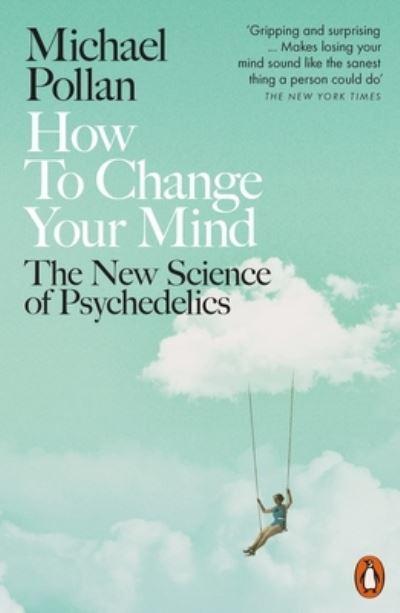
In his latest book, How to Change Your Mind: The New Science of Psychedelics, Michael Pollan draws attention to the revival and renaissance that is taking place when it comes to the potential deployment of ‘entheogens’ or psychedelic substances in the field of medicine. Specifically, ongoing clinical trials at institutions like New York University, Johns Hopkins University in Baltimore, and Imperial College in London are yielding some dramatic findings, namely, that a one-off, carefully controlled drug-induced mystical experience can have entirely benevolent and profoundly transformative effects on patients who are struggling with addiction, anxiety, depression, or a diagnosis of terminal cancer. For example, in trials at NYU and Hopkins, 80 per cent of cancer patients exhibited clinically significant reductions in standard measures of anxiety and depression, an effect that was maintained for at least six months after having been given a dose of psilocybin.

Though the sample was small —fifteen smokers— another study found that twelve had gone without smoking six months after their ‘trip treatment’ . Twelve subjects, all of whom had tried to quit multiple times, using various methods, were verified as abstinent six months after ingesting psilocybin, a success rate of eighty per cent. Previously, these experimental subjects had tried to stop smoking unsuccessfully, using a variety of methods, on several prior occasions.

Additionally, the recreational use of psychedelics has been famously associated with instances of psychosis, flashback, and suicide. But these negative effects were not experienced by patients in the trials at NYU. and Johns Hopkins. After having administered nearly five hundred doses of psilocybin, the researchers have reported no serious negative effects, though it should be noted volunteers are carefully vetted prior to their experience, and are then guided through it by skilled therapists who are well-positioned to help those volunteers manage the episodes of fear and anxiety that many of them do report.

Pollan intriguingly states at one point that, “Many of the people I’d interviewed had started out stone-cold materialists and atheists, no more spiritually developed than I, and yet several had had “mystical experiences” that left them with the unshakable conviction that there was something more to this world that we know – a “beyond” of some kind that transcended the material universe I presume to constitute the whole shebang.”

So if we want to find out whether there is anything to religion or not, maybe the first thing to do is to sign up to one of these trials. As someone who suffers from a psychologically excruciating chronic health condition and a drink problem, I wouldn't mind taking part in one.
 
Last edited:

Don't have an account? Register now and see fewer ads!

SIGN UP
Back
Top