COVID-19 — Coronavirus

Status
Not open for further replies.
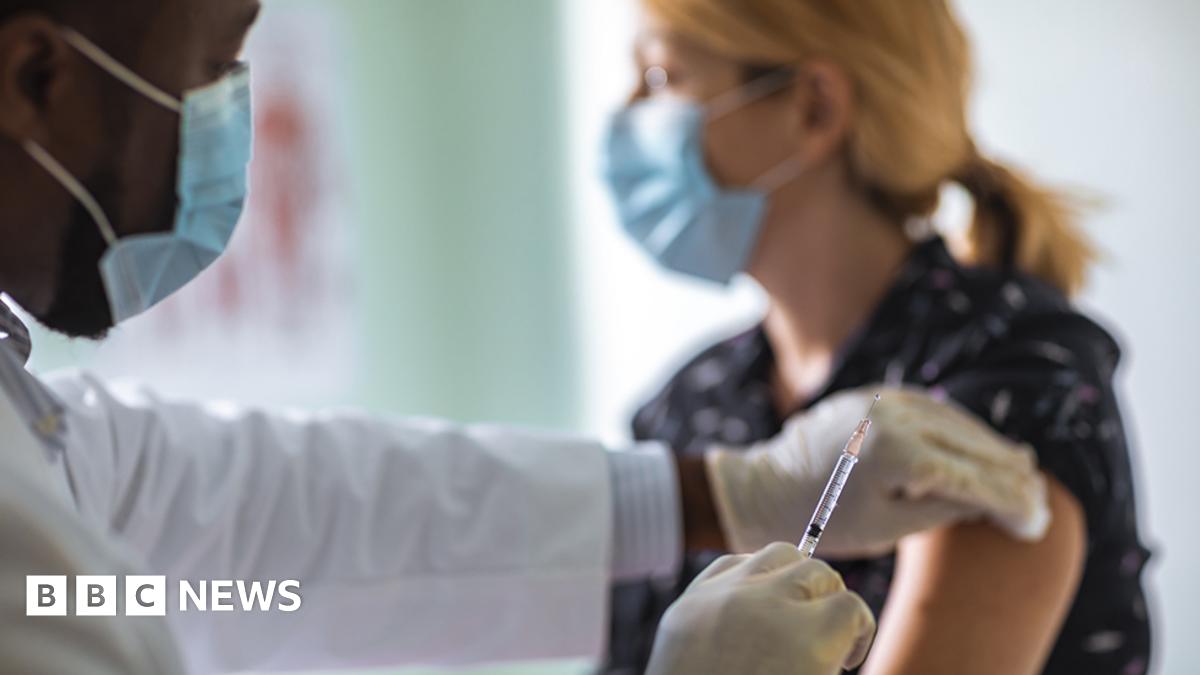
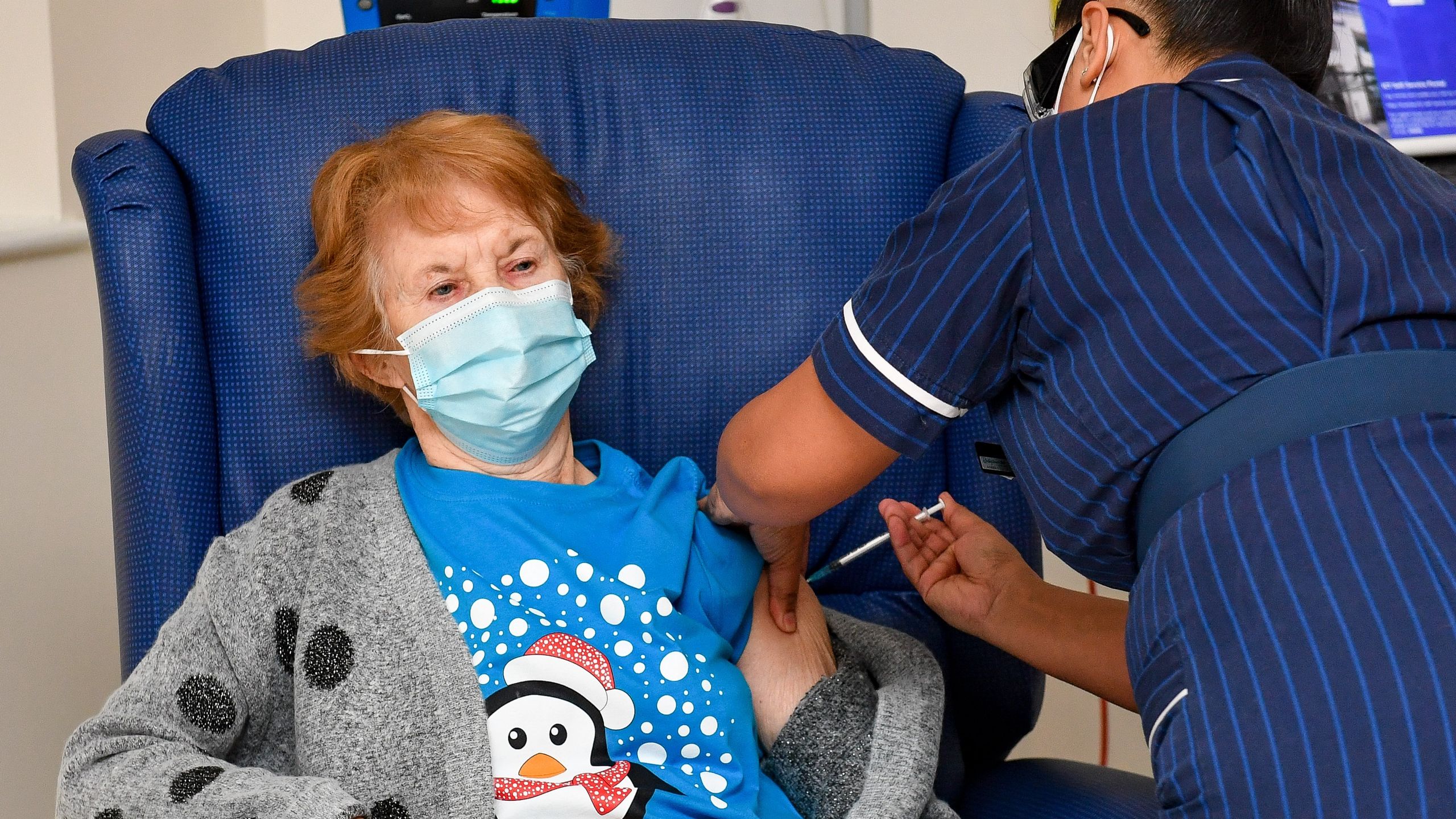
I do wonder how they are going to vaccinate everyone, apparently they have done 175000 at that rate they said it would take 7 years to get to everyone. Now I know there will be more vaccination centres but it’s mind boggling when you have to do 60/70 million people!
They've only been doing it for just over a week, and we have limited doses at the moment, and even more limited places to dispense it, so I think we need to be cautious about the time scale.

I know that large premises are being readied to get a lot of people through quickly, and once that ramps up they'll get through 100's of thousands per day.

Me and the other half got the flu jab last night (over 50's), having only been invited on Monday, and knowing our surgery and it's normal glacial pace, I fully expected to have to wait ages for an appointment, but even on Tuesday we could book any time on Thursday. I expected a full car park and a queue to get in the surgery, but we arrived and were ushered in straight into the surgery room, and were both done and back in the car in under 5 minutes, I was quite impressed, something our surgery has never managed in 10 years experience of being with them.
 
How many do we need to vaccinate though for it to really make a difference. The old, vulnerable, front line workers etc, surely once they have it rolled out then that will be enough to allow some normality to return.
Check out these articles.
 
How many people in Tier 3 Greater Manchester are going to Tier 2 Cheshire to do what they cannot do in Tier 3 during ''party season''?

Lots of them. Tier 3 is useless as it is impossible to contain and just benefits livelihoods outside of your own area by boosting ones that by quirks of the system are free to do what neighbours cannot.

Only fair rules the same for everyone work. If we ignore that reality in January it will slow down any chance of getting cases low enough to avoid months of ever tougher measures.
People are now breaking the rules regardless.
How many communal house parties were there for the derby?
When they were open, restaurnts were only responsible for 5% of cases pubs 7.5%. Environments laid out to keep people safer with table service. I believe closing them is causing more cases rather than fewer.
But oh no that can't be allowed say the SAGE brigade. Crazy - No understanding of human nature and lockdown fatigue.
 
Any news on the Oxford vaccine yet ?

Expectation still seems to be for approval this year. The complication with the dose seems to be the delaying factor.

The higher dose has sufficient efficacy for approval but the Lancet paper looked pretty convincing that the lower dose was near certain more efficacious. The dataset was however very small for the lower dose.

I've heard (insider gossip only) that a further cut of data has been submitted, which would make sense and explain the delay. If true, it must be consistent with the earlier data, or they'd be obliged to make it public. Events will be coming through fast now given the extent of the second wave.

It's worth putting this "delay" in context. So far it's been under review for 21 days. A normal review takes 18 months!

It's also worth considering the key part of the efficacy data: there was not a single case of severe disease on any dose in the trial (10 severe cases on the placebo). So regardless of the headlines on % efficacy, it's clear that mass vaccination with this would stop the pandemic dead as a public health issue.

If it is approved, we can, I think, be hopeful of near normality for summer next year. If not, it will take a lot longer, and be dependent on supply and logistics for the harder to deliver pfizer, moderna jabs.
 
Many more than 8% of my family have or probably had but do not know as never tested because they got over it.
We were discussing this yesterday, and while I don't suspect I have had it (unless it was pretty much asymptomatic), I do think my wife had it back in late Feb/early March, when she was ill for about 2 weeks, missing work, and spending a couple of days in bed.

My son and his girlfriend both think they've had it around the same time, and my daughter thinks she had it, because she was working with someone who they know had it, after a visit to northern Italy in Feb. Pretty much everyone in the office she works in were ill at about the same time it was confirmed, after the person was tested because she was admitted to hospital, the only way at that time tat you could get a test.
 
Check out these articles.
During the first week they were only vaccinating about a ¼ of those they hope to vacinate going forward so those articles are alarmist IMO.
Herd immunity is about 68% for COVID (R0 best guess = 3.1) but if the new variant has a higher R number, as looks likely, it could increase to 75% if the new R0 is 4.
Herd Immunity proportion = 1 - (1/R0) approximately though other factors apply
 
Last edited:
40% and it’ll start to fade away out of existence.
It'll never "fade away out of existence" unfortunately, we'll have to live with it like many other diseases, most likely as a winter illness, what will happen though, is that the impact will become less. It may well be that vulnerable will need booster jabs or similar on a relatively regular basis, but we won't know that for some time (could be years).
 
has anyone now got a reasonable estimate of how many people of the 58 million or so have actually had it over the past 9 months

Serology (blood antibody) studies have been done to assess this.

First wave was <10%, I doubt it will be as high as 20% yet.

Here's last info from ONS.

Analysis of antibodies evidence from individuals who have had the infection in the past show: in England, an estimated 6.9% (95% confidence interval: 6.3% to 7.4%) of people would have tested positive for antibodies against SARS-CoV-2 on a blood test in October, suggesting they had the infection in the past; there is substantial variation in antibody positivity between regions, from 10.8% (95% confidence interval: 9.3% to 12.5%) in London compared with 3.1% (95% confidence interval: 2.1% to 4.4%) in the South West.

 
Perhaps they're aiming to roll out the higher efficacy shot ratio - that's the one most people would want if available.

Yes, this is likely exactly what is being considered.

Is the data on the lower dose sufficient to justify approving it. If not, is it better to wait for more data than approve the higher dose right now, given that a short delay could result in a significantly better vaccine.
 
Expectation still seems to be for approval this year. The complication with the dose seems to be the delaying factor.

The higher dose has sufficient efficacy for approval but the Lancet paper looked pretty convincing that the lower dose was near certain more efficacious. The dataset was however very small for the lower dose.

I've heard (insider gossip only) that a further cut of data has been submitted, which would make sense and explain the delay. If true, it must be consistent with the earlier data, or they'd be obliged to make it public. Events will be coming through fast now given the extent of the second wave.

It's worth putting this "delay" in context. So far it's been under review for 21 days. A normal review takes 18 months!

It's also worth considering the key part of the efficacy data: there was not a single case of severe disease on any dose in the trial (10 severe cases on the placebo). So regardless of the headlines on % efficacy, it's clear that mass vaccination with this would stop the pandemic dead as a public health issue.

If it is approved, we can, I think, be hopeful of near normality for summer next year. If not, it will take a lot longer, and be dependent on supply and logistics for the harder to deliver pfizer, moderna jabs.
I guess there’s a slim chance that the Oxford / AZ vaccine could be cleared by the EMA first, who don’t seem to have made an issue about efficacy (given that it is over 50%).
 
Serology (blood antibody) studies have been done to assess this.

First wave was <10%, I doubt it will be as high as 20% yet.

Here's last info from ONS.

Analysis of antibodies evidence from individuals who have had the infection in the past show: in England, an estimated 6.9% (95% confidence interval: 6.3% to 7.4%) of people would have tested positive for antibodies against SARS-CoV-2 on a blood test in October, suggesting they had the infection in the past; there is substantial variation in antibody positivity between regions, from 10.8% (95% confidence interval: 9.3% to 12.5%) in London compared with 3.1% (95% confidence interval: 2.1% to 4.4%) in the South West.


Yes but it is surely going to be higher in metro areas. Simply because it must be much easier to catch it.

So the average might be 20% but it could be 2% somewhere and 42% somewhere else.

If you catch it and barely get sick would you even retain antibodies that were not really needed? If they had natural immunity in some other way.

Could well be completely wrong but it just feels like way more have had it than anyone has counted. Even allowing for the had a cold and now believes it was Covid numbers that do obviously exist.
 
Yes but it is surely going to be higher in metro areas. Simply because it must be much easier to catch it.

So the average might be 20% but it could be 2% somewhere and 42% somewhere else.

If you catch it and barely get sick would you even retain antibodies that were not really needed? If they had natural immunity in some other way.

Could well be completely wrong but it just feels like way more have had it than anyone has counted

The antibodies are what clears it from your system, no antibodies you would never recover.

It's very unlikely high percentages have had it, or you'd see an effect on transmission - rates would come down. Bergamo in Italy I think had something like 60% hit in 1st wave. Something like 0.5% of the population died - that would be what, 10,000+ in Manchester (depending what's included in the population), 300,000 for the UK. We're nowhere near those death figures, thankfully.

You're absolutely right that there will be big differences across the country.

I guess all this is complicated by the fact that noone knows how long antibody response lasts.

 
How many do we need to vaccinate though for it to really make a difference. The old, vulnerable, front line workers etc, surely once they have it rolled out then that will be enough to allow some normality to return.
Just the over 80s would make a massive difference.
 
Nice to see that Canada - who have ordered enough vaccines to cover their population 5 times - says it will make surplus available to others.

Hope we agree to do the same as protecting the third world who cannot afford to pay big money and will need help to administer is as important as saving ourselves.

Rich countries should be agreeing a joint strategy now to help vaccinate the world.

Either way we should be making this kind of pledge ourselves.
 
It'll never "fade away out of existence" unfortunately, we'll have to live with it like many other diseases, most likely as a winter illness, what will happen though, is that the impact will become less. It may well be that vulnerable will need booster jabs or similar on a relatively regular basis, but we won't know that for some time (could be years).
Yeah maybe not, irrelevant to day to day life is what I meant.
 
Status
Not open for further replies.

Don't have an account? Register now and see fewer ads!

SIGN UP
Back
Top