View attachment 138264
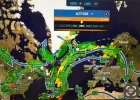
This is what an absolute dogshit night of flying over the North Atlantic looks like for a trip from Chicago (KORD) to Milan (LIMC) on a preflight planning weather map! Doesn’t get decent until we reach Scotland!
As you can see, most of the turbulence is affected by the jet streams, especially orally where the Arctic Jet (northerly one) starts to run into the Tropical Jet (more southerly one). Where the streams of air start to clash, or run in parallel, their disparate airspeeds greatly disturb the air, thus turbulence. Also, where they buckle and change direction (big curves, often turning back on themselves), this also creates significant airflow disturbances. It’s just like a fast running river…of air, hence jet “stream.” The turbulence is running the rapids, and we have classifications, just like rapids (Occasional Light, Ocnl-Continuous Light, Cont Light-Ocnl Moderate, Cont Moderate. This probably where one’s flying experience stops, because we will go to almost any altitude to get out of Cont Mod. It’s called “Moderate” but it is strong jolts, both horizontally and vertically, often including minor altitude and airspeed deviations. Beyond Moderate comes Severe, which is temporary loss of control of the aircraft, both altitude & airspeed, and required aircraft inspection when you get on the ground!
- The route is the magenta line.
- The green shaded areas are areas of predicted turbulence from Govt Aviation Weather sources.
- The orange areas are areas of predicted turbulence based solely on a mathematical calculation of wind direction and speed.
- The big thick blue arrows are jet streams, with the boxes telling you the altitude of the jet core and its wind speed.
- The red boxes are areas of thunderstorms.
- The white circles with 4 letter identifiers are en route and ETOPS alternates for the flight.
- The big box across the top is an altitude slider, so I can try to plan the best altitude through all that shit. That often means climbing and descending and climbing again along the route, which burns more gas, costs more money, but allows the cabin crew to do service and passengers to try to enjoy the flight, all while probably adding time to the flight. A balance of all of those factors that have nothing to do with weather are included in the weather analysis when it comes to safety, efficiency and customer service.
George doesn’t read weather maps, unfortunately, but with AI, he soon might!
One last nugget: Above a certain altitude (18,000 feet in the USA, but much lower, maybe 5,000 to 7,000 in many European areas) aircraft DO NOT fly an actual altitude, they fly a specific PRESSURE “altitude.”
In short, all aircraft set their altimeters to the same SET pressure and then fly the altitudes off the altimeter, even though it is not an actual altitude, either Above Ground Level (AGL) or above Mean Sea Level (MSL). That pressure is 29.92 inches of mercury in the US and 1013 Hectopascals in Europe and most of the world.