
You are using an out of date browser. It may not display this or other websites correctly.
You should upgrade or use an alternative browser.
You should upgrade or use an alternative browser.
Post Something Interesting
- Thread starter Bill Walker
- Start date
I sometimes see my old comments and wonder what the fuck i was thinking at the time.Hmmmmm am I missing something ?
A joke about golden years ?
Or have you not seen the 3 threads (at least)...........
Although it is 10 years since his death.
If you plotted the position of the Sun in the sky at 12pm (what we call Noon, but Noon isn’t actually at 12pm every day) through the year, it would show this pattern:
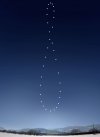
This is because the Earth’s orbit around the Sun isn’t circular, it’s an elipse.
We are further away from the Sun in the Northern Hemisphere’s Summertime, which is why the crossover of the shape isn’t at the half way point of the oval path (although this has little effect on the seasons). Then, the difference in the side-to-side position of the Sun at each point is due to our 23.5° tilt (which strangely has the dominant effect on the seasons, rather than our distance from the Sun).
This week, we are at the point of year in the Northern Hemisphere where the Sun sets in the sky at its earliest time of day. From around 10th December to 16th December, the Sun sets in Manchester at around 3.49pm (with 13th December being the exact earliest by the second). The shortest day of the year is around 21st December, with the daytime being from 8.22am to 3.51pm. Then the latest Sunrise of the year starts around 28th December to 1st January, in Manchester that’s 8.25am (with 30th December being the exact earliest by the second).
Certainly going back to the early Neolithic, we have been placing importance on this as a species. Solar and celestial calendar monuments like Stonehenge and the Goseck Circle in Germany are around 5,000-7,000 years old, but Göbekli Tepe in Turkey is almost 12,000 years old, which is around the dawn of farming.
None older have been found yet, but I wonder if we’ll ever find some older to show that our hunter gatherer ancestors also placed importance on the seasons due to migration of the animals they hunted at different times of the year?
For me, this^ is all the true meaning of what we call ‘Christmas’. It’s a Solar holiday, the reveration of the Sun at its most scarce time in the sky of the year, looking forward to the Sun getting stronger on the way to Summertime.
Roger Daltrey is up to Windsor for his knighthood. But what struck me is the number of 'gongs' that get given out for 'charitable work'. Do these 'worthies' cough up their own money or is it just a matter of turning up at a charitable gig and that's what counts, 'cos the thought crosses my mind that if they stumped up some cash why are charities forever scraping the barrel to make ends meet?
- Joined
- 30 Jun 2019
- Messages
- 33,765
- Team supported
- Manchester City
Roger Daltrey is up to Windsor for his knighthood. But what struck me is the number of 'gongs' that get given out for 'charitable work'. Do these 'worthies' cough up their own money or is it just a matter of turning up at a charitable gig and that's what counts, 'cos the thought crosses my mind that if they stumped up some cash why are charities forever scraping the barrel to make ends meet?
The bigger charities are just grifts these days it's only local charities that have any semblance of honour or integrity. Celebrities know this to be the case but associate themselves with them any way.
I have no reason not to believe Roger isn't a nice chap and does things because he genuinely believes that he's doing good things but my point about money grubbing charities stands.

Royal Albert Hall members accused of cashing in on seats for charity gigs
Exclusive: The Who’s Roger Daltrey questions sellers’ morals, and former hall president says he is ashamed by their conduct
 www.theguardian.com
I think it’s variable but often we don’t find out who is doing what. For example, it emerged a few years ago that Elton John had paid for three scholarships to the RCM every year, but the public knew nowt of this. Not only did he pay, he was constantly in touch with the scholars to encourage and help them.Roger Daltrey is up to Windsor for his knighthood. But what struck me is the number of 'gongs' that get given out for 'charitable work'. Do these 'worthies' cough up their own money or is it just a matter of turning up at a charitable gig and that's what counts, 'cos the thought crosses my mind that if they stumped up some cash why are charities forever scraping the barrel to make ends meet?
Plants are the reason humans can see in trichromatic technicolour.
Nearly all mammals are colour blind… apart from primates. Most mammals’ vision is the same as a human with colour blindness where they cannot distinguish various reds from various greens.
However, the evolution of fruiting trees allowed primates to evolve into tree climbing, fruit eating mammals. Trees provided primates with a food source which helped the trees disperse their seeds and increase their spread.
In order to ensure the seeds had reached maturity to be able to sprout when dispersed, they made their fruit colourful, a lot of the time bright red (as well as being at their tastiest at that point, even making the fruit taste anything between sour, off, or even poisonous before being ripe) at the point the seeds reached maturity.
Primates evolved to recognise the colour changes in the fruit with a new cone of colour receptors in the eyes which distinguished various reds from various greens. Added to the blue and green cone receptors in the eyes, it gave them technicolour vision.
As we are primates, we have evolved with this vision ability through the three primary colour cones.
Plants are also the reason we walk bipedally.
With the depletion of forests and increase in grasslands and savannahs due to climate change, primates were coming out of forests and being fronted with more open spaces.
We evolved from the all-fours stance that modern chimpanzees have, to standing upright to see over a further distance over the grass. Also, we evolved from the all-fours walk that chimps have, to being able move more quickly over longer distances across the grass either to get to safety away from predators or to catch prey, by our pelvises, hip joints and legs evolving a different size, shape and motion to cover the open ground by being able to walk and run as humans do.
Last edited:
Atalanta and Bournemouth both have Haaland on their badges.
The Knowledge | Which football clubs have pictures of people on their badges?
Plus: players popping up randomly on TV, triple-doubles in names and which match featured the most Ballon d’Or winners?

I'm saying nowt.
Except. Fuck that.
Its interesting that was put up by the CoE yesterday presumably in a bid to shoot Tiny Tommy's fox the day before he released it. The actual press ignored it. However they are all over todays protest claiming the CoE (and others ) are banning Xmas. Tells you one of the reasons why the country is in the shit.
Its interesting that was put up by the CoE yesterday presumably in a bid to shoot Tiny Tommy's fox the day before he released it. The actual press ignored it. However they are all over todays protest claiming the CoE (and others ) are banning Xmas. Tells you one of the reasons why the country is in the shit.
IMO if you believe in a god fine just don't promote it to those that don't.
As for that racist farage, who I assume you are calling Tiny Tommy well he can go fuck himself.
Not very interesting but me and a couple of mates had a night out in Glossop last night
I'd love to post something interesting but it's impossible because I'm dull !
Not very interesting but me and a couple of mates had a night out in Glossop last night
I was on a pub crawl in Manchester city centre yesterday, it was absolutely 'rammed' everywhere we went ...... am paying for it with a bit of a sore head this morning though !