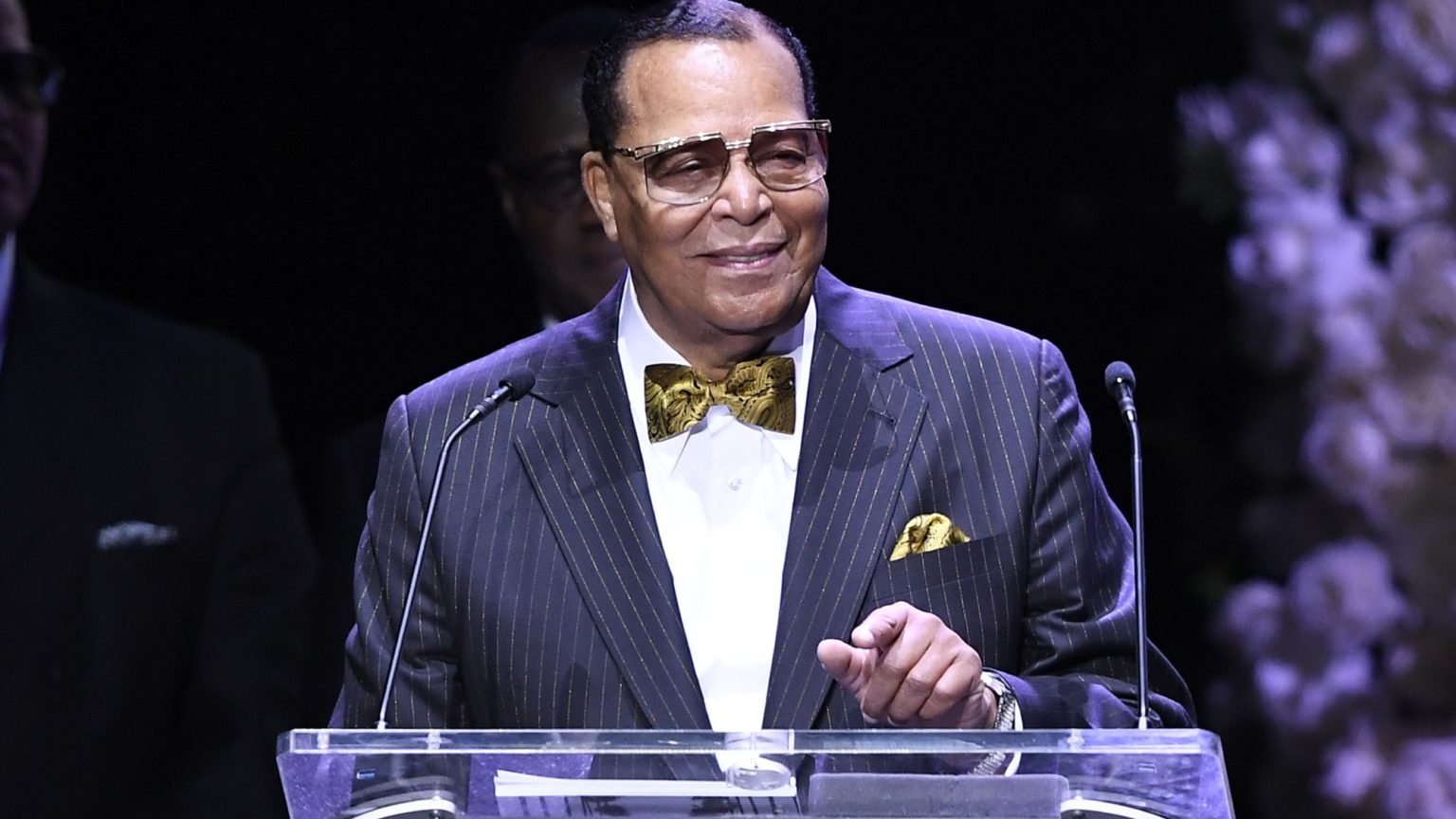
Scotlands new Hate speech/crime bill.

I prefer not to read stuff that is written by mouthpieces for corporate interests.

Spiked is the propaganda arm of the Koch brothers organisation.

From what I've seen and what's on the homepage now, Spiked has next-to-nothing on economics or corporatism: its focus is more on free-speech and civil and political rights.

Also, you do know who owns The Economist? Some of the wealthiest families in the world including the Rothschilds, Agnellis, Schroders and so on.
 
I think that we live in strange times and that, from a certain perspective, one of the problems we suffer from is not a gradual erosion of free speech but arguably a surfeit of it.

For example, Viz Comic cartoonist Davey Jones had the character 'Inspector Paul Dacre' declare this in the last panel of one of his recent cartoons:

'I spotted that my newspaper has a circulation of over one and a half million, which reminded me that I am fabulously rich and can therefore accuse any f****r of doing absolutely any old b****cks that I choose to make up.

I can afford the top lawyers, and anyway if someone successfully sues me, I can just pay the damages out of my petty cash. So who gives a f*****g s**t?'

Given that Dacre was renowned for deploying the 'C' word in his interactions with all and sundry when he edited the rag, it's not difficult to imagine him actually saying something like that.

So we still have the perennial problem of a predominantly right-wing media passing off any old bollocks as the truth.

But in addition, we now also have populist politicians who make a big show of rejecting facts, who actively embrace the pleasures of spouting nonsense in order to make glum reality seem more attractive. One of the ways they do that - in addition to making hyperbolic claims about their own achievements- is by substituting nostalgia for utopia.

So Putin's troll farms attempt to sell dreams of a renewed Russian Empire, Trump vows to Make America Great Again, and Turkish and Hungarian media dream of resurrecting their own phantoms of greatness.

In other words, the powerful seem to be using information (or disinformation) abundance rather than scarcity to find new ways of maintaining the status quo and excessive economic inequality, and to take people's minds off things like climate change and economic stagnation.

So Instead of an alleged lack of free speech, from a certain point of view it could be argued that we might have too much of it.

In this kind of situation, one in which nobody can be certain of anything, the politics of populism then becomes one of the nearest branches that seems to offer a false sense of security, when instead it is a cure that is worse than the disease.

Don’t get me wrong. I also share the concerns that others have expressed about things like ‘cancel culture’.

But I do wonder whether the issues I have attempted to draw attention to above, ones that are emphasised in the recent publications of the Yale historian Tim Snyder and those of Peter Pomerantsev, are also worth reflecting on.

I think you're conflating the domination of the media by certain voices with the everyday speech that the average person is legally entitled to.

Do I think Murdoch should be allowed to own multiple papers in this country? No.

Do I think we need to crack down and imprison people for up to 7 years for saying something without an intent to 'stir up hatred'? No.
 
I think that we live in strange times and that, from a certain perspective, one of the problems we suffer from is not a gradual erosion of free speech but arguably a surfeit of it.

For example, Viz Comic cartoonist Davey Jones had the character 'Inspector Paul Dacre' declare this in the last panel of one of his recent cartoons:

'I spotted that my newspaper has a circulation of over one and a half million, which reminded me that I am fabulously rich and can therefore accuse any f****r of doing absolutely any old b****cks that I choose to make up.

I can afford the top lawyers, and anyway if someone successfully sues me, I can just pay the damages out of my petty cash. So who gives a f*****g s**t?'

Given that Dacre was renowned for deploying the 'C' word in his interactions with all and sundry when he edited the rag, it's not difficult to imagine him actually saying something like that.

So we still have the perennial problem of a predominantly right-wing media passing off any old bollocks as the truth.

But in addition, we now also have populist politicians who make a big show of rejecting facts, who actively embrace the pleasures of spouting nonsense in order to make glum reality seem more attractive. One of the ways they do that - in addition to making hyperbolic claims about their own achievements- is by substituting nostalgia for utopia.

So Putin's troll farms attempt to sell dreams of a renewed Russian Empire, Trump vows to Make America Great Again, and Turkish and Hungarian media dream of resurrecting their own phantoms of greatness.

In other words, the powerful seem to be using information (or disinformation) abundance rather than scarcity to find new ways of maintaining the status quo and excessive economic inequality, and to take people's minds off things like climate change and economic stagnation.

So Instead of an alleged lack of free speech, from a certain point of view it could be argued that we might have too much of it.

In this kind of situation, one in which nobody can be certain of anything, the politics of populism then becomes one of the nearest branches that seems to offer a false sense of security, when instead it is a cure that is worse than the disease.

Don’t get me wrong. I also share the concerns that others have expressed about things like ‘cancel culture’.

But I do wonder whether the issues I have attempted to draw attention to above, ones that are emphasised in the recent publications of the Yale historian Tim Snyder and those of Peter Pomerantsev, are also worth reflecting on.
I think you make a great point about a surfeit of free speech, I prefer to see it as what we would know as common decency and courtesy being eroded by the need of some to be able to offend without subscribing to societal norms.

People who claim their free speech is being denied are in my opinion those who want to push the boundaries of the societal norms towards a place where their opinions become the norm and as a result common decency and societal norms follow the same trajectory.

I always muse over what is it these free speech advocates actually want to say that they feel they are being stopped from saying. All I can think of is that they wish to speak freely outside the law and societal norms, which in itself is dangerous because total free speech I don't believe is possible within a rules based society. What follows is the creation of myth surrounding what they cant say or cant express like being unable to fly the St Georges flag, which is utter nonsense otherwise the Queen would be arrested and Navy ships impounded.
 
From what I've seen and what's on the homepage now, Spiked has next-to-nothing on economics or corporatism: its focus is more on free-speech and civil and political rights.

Also, you do know who owns The Economist? Some of the wealthiest families in the world including the Rothschilds, Agnellis, Schroders and so on.

Fair enough, you carry on reading it, I will avoid it like the plague.
 
I also have issues with Spiked. Quite by chance, over the weekend, I ended up reading what they wrote about the concerns Nick Cave had recently expressed about cancel culture.

Their headline portrays him as being engaged in a ‘one man crusade’ against it.

I receive alerts whenever Cave’s Red Hand Files site is updated, and it is simply false to claim that he is on any kind of crusade.

All he has been doing is responding to the random questions of fans, and the content of an overwhelming majority of those responses are completely apolitical.

There is therefore no sense in which Cave is spearheading any kind of solitary campaign, and his comments are far more temperate and measured than Spiked have made them seem with their selective quotations.

It’s just one example but it doesn’t say a lot for their journalistic standards and instead suggests that they have an agenda to push, one that involves appropriating and distorting relatively uncontroversial opinions in order to promote it.
 
I also have issues with Spiked. Quite by chance, over the weekend, I ended up reading what they wrote about the concerns Nick Cave had recently expressed about cancel culture.

Their headline portrays him as being engaged in a ‘one man crusade’ against it.

I receive alerts whenever Cave’s Red Hand Files site is updated, and it is simply false to claim that he is on any kind of crusade.

All he has been doing is responding to the random questions of fans, and the content of an overwhelming majority of those responses are completely apolitical.

There is therefore no sense in which Cave is spearheading any kind of solitary campaign, and his comments are far more temperate and measured than Spiked have made them seem with their selective quotations.

It’s just one example but it doesn’t say a lot for their journalistic standards and instead suggests that they have an agenda to push, one that involves appropriating and distorting relatively uncontroversial opinions in order to promote it.

I've just read the article in question if you're referring to this: https://www.spiked-online.com/2020/08/13/nick-caves-one-man-crusade-against-cancel-culture/

Also, what do you mean, 'it suggests they have an agenda' to push? The piece in question did have an 'agenda' to push: it was an opinion piece as is every other article on their site.

They are openly a platform for opinion and the respectable thing about that article is that, unlike a lot of sites that purport to be news-reporting (unlike Spiked), they actually linked to the whole, in context, response from Nick Cave here at the bottom of the page: https://www.theredhandfiles.com/what-is-mercy-for-you/

Also, if you Google Nick Cave, you will see pretty much every other site or publication leading with his comments on cancel culture. FWIW, I totally agree with Nick Cave. I don't understand how anybody can think there's a surfeit of free speech, especially when bills like the above are being put in front of Western legislatures.
 
I think you're conflating the domination of the media by certain voices with the everyday speech that the average person is legally entitled to.

That’s a fair point. I certainly find it hard to get a handle on what’s been going on in relation to free speech in recent times.

I started to take an interest in the issue when the phone hacking thing kicked off a few years ago.

One book I read that I found helpful was Nigel Warburton’s Very Short Introduction to the subject. It’s a lively, vibrant little book that covers a lot of ground, including a discussion of this controversial publication:

 
I don't understand how anybody can think there's a surfeit of free speech...

Neither did I until I read Peter Pomerantsev’s This is Not Propaganda. He is my main source when it comes to that claim. Pomerantsev is an interesting character because his parents were Russian dissidents. So he certainly knows what life in a society where free speech is curtailed is like.

You may want to check out the reviews. And his other book on Putin’s Russia is superb.

Please note that I also have a lot of time for the posts of yours that I have read on this thread and share your concerns.

What I was trying to do was convey the point that both possibilities are true simultaneously, namely, that on the one hand there is so much ‘speech’ that it is getting difficult to see the wood for the trees, and that political demagogues like Trump, Bolsonaro and Putin are deliberately engineering this kind of situation because their emotivist messaging offers the hope of something to cling to, some measure of truth, through the promotion of their politics of nostalgia in these times of uncertainty.

Meanwhile, on the other, there are ongoing attempts to curtail freedom of expression in the form of legislation, cancel culture, no-platforming and so on.

Going back to Spiked, I am just wary of them and what they are about.
 
So what?

I'm sure the Koch brothers will have opinions I agree with (even though I don't know who they are), Dawn Butler will have opinions I agree with, Chairman Mao will have opinions I agree with, Peter Sutcliffe will have opinions I agree with.

The only relevant question is, do you agree with the opinion given in the article under question?

The article I posted expresses some of my concerns about the bill and that's why I posted it (plus partly to wind up Bob who also likes his reading from people he already agrees with).
I'd say read up on the koch brothers.
 
I also have issues with Spiked. Quite by chance, over the weekend, I ended up reading what they wrote about the concerns Nick Cave had recently expressed about cancel culture.

Their headline portrays him as being engaged in a ‘one man crusade’ against it.

I receive alerts whenever Cave’s Red Hand Files site is updated, and it is simply false to claim that he is on any kind of crusade.

All he has been doing is responding to the random questions of fans, and the content of an overwhelming majority of those responses are completely apolitical.

There is therefore no sense in which Cave is spearheading any kind of solitary campaign, and his comments are far more temperate and measured than Spiked have made them seem with their selective quotations.

It’s just one example but it doesn’t say a lot for their journalistic standards and instead suggests that they have an agenda to push, one that involves appropriating and distorting relatively uncontroversial opinions in order to promote it.

Spiked is part of the evolution of the Revolutionary Communist Party from far left to far right and a position of influence on the Johnson Govt. An article by Oliver Kamm on the RCP.

 
Spiked is part of the evolution of the Revolutionary Communist Party from far left to far right and a position of influence on the Johnson Govt. An article by Oliver Kamm on the RCP.


Brendan O'Neill thinks freedom of speech is fine apart from if somebody wants to use it to talk about the abuse they suffered at the hands of a paedophile 30 years earlier. The guy is an absolute melter.


Im pretty busy at work so will read it all later but the first half of the article doesn’t suggest there’s anything wrong with what they are doing.

Billionaires back both sides and try and push the left and the right out in front.

The difference is I don’t see either side as being wrong, I just see a difference of opinion.
 
That Oliver Kamm article is fascinating but not altogether unsurprising. There seems to be a certain type of (usually deeply unpleasant person) who tend to operate on the margins of politics and who may be unable to function without aligning themselves with some kind of radical agenda. I suspect that it is not the ideology that matters so much as the psychological purpose that it serves. By this I mean that being unduly and inordinately preoccupied with the political can be convenient because it then means that you don’t have to deal with your own personal issues and often profound character defects.

The author Brad Warner conveys this point rather well in one of his books:

‘When you decide that helping feed homeless transgender crack addicts to the baby whales - or whatever - is more worthy than helping your mom clean the dead squirrel out of one of the gutters, that’s when you get in trouble. It’s not that the ‘worthy’ causes aren’t worth pursuing - of course they are. It’s that all too often our image of ‘worthy’ causes completely obscures the stuff right under our noses - and that’s the stuff that needs our attention, right here and now.’

Sounds like this O’Neil character might be an example of this type of ****.
 
Browsing recent Spiked articles, I came across another one that’s dodgy.


I have chosen it because it’s to do with a topic I actually know a bit about.

It’s a not especially well-informed piece of writing and hardly revelatory. Farrakhan’s anti-semitism has been extensively documented in books going way back when (e.g. Rachel Storm’s In Search of Heaven on Earth published in 1991) and celebrities have been aligning themselves with the NOI for a long time, stretching back to when Muhammad Ali declared his membership of the movement (and name change) in the wake of his victory over Sonny Liston when Elijah Muhammad headed the movement.

If the author of the piece had actually done his homework on more recent examples of black supremacy, he might have stumbled across the spin-off fringe religion Five Percent Nation (who have attracted considerable celebrity endorsement from well-known artists within the world of rap and hip-hop) and the very weird UFO cult the United Nuwaubian Nation of Moors a.k.a Nuwaubian Nation led by the unlikely named Dwight York (not to be confused with a certain ex-Man Ure/Villa player).

Here’s Brand Nubian - an openly Five Percent Nation band - ‘schooling’ a class on aspects of Five Percenter belief.


Allah’ here refers to the two arms, legs and head of a black person. It’s an assertion of black divinity.
I doubt that you can get any more ‘black supremacist’ than that.
Anyway, in the very unlikely event that someone actually wants to know more about anti-Semitic New Religious Movements, or ones that think the UFO’s will one day arrive to save us from ourselves, or those that think that black people are gods, the publications of Christopher Partridge and Michael Muhammad Knight would be the place to start.

I guess it really depends on whether you have the time or motivation but if I want to know more about something these days, I tend to go for peer-reviewed, well-received academic writing rather than online op-Ed articles or YouTube videos, that kind of thing.
 

Don't have an account? Register now and see fewer ads!

SIGN UP
Back
Top