Hi Phil, thanks for the discussion
philinho said:
1 - If evolution is true, how is the missing link explained these days and why are the different species so distinct? Why do we not have creatures that are halfway through an evolutionary stage?
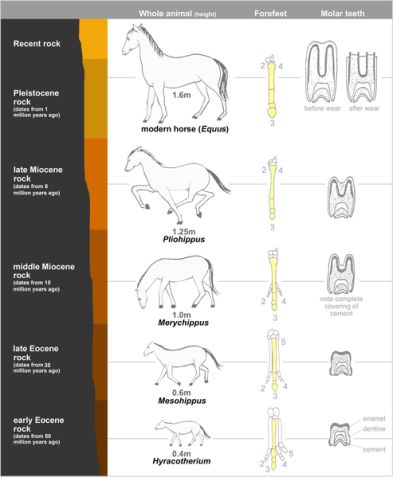
Evolution is a product of the animal adapting itself to the most favourable conditions to survive. It isn't a transformation from one thing to another, with stage 1, stage 2, etc, and isn't a force. We see evolution all around us, the simplest one being the zebras and lions.
Think of a pack of zebras and a pack of lions. The lions chase the zebras, then eat them. Due to this, the faster lions will always have the ability to eat, and to breed whereas the slower lions will starve to death thus not passing on their genes. Only the faster lions survive in large numbers and the zebra population is suffering.
The only zebras that survive are those who were quicker than the newly quick lions, or are more agile, and able to evade them.
Thus those zebras are able to breed, producing lots of agile/quick zebras. The lion population starts to die out again as even the newly quick lions can't catch the new zebras. Eventually, the zebra population becomes so big, and more agile lions evolve, meaning a return of lion numbers as they successfully hunt and breed. Perhaps then that one zebra is born with a genetic mutation (not unlike somebody with 12 toes, or Siamese twins or whatever). This zebra may have a better paw pads, meaning more grip, meaning easier turning circle/jumping/speed/whatever.
It works like that, each generation trying to get a little faster or a little more agile to beat the competition to get the chance to breed. This is what was sort of meant by the term "natural selection". The animals adapt to their local environment to survive.
As I say, there's no 'midpoint' just a slow and gradual change based on local environment and competition then adaptations over millions of years to this.
2 - How do you explain the origin of the earth and do you think the Large Hadron Collider will succeed in reproducing the big bang?
This is a misunderstanding. The LHC isn't there to reproduce the Big Bang, but is there to collide a tiny number of particles together at high energy speeds so that we can answer several physics questions that remain, around the Higgs Boson, Super Symmetry and a few others. There is one experiment at the LHC known as ALICE which is trying to recreate the conditions just after the Big Bang to study quark-gluon plasma, but "conditions just after the Big Bang" is just a sensationalised way of saying "very very hot".
3 - If science is based on current knowledge, with the understanding that we don't know everything, does that mean that until we know everything, science cannot report anything as fact, opening the door for at least the possibility that God may or may not exist?
Fact in common language and fact in scientific language are two very different things. For example, it is a
fact that the Earth moves around the Sun. In physics, that's called the Copernican Heliocentrism
Theory. Copernicus came up with it, and it had additions from Newton, Kepler and Einstein.
There is no such thing as a fact in science, just what we call observations. Example, in common language, if I drop a ball, it is a fact that it will fall to the ground. In scientific language, if I drop a ball, I observe that it will fall to the ground.
Theory is also a misunderstood word. In common language, theory means "guess". In scientific standards, theory is something that has been undeniably proven; after hundreds or thousands of attempts to both replicate and disprove the data, the theory still stands as true to life. Theories are composed of several observations, laws, inferences and hypothesis.
In strictly scientific terms, there is no proof to infer that God exists and there is no proof to infer that God does not exist. We can disprove the religious stories in the religious books, because there is undeniable proof on how things like the planets were formed or the Universe was created (sort of, the exact moment of creation is unknown, be we can explain everything about a billionth of a second after that, and some now believe that we can prove the first billionth too).
Anybody who is an atheist is just as unscientific as theists; the only correct answer so far is "I don't know".
4 - Do you think there is absolute truth?
Cheers
Phil
I believe that there is absolute truth, but it is a very rare thing. We have constants in maths and in physics which can be called absolute truths. However, relativity also teaches us that the same truth might be different in differing frames of reference.
The only absolute truths that we can hang our hat on are universal constants, such as c.
I'll upload a video for you to watch about evolution and the planets forming in a min.