General / Mental Health Support Thread

A suggestion for the mods.
Keep this thread permanently on the first page of "off topic."
I know that threads come and go according to postings and maybe that's as intended. But this one has been a lifeline for a few people in the past year (maybe more) and for people needing help or asking questions I'd say they shouldn't have to go searching down page 2 or 3 to find this in order to post their worries. Wouldn't have to be top of the page but keeping it always visible on page one might be welcome.
 
I had my first CBT session today, nice guy and some homework for me to do, i have six hours on the nhs, i think that should be enough to move me foward as i am stuck, i feel that the arrest happened the other day snd not a year ago this weekend, a year is such a long time but i don't feel feel it at all

At the moment i am so triggered by the dentist this first session-has come at a good timer, i feel positive about it helping
 
They came to collect the rope on Sunday morning at around 4am.
Three nice NHS mental health staff who also chatted with me for half an hour.
The walk in centre rang on Monday, I told them about the rope going but I told them I couldn't promise I wouldn't buy more.
I feel I need electro convulsive therapy - because the gym and long walks are not enough, the high dose of medication isn't enough. The depression is so, so acute. The walk in centre has social drop ins daily but I've had experience of these as a psychiatric outpatient years ago and found it grim. Then there's the huge reluctance to go out shortly after waking.

I don't know what to do. I'm so scared.
I could hang around a bridge or railway station I suppose but might end up being sectioned. I don't want other people traumatised in any way.
I suppose at the very least I should go to see my GP again but when you're in my situation everything is a struggle , especially going outside in daylight.


Ramones tribute Thursday and Stranglers tribute on Saturday
Something to look forward to at least.
 
Just had an unscheduled visit from the NHS
Asking me about my mental health
They've took some medication off me in case I OD
I have an appointment with GP on Monday
Hopefully the doctor will listen this time, drop in centres are great but ultimately the GP has all the power, especially as you’ve tried so hard to help yourself with music and going for walks good luck Monday PF and everyone else fighting the battle against depression and mental health issues.
 
Happy today as i have been able to read a lot better and post a bit as well, go me !

Get tomorrow out of the way and into a new year and i hope to be looking foward more. My CBT is on monday again, the wait was long but it is now happening at the right time

I ignored an in growing toe nail and it has gone crazy so i need surgery on it now, just a local and it will be a while to wait, my body is so fucked lol
 
When the doctor came round yesterday I probably came over as calm.
I had gone out on Thursday night to a gig and having a good singalong with hundreds of others as opposed to my usual routineless isolated existence is a tonic.
But I'm back in purgatory today. It's not just depression, it's a terrible fear. FEAR not anxiety.
Fear of life and my terrible, terrible situation.
I'm so sick of this torture.

I've got another gig tonight so hopefully that'll be a distraction.
If I still feel horrendous on Sunday I'll have to go to A&E. I think if the NHS was capable I'd almost certainly be on a ward right now but it seems you need to be seriously suicidal or psychotic to be hospitalised.
 
When the doctor came round yesterday I probably came over as calm.
I had gone out on Thursday night to a gig and having a good singalong with hundreds of others as opposed to my usual routineless isolated existence is a tonic.
But I'm back in purgatory today. It's not just depression, it's a terrible fear. FEAR not anxiety.
Fear of life and my terrible, terrible situation.
I'm so sick of this torture.

I've got another gig tonight so hopefully that'll be a distraction.
If I still feel horrendous on Sunday I'll have to go to A&E. I think if the NHS was capable I'd almost certainly be on a ward right now but it seems you need to be seriously suicidal or psychotic to be hospitalised.
Enjoy the gig and I hope the GP visit goes well. Tell him/her everything you have said on here. If you can’t say it, show him/her this thread and let them read it. I hope you get the help you need. It sounds very hard for you.
 
Enjoy the gig and I hope the GP visit goes well. Tell him/her everything you have said on here. If you can’t say it, show him/her this thread and let them read it. I hope you get the help you need. It sounds very hard for you.

It's brutal. Absolutely merciless.
Never knew depression could be this bad.
I've shown my posts on here to doctors counsellors etc. In recent weeks
 

Have you looked into the possibility of being a participant in one of these trials (though I'm not sure if there are any that are currently ongoing - it's been a while since I read this article and I don't have time to check this evening)?

This is something I've been reading about myself for quite some time. Am now retired but I used to teach Religious Studies A Level. The analysis and evaluation of mystical experiences is part of the syllabus, and the capacity for entheogens to induce this form of experience is directly relevant to it.

In fact, I started the book I provide a link to immediately below just before the BBC published the above piece. Then I subsequently noticed that you had referenced the same article here.

But anyway, here's the link:


Grof's book describes a much older study in which terminally ill patients were given hallucinogens in a controlled environment as a form of psychedelic therapy.

I found it fascinating. The transformative effect of this approach on the participants was profound. If you want to give the book a try but would rather cut to the chase, Chapter 5 is the one to read.

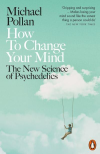
Fast-forward to more recent times, and as the article states, there has been a revival of interest in the potential medicinal uses of psychedelic medicine. This book brings a lot of that research together:

1769291240755.png

Here's what I wrote about it in a blog entry for sixth form students a while ago:

'In his latest book, Pollan draws attention to the revival and renaissance that is taking place when it comes to the potential deployment of ‘entheogens’ or psychedelic substances in the field of medicine. Specifically, ongoing clinical trials at institutions like New York University, Johns Hopkins University in Baltimore, and Imperial College in London are yielding some dramatic findings, namely, that a one-off, carefully controlled drug-induced mystical experience can have entirely benevolent and profoundly transformative effects on patients who are struggling with addiction, anxiety, depression, and a diagnosis of terminal cancer. For example, in trials at NYU and Hopkins, 80 per cent of cancer patients exhibited clinically significant reductions in standard measures of anxiety and depression, an effect that was maintained for at least six months after having been given a dose of psilocybin.

Though the sample was small —fifteen smokers— another study found that twelve had gone without smoking six months after their ‘trip treatment’ . Twelve subjects, all of whom had tried to quit multiple times, using various methods, were verified as abstinent six months after ingesting psilocybin, a success rate of eighty per cent. Previously, these experimental subjects had tried to stop smoking unsuccessfully, using a variety of methods, on several prior occasions.

Additionally, the recreational use of psychedelics has been famously associated with instances of psychosis, flashback, and suicide. But these negative effects were not experienced by patients in the trials at NYU. and Johns Hopkins. After having administered nearly five hundred doses of psilocybin, the researchers have reported no serious negative effects, though it should be noted volunteers are carefully vetted prior to their experience, and are then guided through it by skilled therapists who are well-positioned to help those volunteers manage the episodes of fear and anxiety that many of them do report.'


Here is Pollan providing some historical context for this research and an overview of it.


The BBC article also cites Jules Evans, who argues for a more cautious approach following an experience of LSD that left him with PTSD.

As it happens, I've read two of Evans' books as well: Philosophy for Life and Other Dangerous Situations, and The Art of Losing Control : A Philosopher's Search For Ecstatic Experience. Both are excellent and he's definitely a good guy. So if Evans has reservations, they are definitely worth taking seriously. Evans expands on the trauma that LSD induced in the first of those titles if I remember rightly.

Having said that, there is a world of difference between unsupervised self-experimentation and the very carefully controlled conditions under which psilocybin and other psychedelics are administered in the studies that Pollan and the BBC article both describe.

Will leave it there, except to add that I have no personal experience of psychedelics. So all of this is theoretical for me. But as someone who has struggled with my own mental health since retiring, this is an intriguing area of ongoing research that I am keeping tabs on.

 
Have you looked into the possibility of being a participant in one of these trials (though I'm not sure if there are any that are currently ongoing - it's been a while since I read this article and I don't have time to check this evening)?

This is something I've been reading about myself for quite some time. Am now retired but I used to teach Religious Studies A Level. The analysis and evaluation of mystical experiences is part of the syllabus, and the capacity for entheogens to induce this form of experience is directly relevant to it.

In fact, I started the book I provide a link to immediately below just before the BBC published the above piece. Then I subsequently noticed that you had referenced the same article here.

But anyway, here's the link:


Grof's book describes a much older study in which terminally ill patients were given hallucinogens in a controlled environment as a form of psychedelic therapy.

I found it fascinating. The transformative effect of this approach on the participants was profound. If you want to give the book a try but would rather cut to the chase, Chapter 5 is the one to read.

Fast-forward to more recent times, and as the article states, there has been a revival of interest in the potential medicinal uses of psychedelic medicine. This book brings a lot of that research together:

View attachment 181530

Here's what I wrote about it in a blog entry for sixth form students a while ago:

'In his latest book, Pollan draws attention to the revival and renaissance that is taking place when it comes to the potential deployment of ‘entheogens’ or psychedelic substances in the field of medicine. Specifically, ongoing clinical trials at institutions like New York University, Johns Hopkins University in Baltimore, and Imperial College in London are yielding some dramatic findings, namely, that a one-off, carefully controlled drug-induced mystical experience can have entirely benevolent and profoundly transformative effects on patients who are struggling with addiction, anxiety, depression, and a diagnosis of terminal cancer. For example, in trials at NYU and Hopkins, 80 per cent of cancer patients exhibited clinically significant reductions in standard measures of anxiety and depression, an effect that was maintained for at least six months after having been given a dose of psilocybin.

Though the sample was small —fifteen smokers— another study found that twelve had gone without smoking six months after their ‘trip treatment’ . Twelve subjects, all of whom had tried to quit multiple times, using various methods, were verified as abstinent six months after ingesting psilocybin, a success rate of eighty per cent. Previously, these experimental subjects had tried to stop smoking unsuccessfully, using a variety of methods, on several prior occasions.

Additionally, the recreational use of psychedelics has been famously associated with instances of psychosis, flashback, and suicide. But these negative effects were not experienced by patients in the trials at NYU. and Johns Hopkins. After having administered nearly five hundred doses of psilocybin, the researchers have reported no serious negative effects, though it should be noted volunteers are carefully vetted prior to their experience, and are then guided through it by skilled therapists who are well-positioned to help those volunteers manage the episodes of fear and anxiety that many of them do report.'


Here is Pollan providing some historical context for this research and an overview of it.


The BBC article also cites Jules Evans, who argues for a more cautious approach following an experience of LSD that left him with PTSD.

As it happens, I've read two of Evans' books as well: Philosophy for Life and Other Dangerous Situations, and The Art of Losing Control : A Philosopher's Search For Ecstatic Experience. Both are excellent and he's definitely a good guy. So if Evans has reservations, they are definitely worth taking seriously. Evans expands on the trauma that LSD induced in the first of those titles if I remember rightly.

Having said that, there is a world of difference between unsupervised self-experimentation and the very carefully controlled conditions under which psilocybin and other psychedelics are administered in the studies that Pollan and the BBC article both describe.

Will leave it there, except to add that I have no personal experience of psychedelics. So all of this is theoretical for me. But as someone who has struggled with my own mental health since retiring, this is an intriguing area of ongoing research that I am keeping tabs on.

Yes thanks I was looking at the trial info a few weeks ago
 

Don't have an account? Register now and see fewer ads!

SIGN UP
Back
Top