Stuuuuuu
Well-Known Member
I would have to respectfully disagree with your latter points.I think I ve said it before on here. I think there is no need for gels or food in training up to two hours and racing up to half marathon distance.....assuming HM done at least around the 90 minutes mark. You may need water in training over an hour ......if it's warm....sometimes I carry a bottle with a handle if going on very long trail runs. Train your body to run without the need for food. And I stick to foods like porridge, nuts and banannas and drinks like water, milk, tea or coffee.
Forget the gels and sports drinks .....apart from the second haf of the marathon or post 20 miles when things start to get desperate!!
I do agree that there's little need for fuel during training runs, although the evidence in favour of fasted training does now appear to be getting debunked.

Effects of aerobic exercise performed in fasted v. fed state on fat and carbohydrate metabolism in adults: a systematic review and meta-analysis - PubMed
This study aimed to verify the effect of aerobic exercise performed in the fasted v. fed states on fat and carbohydrate metabolism in adults. Searches were conducted in March 2015, and updated in July 2016, using PubMed®, Scopus and Cochrane databases (terms: 'fasting', 'exercise', 'aerobic...
 pubmed.ncbi.nlm.nih.gov
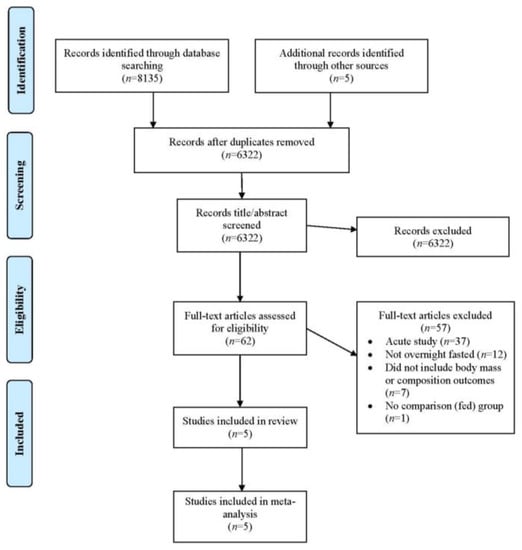
Effect of Overnight Fasted Exercise on Weight Loss and Body Composition: A Systematic Review and Meta-Analysis
It remains unclear whether training in fasted compared to fed states leads to greater weight loss and whether this practice results in beneficial or detrimental changes in body composition. We conducted a systematic review to examine the effect of overnight-fasted versus fed exercise on weight...
 www.mdpi.com
Also, there doesn't seem to be much evidence in favour of training your body to run without food, and indeed, I've recently read evidence suggesting that training with gels/food will mean that your body can be trained to make better use of the fuel on race day.
Also, if you wait to take on your fuel during the second half of a marathon (or, indeed, after 20 miles), then it's too late to have much impact! Firstly because it takes time for the fuel that you consume to actually translate into energy. Secondly, the idea of fuelling during a marathon is to push back the wall: fuelling from the start means you can top up your carbs so that you are using them as fuel throughout the race, meaning less reliance on stored fat throughout. During these runs, about 25% of fuel will come from stored fat but you can reduce the amount of fuel consumed during carb-loading by consuming fuel throughout so that the stored energy is still there and available later in the race.